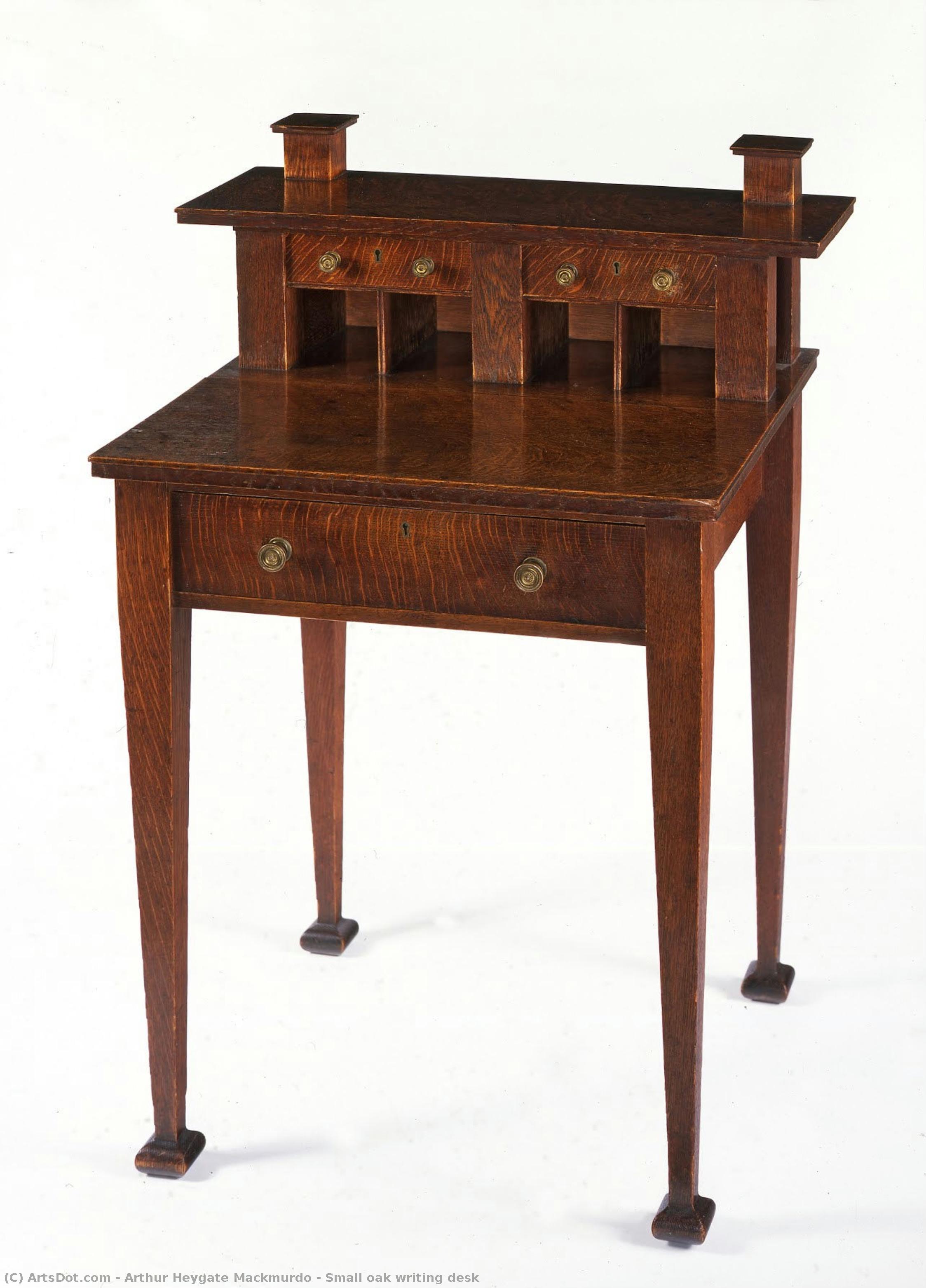
A Masterpiece of Victorian Utility and Grace
In the quiet elegance of Arthur Heygate Mackmurdo’s 1886 painting, Small Oak Writing Desk, we encounter more than just a depiction of furniture; we witness a profound meditation on craftsmanship and the sanctity of the domestic workspace. The composition is strikingly intimate, presenting a meticulously rendered oak desk that stands as a testament to the burgeoning Arts and Emphases movement. Set against a pristine, ethereal white background, the desk emerges with a sculptural clarity that commands the viewer's attention. Every grain of the wood and every subtle shadow cast by its sturdy legs invites the observer to appreciate the tactile reality of the object. This isolation from a cluttered environment allows the piece to breathe, transforming a functional item into a focal point of pure, unadulterated form.
The technique employed by Mackmurdo reflects his deep-seated reverence for structural integrity and detail. Through delicate brushwork, the artist captures the warm, honeyed tones of the oak, suggesting a surface that has been smoothed by years of thoughtful use. The interplay of light across the drawers—one larger than the other—creates a rhythmic visual depth, guiding the eye through the architectural logic of the piece. There is a certain stillness in the painting, a quietude that speaks to the contemplative nature of writing itself. For the collector or interior designer, this work offers a sense of groundedness, providing a sophisticated anchor for any space that values historical resonance and the beauty of organic materials.
The Intersection of Design and Soul
To understand this painting, one must look toward the historical heartbeat of the late 19th century. Mackmurdo was a visionary who bridged the gap between the heavy, ornate traditions of the Gothic Revival and the fluid, organic lines of Art Nouveau. In this work, we see the seeds of that transition. The desk is not merely an ornament; it is a functional masterpiece designed with a "methodical thoroughness" that Mackmurdo learned from his mentors. It embodies the era's desire to elevate everyday objects to the status of fine art, suggesting that even a writing desk can possess a soul if crafted with intention and respect for the medium.
Symbolically, the Small Oak Writing Desk serves as an altar to intellect and personal expression. In an age before the digital deluge, the desk was the site of profound thought, correspondence, and the creation of legacies. By focusing on this singular object, Mackmurdo evokes a sense of nostalgia for a time when communication was deliberate and permanent. For those seeking to adorn their homes with art that inspires reflection, this reproduction offers an emotional depth that transcends mere decoration. It is an invitation to slow down, to appreciate the enduring strength of oak, and to find beauty in the quiet, functional corners of our lives.