 Preview
 Send
Send Share
Share
 Details

 Download
 Similars
 X-Ray
X-Ray Diaporama
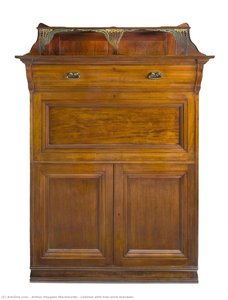
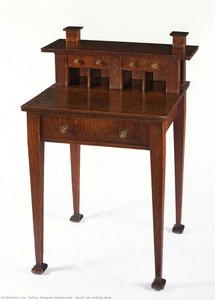
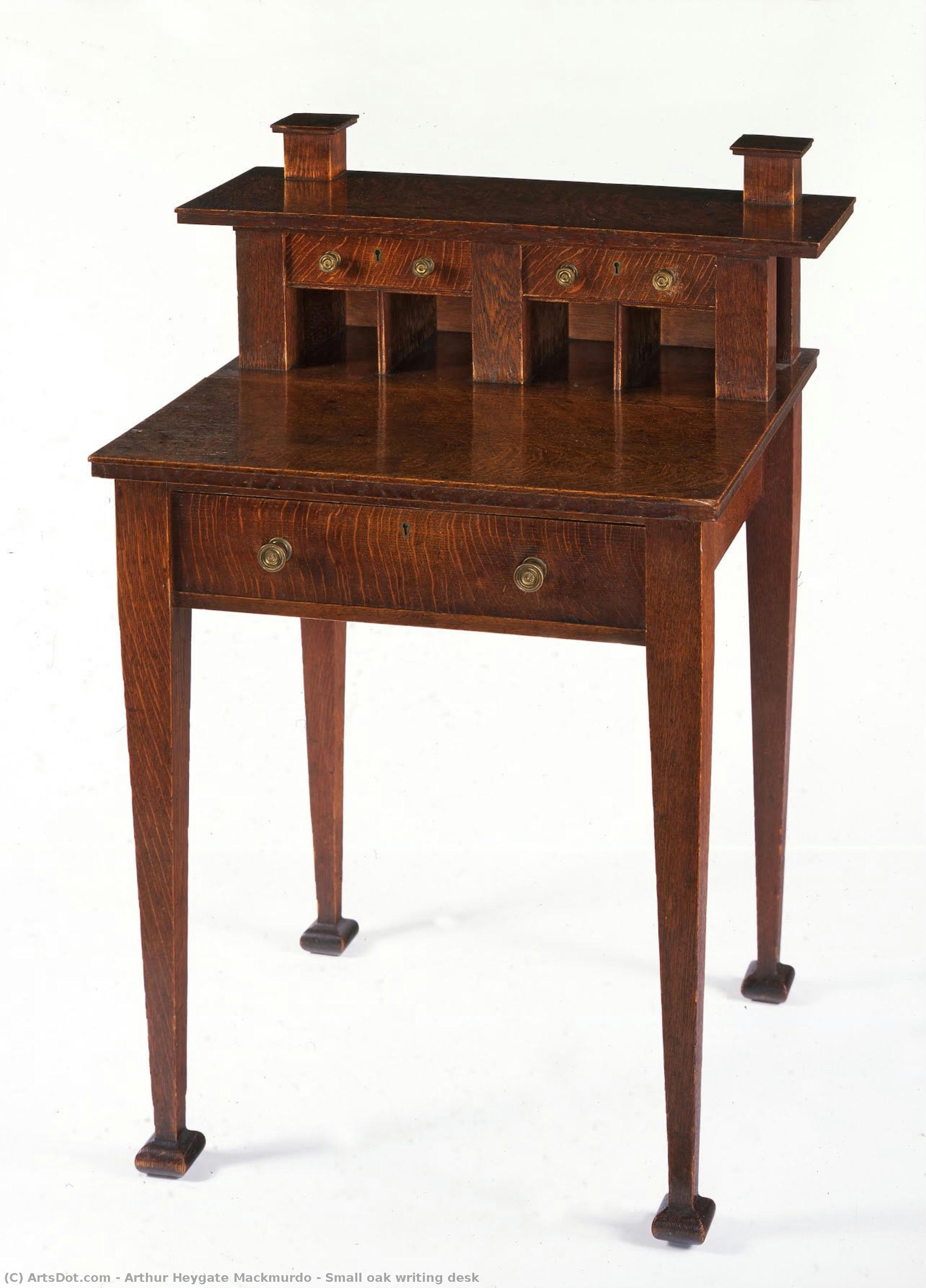
Small oak writing desk
 Oil
Oil- WallArt
- Victorian Design
 1886
1886- 19th Century
 97.0 x 69.0 cm
 William Morris Gallery
 Read More
Hand Made Oil Reproduction
Hand-painted oil on canvas in your size and frame, made to order by our artists. ( Buy Print Buy Image)




P118B $10

P118H $10

P118W $10

P438Z $10

P508JH $12

P508YH $12

P805H $10

P805Z $10

P919BZ $10

P919G $10

P919XJ $10

P959ZH $10

P968JZ $12

W106C $8

W218G $10

W218JH $8

W218Y $10

W307PJ $10

W316G $10

W316PJ $8

W316Y $10

W398PJ $8

W4111J $10

W500HY $15

W500JH $15

W692G $12

W849H $8

W940BG $15

W953PJ $8




Pick from our preset sizes that match the artwork's original proportions.

You may enter your own dimensions to fit a specific frame or space. If your selected size does not match the original image's proportions, we will either crop the artwork or extend the painting with additional hand-painted elements. A digital mockup will be sent for your approval before production begins.
Please note that the on-screen preview does not reflect the actual cropping or extension. Only the mockup will accurately show the final composition.
While custom sizes are available, we recommend selecting a dimension from the predefined list to preserve the original proportions.
After order, ArtsDot.com team will email client for instructions and provide a mockup preview
Worldwide Delivery () in 3/4 weeks instead of standard 5 weeks. (17 August). No compromise on quality.

Free Worldwide Express Shipping

High-Quality Linen Canvas

Full Shipping Insurance

Customs Tax Refund Guarantee

True Color Matching Guarantee

60-Day Return Policy (Defects Only)

100% Money-Back Guarantee

Bulk Discount Offer
 Glass option is only available in size under 110 CM

Small oak writing desk
Reproduction Medium
Reproduction Size
-


Total Price
$ 263
Artwork Description
A Masterpiece of Victorian Utility and Grace
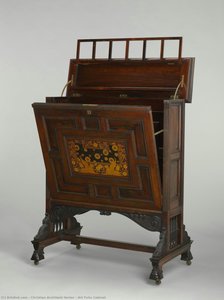
In the quiet elegance of Arthur Heygate Mackmurdo’s 1886 painting, Small Oak Writing Desk, we encounter more than just a depiction of furniture; we witness a profound meditation on craftsmanship and the sanctity of the domestic workspace. The composition is strikingly intimate, presenting a meticulously rendered oak desk that stands as a testament to the burgeoning Arts and Emphases movement. Set against a pristine, ethereal white background, the desk emerges with a sculptural clarity that commands the viewer's attention. Every grain of the wood and every subtle shadow cast by its sturdy legs invites the observer to appreciate the tactile reality of the object. This isolation from a cluttered environment allows the piece to breathe, transforming a functional item into a focal point of pure, unadulterated form.
The technique employed by Mackmurdo reflects his deep-seated reverence for structural integrity and detail. Through delicate brushwork, the artist captures the warm, honeyed tones of the oak, suggesting a surface that has been smoothed by years of thoughtful use. The interplay of light across the drawers—one larger than the other—creates a rhythmic visual depth, guiding the eye through the architectural logic of the piece. There is a certain stillness in the painting, a quietude that speaks to the contemplative nature of writing itself. For the collector or interior designer, this work offers a sense of groundedness, providing a sophisticated anchor for any space that values historical resonance and the beauty of organic materials.
The Intersection of Design and Soul
To understand this painting, one must look toward the historical heartbeat of the late 19th century. Mackmurdo was a visionary who bridged the gap between the heavy, ornate traditions of the Gothic Revival and the fluid, organic lines of Art Nouveau. In this work, we see the seeds of that transition. The desk is not merely an ornament; it is a functional masterpiece designed with a "methodical thoroughness" that Mackmurdo learned from his mentors. It embodies the era's desire to elevate everyday objects to the status of fine art, suggesting that even a writing desk can possess a soul if crafted with intention and respect for the medium.
Symbolically, the Small Oak Writing Desk serves as an altar to intellect and personal expression. In an age before the digital deluge, the desk was the site of profound thought, correspondence, and the creation of legacies. By focusing on this singular object, Mackmurdo evokes a sense of nostalgia for a time when communication was deliberate and permanent. For those seeking to adorn their homes with art that inspires reflection, this reproduction offers an emotional depth that transcends mere decoration. It is an invitation to slow down, to appreciate the enduring strength of oak, and to find beauty in the quiet, functional corners of our lives.
Related Artworks
Artist Biography
A Pioneer of Modern Style: The Life and Legacy of Arthur Heygate Mackmurdo
Arthur Heygate Mackmurdo, born December 12th, 1851, in Edmonton, Middlesex, stands as a pivotal figure bridging the ideals of the Arts and Crafts movement with the nascent aesthetic of Art Nouveau. Often described as a progressive architect and designer, his influence resonated far beyond the confines of Victorian England, shaping artistic sensibilities across Europe. Mackmurdo wasn’t merely an artist; he was a visionary who sought to unify art forms, elevate craftsmanship, and imbue everyday objects with beauty and meaning. His early education at Felsted School provided a foundation, but it was his apprenticeships – first under T. Chatfield Clarke, then more significantly with the Gothic Revival architect James Brooks – that began to mold his meticulous approach. Brooks instilled in him “methodical thoroughness,” a quality that would become a hallmark of Mackmurdo’s work and a driving force behind his organizational skills. A formative experience came in 1873 when he attended lectures by John Ruskin, followed by a journey to Italy with the influential critic in 1874. While initially guided by Ruskin's principles, it was the Renaissance art of Florence that truly captivated Mackmurdo, igniting a lifelong passion for intricate detail and harmonious form.The Century Guild: A Hub of Artistic Innovation
In 1874, Mackmurdo established his architectural practice in London, but it was the founding of the Century Guild of Artists in 1882 that cemented his place in art history. Partnering with Herbert Percy Horne, he created a collective unlike any other. The Guild wasn’t simply an association of artists; it was a holistic enterprise dedicated to elevating all branches of artistic production – from architecture and furniture design to glass painting, pottery, woodcarving, and metalwork. The core philosophy centered on restoring “the dignity of building decoration” and fostering collaboration between designers and craftspeople. Mackmurdo actively participated in every aspect of the Guild’s output, mastering various techniques himself to ensure quality and artistic integrity. The Century Guild offered complete furnishing schemes for homes and buildings, encouraging artists to be involved in both conception and execution. This commitment to integrated design was revolutionary for its time, challenging the prevailing separation between fine art and applied arts. Exhibitions at venues like the Health Exhibition in London (1884) showcased their work, gradually attracting attention and establishing a distinctive style that would soon become synonymous with the Modern Style – the British precursor to Art Nouveau.The Birth of Art Nouveau: Floral Motifs and Whiplash Curves
Mackmurdo’s contribution to the development of Art Nouveau is undeniable. While the term itself wouldn't be coined for some time, his designs from the early 1880s exhibited key characteristics that would define the movement. His chair design of 1882, with its conventional framing and twisting foliage, is widely considered a seminal work – a precursor to the flowing lines and organic forms that became Art Nouveau’s signature aesthetic. Even more impactful was his engraved title page for *Wren's City Churches* (1883). Nikolaus Pevsner famously identified this piece as “the first work of art nouveau which can be traced,” recognizing its debt to Rossetti, Burne-Jones, and ultimately, William Blake. The sinuous curves and stylized floral motifs that adorned the page foreshadowed the whiplash lines that would become ubiquitous in Art Nouveau design across Europe. These elements weren’t merely decorative; they represented a rejection of rigid Victorian formalism in favor of naturalistic forms and dynamic compositions. Mackmurdo's influence extended beyond England, reaching Belgian avant-garde groups like Les XX and inspiring artists such as Hector Guimard, Victor Horta, and Charles Rennie Mackintosh.Beyond the Guild: Architectural Projects and Social Concerns
Although the Century Guild disbanded in 1888, Mackmurdo continued to pursue architectural projects, albeit on a smaller scale. He undertook commissions for interiors – notably at the Savoy Hotel (1889) – and designed houses for private clients, including one for artist Mortimer Menpes in Chelsea. His own homes in Essex, particularly 8 Private Road, Enfield (1887), and Great Ruffins, Great Totham (1904), served as laboratories for his design ideas. However, Mackmurdo’s interests extended beyond aesthetics. He harbored deep social concerns, advocating for affordable housing and electoral reform. In fact, he retired from active artistic practice at the age of 55 to dedicate himself fully to these causes, becoming a prominent socialist campaigner and authoring pamphlets on related subjects. This shift reflects a broader commitment to using art as a force for positive change – a principle deeply rooted in the Arts and Crafts ethos.A Lasting Impression: Mackmurdo’s Enduring Legacy
Arthur Heygate Mackmurdo died March 15th, 1942, leaving behind a legacy that continues to inspire designers today. His pioneering work with the Century Guild helped disseminate William Morris' ideas and paved the way for the Art Nouveau movement. His emphasis on integrated design, craftsmanship, and organic forms remains relevant in contemporary art and architecture. The Gallery William Morris, dedicated to the life and work of his mentor, houses a collection that includes pieces related to Mackmurdo’s contributions, serving as a testament to his enduring influence. He wasn't simply an architect or designer; he was a catalyst for change, a visionary who believed in the power of art to transform society – a true pioneer of Modern Style and a key figure in British design history.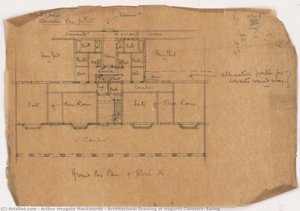
arthur heygate mackmurdo
1851 - 1942
Quick Facts
- Artistic Movement Or Style: Arts & Crafts, Art Nouveau
- Artists Or Movements Influenced By This Artist:
- Hector Guimard
- Victor Horta
- Charles Rennie Mackintosh
- Artists Who Influenced This Artist:
- William Morris
- John Ruskin
- Date Of Birth: December 12, 1851
- Date Of Death: March 15, 1942
- Full Name: Arthur Heygate Mackmurdo
- Nationality: English
- Notable Artworks:
- 8 Private Road
- 25 Cadogan Gardens
- Wren's City Churches cover
- Place Of Birth: Edmonton, England
Related Articles
The Refined Aesthetic of Victorian Illustration: A Study in Narrative & Technique
Explore the captivating world of Victorian illustration! Discover Pre-Raphaelite influences, key artists like Rossetti & Stephens, and the era's rich narrative detail. A deep dive for art enthusiasts.
Sir Lawrence Alma-Tadema: A Study in Victorian Aestheticism & Classical Antiquity
Explore the captivating world of Sir Lawrence Alma-Tadema, a master of Victorian Aestheticism. Discover his stunning depictions of ancient Rome, artistic techniques, and enduring legacy with ArtsDot.
William Powell Frith: Narratives of Victorian Society & the Rise of Realist Painting
Explore the life & works of William Powell Frith, the 'greatest British painter of social scenes.' Discover his iconic Victorian genre paintings and learn about his lasting impact on realist art. Hand-painted reproductions available.
George Goodwin Kilburne: Capturing Victorian Sentimentality Through Genre Painting
Explore the evocative Victorian paintings of George Goodwin Kilburne. Discover his detailed scenes of domestic life, masterful use of light, and lasting impact on British genre painting. Learn more at ArtsDot.
Myles Birket Foster: Nostalgia, Narrative & the Victorian Pastoral Tradition
Explore the captivating world of Myles Birket Foster, Victorian watercolorist renowned for idyllic rural scenes. Discover his sentimental landscapes, narrative detail & lasting artistic legacy. Learn more at ArtsDot.