The Rise of Victorian Sentiment: Contextualizing Foster’s Appeal
Victorian painting refers to the distinctive styles of painting in the United Kingdom during the reign of Queen Victoria (1837–1901). Victoria's early reign was characterised by rapid industrial development and social and political change, which made...
Myles Birket Foster occupies a unique position within the pantheon of Victorian artists, not as a revolutionary innovator but as a supremely gifted interpreter of a prevailing mood. To understand his enduring popularity, one must first appreciate the societal currents that shaped mid-19th century Britain. The rapid industrialization of the era brought unprecedented wealth and progress, yet also engendered anxieties about social upheaval, loss of tradition, and the alienation of rural life. Foster’s paintings offered a potent antidote to these concerns – not by ignoring the changes sweeping the nation, but by presenting an idealized vision of a countryside steeped in nostalgia and imbued with moral virtue. This wasn't simply landscape painting; it was a carefully constructed fantasy, a refuge from the grime and clamor of urban existence. His work resonated deeply because it tapped into a collective yearning for simpler times, for a harmonious relationship between humanity and nature that felt increasingly distant. The rise of a prosperous middle class eager to decorate their homes with scenes reflecting aspirational values further fueled his success.
Idyllic England: Recurring Themes in Foster's Landscapes
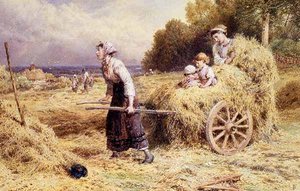 Haytime
Discover 'Haytime' by Myles Birket Foster – a quintessential Victorian watercolor capturing idyllic rural England. Admire his sentimental landscapes & timeless beauty.
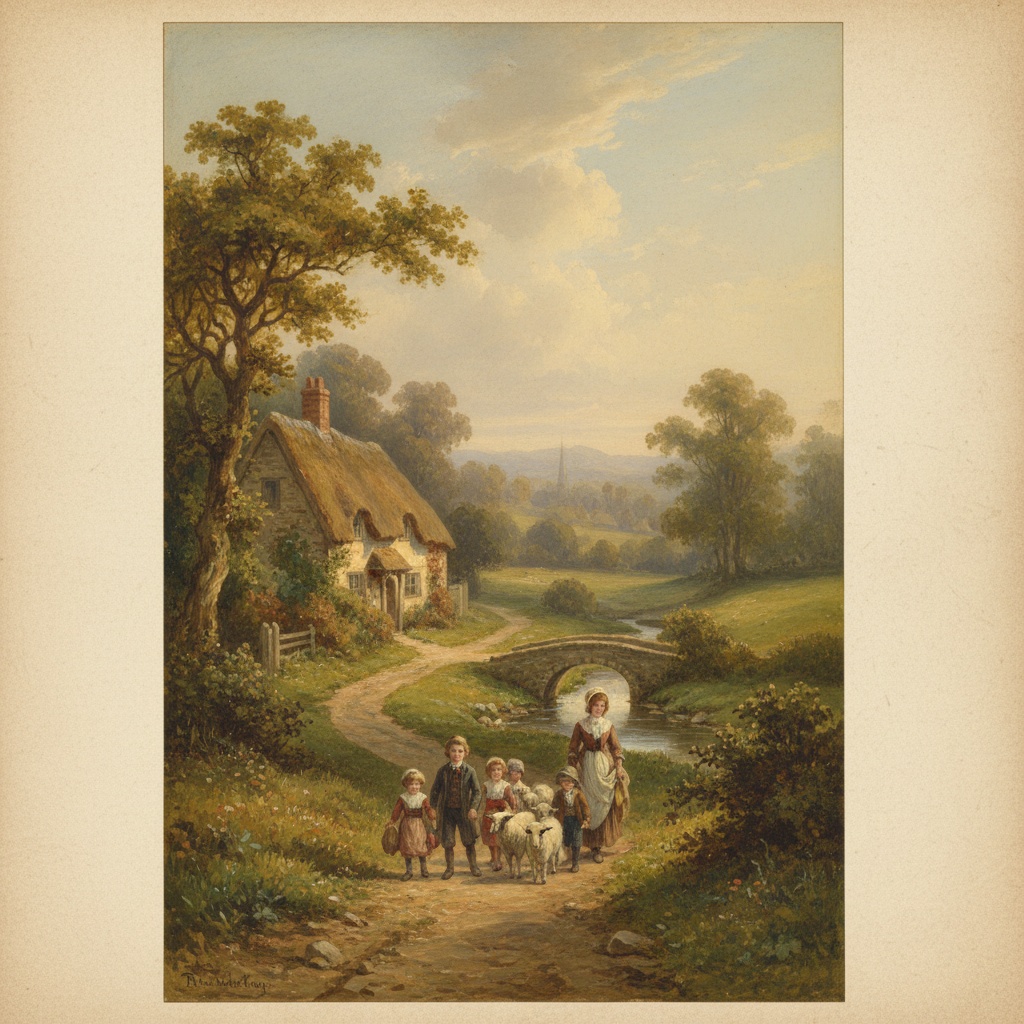
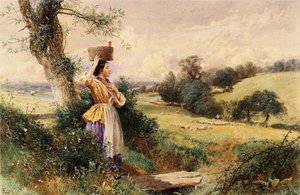
Foster’s visual vocabulary is remarkably consistent, revolving around a core set of motifs that evoke a sense of tranquility and domestic bliss. He frequently depicted families engaged in leisurely pursuits – picnicking by riversides, gathering wildflowers, or simply enjoying each other’s company amidst picturesque scenery. Children feature prominently, often portrayed as innocent figures embodying the virtues of playfulness and piety. The English countryside itself is rendered with meticulous detail, yet always softened by a romantic haze. He wasn't interested in topographical accuracy so much as in creating an atmosphere – a sense of warmth, light, and abundance. Recurring elements like stepping stones crossing streams, thatched-roof cottages nestled amongst trees, and grazing livestock contribute to this overall impression of pastoral harmony. Haytime, for example, perfectly encapsulates this aesthetic; the golden fields, the bustling activity, and the idyllic setting all combine to create a scene that feels both timeless and deeply comforting. His compositions often employ a gentle recession into depth, drawing the viewer’s eye towards distant horizons and suggesting a sense of limitless space and possibility.
Narrative Detail & Social Commentary: Beyond the Picturesque
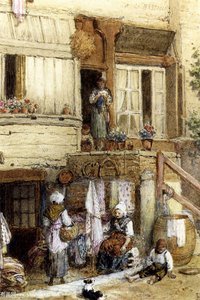 A La Bastille
Admire 'A La Bastille' by Myles Birket Foster – a quintessential Victorian pastoral painting. Explore idyllic English landscapes & Foster’s sentimental art style.
While Foster's paintings are often celebrated for their picturesque beauty, closer examination reveals a subtle layer of narrative detail that hints at broader social concerns. He wasn’t merely documenting idyllic scenes; he was also subtly observing and commenting on the changing fabric of rural life. A La Bastille, though seemingly straightforward in its depiction of a village fête, offers glimpses into the lives of working-class families and the traditions that bound them together. The inclusion of specific details – clothing styles, tools, architectural features – provides valuable insights into the everyday realities of Victorian England. Furthermore, Foster’s work often subtly acknowledges the hardships faced by agricultural laborers, portraying scenes of toil alongside moments of leisure. This nuanced approach distinguishes him from artists who simply romanticized rural life without acknowledging its complexities. He wasn't a radical social critic, but his paintings offer a more grounded and realistic portrayal of Victorian society than is often acknowledged.
Foster’s Technique and Influence: Watercolor Mastery and Legacy
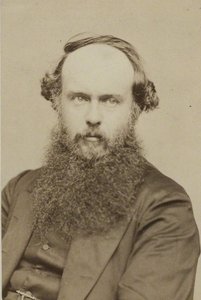 Myles Birket Foster
Discover Myles Birket Foster, Victorian watercolorist famed for idyllic English landscapes & charming scenes. Explore his work & legacy of sentimental rural art.
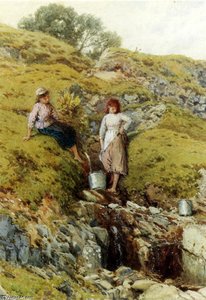
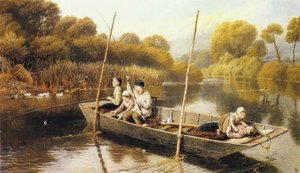
Myles Birket Foster was a master watercolorist, renowned for his delicate brushwork, luminous colors, and ability to capture the subtle nuances of light and atmosphere. He initially honed his skills as a wood engraver, which instilled in him a meticulous attention to detail and a deep understanding of line and form. This training translated seamlessly into his watercolor paintings, allowing him to create works that are both technically accomplished and emotionally resonant. He favored a layered approach, building up color gradually to achieve a sense of depth and luminosity. His use of glazing techniques – applying thin washes of transparent color over previous layers – created a remarkable sense of atmosphere and texture. Stepping Stones, exemplifies his watercolor technique; the delicate rendering of the water, the subtle gradations of light, and the overall sense of tranquility are hallmarks of his style. Foster’s influence extended far beyond his own lifetime, inspiring generations of artists to embrace a more sentimental and narrative approach to landscape painting. His work also played a significant role in shaping popular perceptions of rural England, contributing to a romanticized vision that continues to resonate today.
‘Haytime’, ‘A La Bastille’, and ‘Stepping Stones’: Case Studies in Pastoral Representation
Examining these three representative works – Haytime, A La Bastille, and Stepping Stones – reveals the full breadth of Foster’s artistic vision. ‘Haytime’ is perhaps his most iconic image, a celebration of rural labor and community spirit rendered with exquisite detail and warmth. ‘A La Bastille’, while seemingly lighter in tone, offers a more nuanced glimpse into Victorian social life, capturing the energy and vitality of a village fête. And ‘Stepping Stones’ embodies Foster's mastery of watercolor technique, creating a scene that is both idyllic and deeply evocative. These paintings are not simply beautiful images; they are carefully constructed narratives that reflect the values, anxieties, and aspirations of Victorian England. They offer a window into a bygone era, inviting us to contemplate the relationship between humanity and nature, the importance of community, and the enduring power of nostalgia. At ArtsDot.com you can explore these masterpieces and many more, bringing the beauty and tranquility of Myles Birket Foster’s world into your own home.