Early Life & Artistic Foundations: From Yorkshire Roots to Royal Academy Training
 Wikipedia: William Powell Frith
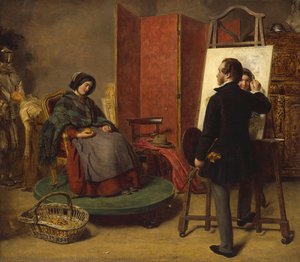
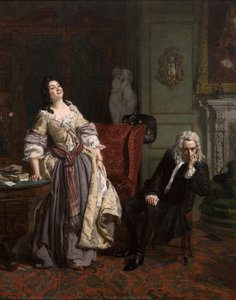
William Powell Frith (9 January 1819 – 2 November 1909) was an English painter specialising in genre subjects and panoramic narrative works of life in the Victorian era. He was elected to the Royal Academy in 1853, presenting The Sleeping Model as h...
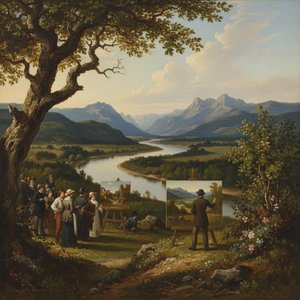
William Powell Frith, a name synonymous with the meticulous depiction of Victorian life, began his artistic journey far from the bustling streets and social dramas he would later immortalize on canvas. Born in 1819 in the quaint village of Aldfield, near Ripon in Yorkshire, young William initially harbored ambitions not for painting but for auctioneering – a pragmatic pursuit reflecting the realities of the time. However, encouraged by his father, a hotelier with an eye for aesthetics, Frith’s innate artistic talent blossomed. This early nurturing proved pivotal, leading him to London in 1835 and formal studies at Sass's Academy, followed by rigorous training at the prestigious Royal Academy Schools. These formative years laid the groundwork for his distinctive style – a blend of precise observation, narrative complexity, and an unwavering commitment to realism that would soon captivate Victorian audiences.
Frith’s early work focused on portraiture, honing his technical skills and establishing a foothold in the competitive London art scene. Yet, it was his fascination with contemporary life – the bustling markets, crowded streets, and intimate domestic scenes – that truly ignited his artistic vision. Influenced by artists like Sir David Wilkie, known for his moralizing genre paintings, Frith began to move beyond conventional portraiture towards a more ambitious form of social commentary.
The Rise of Genre Painting: Capturing Everyday Victorian Life with Unprecedented Detail
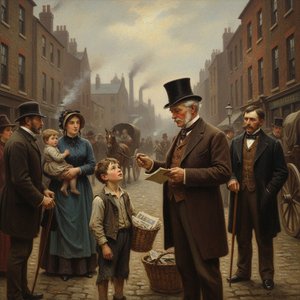
The mid-19th century witnessed a burgeoning interest in genre painting – the depiction of scenes from everyday life. This shift reflected a broader cultural fascination with realism, fueled by advancements in science and a growing desire to represent the world as it truly was. William Powell Frith emerged as a leading figure in this movement, elevating genre painting to unprecedented heights of detail and narrative sophistication. Unlike historical paintings that focused on grand events and celebrated figures, Frith’s canvases captured the nuances of ordinary existence – the social interactions, anxieties, and aspirations of the Victorian middle class.
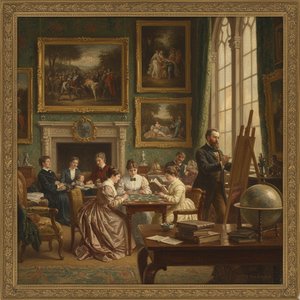
His meticulous approach was revolutionary. He didn't merely paint what he saw; he *studied* it. Frith would spend hours sketching scenes in public spaces, meticulously documenting clothing, architecture, and human behavior. This dedication to accuracy, combined with his exceptional technical skill, resulted in paintings that were remarkably lifelike – windows into a world both familiar and captivating. He sought not just to represent reality but to tell stories *within* that reality, creating complex narratives that resonated deeply with Victorian viewers.
Frith's Masterpieces: 'Derby Day,' 'The Railway Station,' and the Panoramas of Modernity
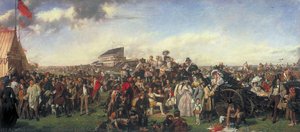
‘Derby Day’ (1856), perhaps his most iconic work, exemplifies Frith’s mastery. The painting is a sprawling panorama of Epsom Downs during the annual Derby race, teeming with figures from all walks of life – elegantly dressed ladies and gentlemen, boisterous gamblers, street vendors, and pickpockets. It wasn't simply a depiction of a horse race; it was a social microcosm, revealing the complexities and contradictions of Victorian society. The sheer scale and detail of ‘Derby Day’ were unprecedented, requiring Jacob Bell to install protective railings around the painting at the Royal Academy to prevent viewers from getting too close.
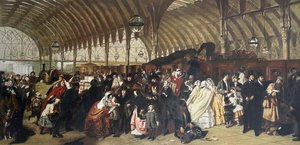
‘The Railway Station’ (1862), another monumental achievement, similarly captured the dynamism of modern life. The scene depicts Paddington Station bustling with travelers – families reuniting, lovers parting, and businessmen rushing to catch their trains. Frith's ability to convey emotion and narrative within such a crowded composition was extraordinary. These paintings weren’t just visually impressive; they were social documents, offering invaluable insights into the changing landscape of Victorian England.
Social Commentary & Moral Narratives: Exploring Class, Wealth, and Vulnerability in Frith’s Works
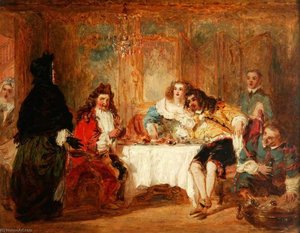
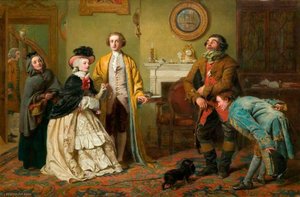 Mr Honeywood Introduces the Bailiffs to Miss Richland as His Friends (also known as rom Oliver Goldsmith's 'The Good Natured Man', Act III, Scene 1)
William Powell Frith’s 'Mr Honeywood...' captures Victorian social drama in rich detail. Explore this opulent scene of wealth & vulnerability – a masterpiece of Neoclassical style.
Beneath the surface of his seemingly idyllic scenes lay a subtle but powerful social commentary. Frith didn't shy away from depicting the darker aspects of Victorian life – poverty, inequality, and moral ambiguity. ‘Mr Honeywood Introduces the Bailiffs to Miss Richland as His Friends’ (1863), based on Oliver Goldsmith’s ‘The Good Natured Man’, is a prime example. The painting portrays a scene of financial ruin and social humiliation, exposing the vulnerability of women in a patriarchal society. His work often highlighted the precariousness of wealth and the consequences of reckless speculation.
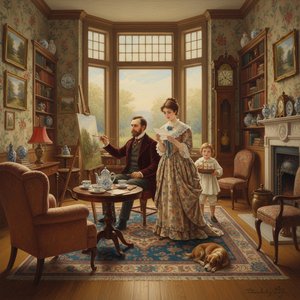
‘Many Happy Returns of the Day’ (1856), while seemingly depicting a heartwarming family dinner, also subtly reveals the social constraints and expectations of Victorian domestic life. Frith's paintings weren’t simply celebrations of prosperity; they were nuanced explorations of the human condition, prompting viewers to reflect on their own values and beliefs.
Technique and Influence: Realism, Dickensian Detail, and a Lasting Legacy
Literary realism is a movement and genre of literature that attempts to represent mundane and ordinary subject-matter in a faithful and straightforward way, avoiding grandiose or exotic subject-matter, exaggerated portrayals, and speculative elements...
Frith’s technique was characterized by meticulous detail, precise brushwork, and a masterful use of light and shadow. He drew inspiration from the literary output of Charles Dickens, whose novels vividly portrayed the social realities of Victorian England. Like Dickens, Frith populated his canvases with memorable characters and compelling narratives. His paintings often featured complex compositions with numerous figures, requiring exceptional skill to maintain clarity and coherence.
His influence on popular illustration was significant, as his works were widely reproduced in engravings and prints, bringing his vision of Victorian life to a broader audience. Frith’s commitment to realism paved the way for future generations of artists who sought to depict the world with honesty and authenticity. While he faced criticism later in his career for his perceived conservatism and aversion to modern art movements, his impact on Victorian painting remains undeniable.
Frith's Enduring Appeal: Rediscovering the Painter of Victorian Society
Though perhaps overlooked in recent decades, William Powell Frith is experiencing a renewed appreciation. His paintings offer a fascinating glimpse into a bygone era – a world of social conventions, moral anxieties, and rapid change. His ability to capture the nuances of everyday life with such detail and sensitivity continues to resonate with audiences today.
Whether you are an art collector seeking investment pieces or simply someone fascinated by Victorian history, Frith’s works offer a unique and compelling perspective on a pivotal period in British culture. ArtsDot.com provides high-quality reproductions of his masterpieces, allowing you to bring the vibrant world of William Powell Frith into your own home. Explore our collection today and discover the painter who truly captured the spirit of Victorian society.