 Preview
 Send
Send Share
Share
 Details

 Download
 Similars
 X-Ray
X-Ray Diaporama
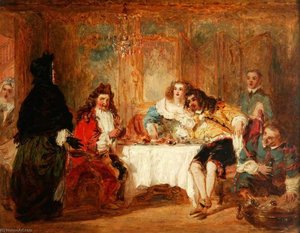
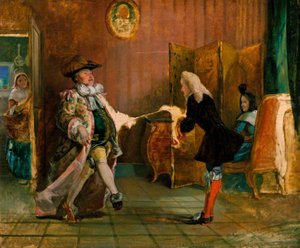
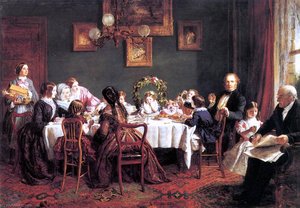
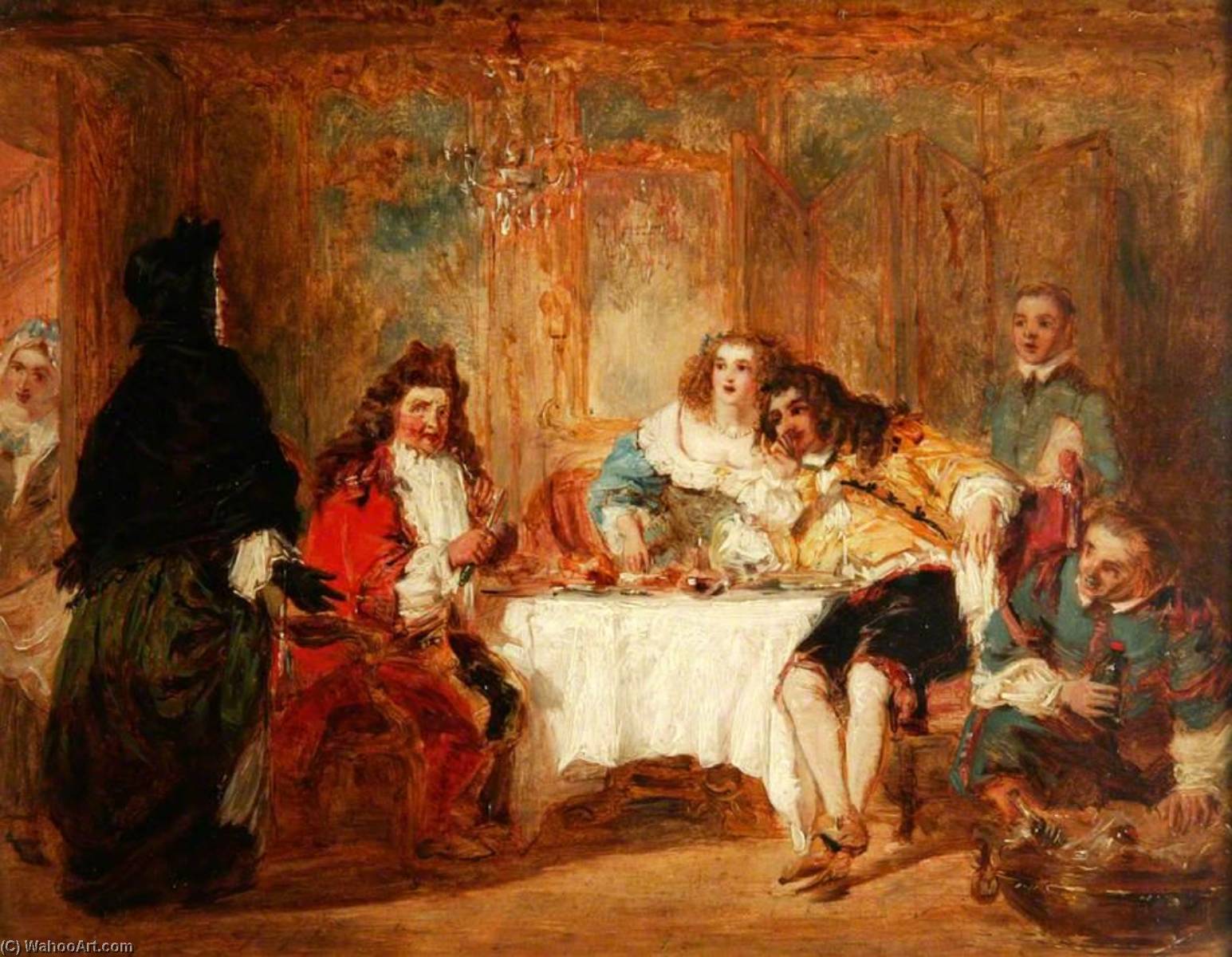
Mme Jourdain Discovers Her Husband at the Dinner Which He Gave to the Marquise and Count Dorante


 Read More
Hand Made Oil Reproduction
Hand-painted oil on canvas in your size and frame, made to order by our artists. ( Buy Print Buy Image)




P118B $10

P118H $10

P118W $10

P438Z $10

P508JH $12

P508YH $12

P805H $10

P805Z $10

P919BZ $10

P919G $10

P919XJ $10

P959ZH $10

P968JZ $12

W106C $8

W218G $10

W218JH $8

W218Y $10

W307PJ $10

W316G $10

W316PJ $8

W316Y $10

W398PJ $8

W4111J $10

W500HY $15

W500JH $15

W692G $12

W849H $8

W940BG $15

W953PJ $8




Pick from our preset sizes that match the artwork's original proportions.

You may enter your own dimensions to fit a specific frame or space. If your selected size does not match the original image's proportions, we will either crop the artwork or extend the painting with additional hand-painted elements. A digital mockup will be sent for your approval before production begins.
Please note that the on-screen preview does not reflect the actual cropping or extension. Only the mockup will accurately show the final composition.
While custom sizes are available, we recommend selecting a dimension from the predefined list to preserve the original proportions.
After order, ArtsDot.com team will email client for instructions and provide a mockup preview
Worldwide Delivery () in 3/4 weeks instead of standard 5 weeks. (17 August). No compromise on quality.

Free Worldwide Express Shipping

High-Quality Linen Canvas

Full Shipping Insurance

Customs Tax Refund Guarantee

True Color Matching Guarantee

60-Day Return Policy (Defects Only)

100% Money-Back Guarantee

Bulk Discount Offer
 Glass option is only available in size under 110 CM

Mme Jourdain Discovers Her Husband at the Dinner Which He Gave to the Marquise and Count Dorante
Reproduction Medium
Reproduction Size
-


Total Price
$ 263
Artwork Description
A Window into Victorian Society: Mme Jourdain’s Unexpected Encounter
William Powell Frith's "Mme Jourdain Discovers Her Husband at the Dinner Which He Gave to the Marquise and Count Dorante," painted in 1862, is far more than a charming domestic scene. It’s a meticulously observed snapshot of Victorian London society, brimming with social commentary and subtle theatricality. The painting captures a pivotal moment – a clandestine meeting between Madame Jourdain, a woman renowned for her extravagant claims of artistic talent (a satirical device employed by Molière in the play upon which it's based), and her husband, revealed to be engaged in an illicit affair. Frith masterfully utilizes light and shadow, color, and carefully posed figures to create a scene that is both visually arresting and deeply layered with meaning.
The composition itself is remarkably complex, almost cinematic in its arrangement. The setting – a lavishly decorated dining room – immediately establishes an atmosphere of opulence and social standing. Frith’s skill lies not just in depicting the physical space but also in conveying the unspoken tensions simmering beneath the surface. Notice how he employs a dramatic diagonal line created by the table, drawing the eye through the scene and emphasizing the central drama unfolding between Madame Jourdain and her husband. The figures are arranged with deliberate precision; each gesture, expression, and posture contributes to the narrative’s intricate web of deceit and hidden desires.
The Painter's Technique: A Masterclass in Detail
Frith was a meticulous artist, renowned for his painstaking attention to detail and his ability to capture the nuances of human emotion. "Mme Jourdain" exemplifies this approach. The painting is executed with remarkable precision, from the intricate patterns on the wallpaper to the folds of the fabrics adorning the guests. Frith’s use of color is particularly noteworthy – a rich palette of reds, golds, and browns creates a sense of warmth and luxury, while subtle shifts in tone subtly reveal character and mood. He employed a technique known as ‘plein air’ painting, working directly from life to capture the light and atmosphere with unparalleled accuracy.
The artist's background as an auctioneer is evident in his ability to create dynamic compositions filled with numerous figures. He skillfully uses perspective and spatial relationships to draw the viewer into the scene, creating a sense of immediacy and involvement. Frith’s detailed rendering of textures – the sheen of silverware, the velvet upholstery, the delicate lace on Madame Jourdain's gown – adds another layer of realism and sophistication to the work.
A Reflection of Victorian Values and Social Critique
"Mme Jourdain" is deeply rooted in the social conventions and anxieties of Victorian England. The painting satirizes the pretensions of the upper classes, particularly the obsession with appearances and the prevalence of deceitful behavior behind polite facades. The play upon which it’s based, Molière's "Le Bourgeois Gentilhomme," served as a vehicle for exposing hypocrisy and challenging social norms – Frith brilliantly translates this satirical spirit into his painting.
Furthermore, the scene subtly critiques the rigid social hierarchy of the era. Madame Jourdain’s inflated claims of artistic talent are juxtaposed with the genuine artistry evident in the details of the room and the figures' attire. The painting suggests that true value lies not in outward displays of wealth or self-promotion but in authentic human connection – a concept largely absent from the characters’ interactions.
Symbolism and Emotional Resonance
Beyond its social commentary, "Mme Jourdain" is rich in symbolism. The lighting, for instance, plays a crucial role in shaping the mood of the scene. The warm glow emanating from the fireplace contrasts sharply with the shadows that conceal the husband’s illicit rendezvous. Madame Jourdain's posture – alert and inquisitive – conveys her growing suspicion and determination to uncover the truth.
The painting evokes a sense of intrigue, suspense, and ultimately, melancholy. It captures a fleeting moment of betrayal and deception, reminding us of the fragility of trust and the hidden complexities that lie beneath the surface of social interactions. It’s a powerful testament to Frith's ability to transform a simple narrative into a profound exploration of human nature – a timeless masterpiece that continues to resonate with viewers today.
Related Artworks
Artist Biography
Early Life and Training
- Born: January 9, 1819, Aldfield, near Ripon, North Yorkshire, England
- Died: November 2, 1909, London
- William Powell Frith’s father was a hotelier in Harrogate.
- He initially intended to be an auctioneer but his father recognized his artistic talent.
- Frith studied at Sass's Academy in Charlotte Street, London and later attended the Royal Academy Schools.
- Early career focused on portrait painting and literary subjects (Shakespeare, Scott).
Career Highlights and Artistic Style
- Membership: Member of The Clique, a group of artists including Richard Dadd, Augustus Egg, Henry O’Neil, John Phillip, Edward Ward, and Thomas Creswick.
- Influences: Heavily influenced by Sir David Wilkie's domestic subjects.
- Genre Painting & Panoramic Narrative: Frith became renowned for his detailed genre scenes and panoramic narrative works depicting Victorian life in public places.
- Notable Works:
- Ramsgate Sands (1854): Depicts a lively scene at the seaside resort of Ramsgate.
- The Derby Day (1858): Captures the atmosphere and social interactions at Epsom Downs Racecourse. This painting was incredibly popular, requiring railings to manage crowds viewing it.
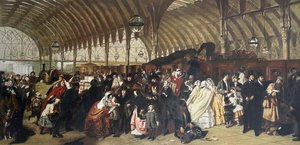
- The Railway Station (1862): A detailed depiction of Paddington Station.
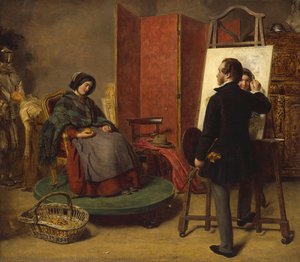
- The Sleeping Model (1853): Presented as his Diploma work at the Royal Academy.
- The Crossing Sweeper (1858): Explores the contrast between wealth and poverty in London.
- Photographic Influence: Frith utilized photographic studies by Robert Howlett to achieve remarkable detail and accuracy in his paintings, particularly in works like The Derby Day.
- Style: Characterized by meticulous observation, a large number of figures, and a focus on capturing the details of everyday life. He was known for his realism and attention to social commentary within his scenes.
Development and Later Years
- Autobiographies: Frith wrote two autobiographies, My Autobiography (1887) and Further Reminiscences (1888), providing insights into Victorian art and society.
- Artistic Views: He was a traditionalist and expressed his aversion to modern art developments.
- Royal Academician: Elected as a Royal Academician in 1853.
- Longevity: Frith lived a remarkably long life, witnessing significant changes in the art world during the Victorian era. He outlived many of his contemporaries from The Clique.
Historical Significance and Legacy
- Social Commentary: His paintings provided valuable documentation of Victorian society, capturing its social dynamics, fashion, and leisure activities.
- Popularity & Commercial Success: Frith was one of the most commercially successful artists of his time, with his works widely admired and sought after.
- Influence on Genre Painting: He significantly contributed to the development of genre painting in Britain, elevating it to a respected art form.
- Detailed Realism: His meticulous attention to detail set a standard for realism in Victorian art.
- Legacy: Frith’s paintings continue to be exhibited and studied, offering a unique window into 19th-century life and solidifying his place as a significant figure in British art history.
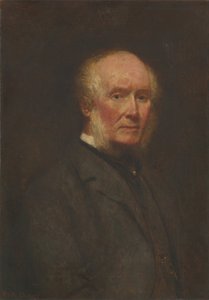
William Powell Frith
1819 - 1909 , United Kingdom
Quick Facts
- Artistic Movement Or Style: Genre painting, panoramic narrative
- Artists Who Influenced This Artist: ['Sir David Wilkie']
- Date Of Birth: January 19, 1819
- Date Of Death: November 9, 1909
- Full Name: William Powell Frith
- Nationality: English
- Notable Artworks:
- Ramsgate Sands (Life at the Seaside)
- The Derby Day
- The Railway Station
- The Sleeping Model
- The Crossing Sweeper
- Place Of Birth: Aldfield, United Kingdom
Related Articles
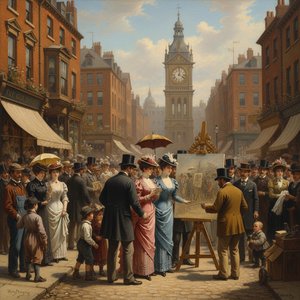
William Powell Frith: Narratives of Victorian Society & the Rise of Realist Painting
Explore the life & works of William Powell Frith, the 'greatest British painter of social scenes.' Discover his iconic Victorian genre paintings and learn about his lasting impact on realist art. Hand-painted reproductions available.
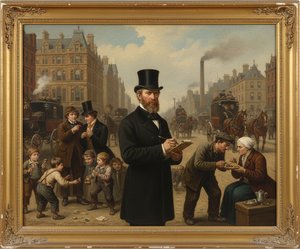
R.A. Benjamin Williams: Victorian Genre Painting & Social Commentary
Explore the captivating world of Benjamin Williams Leader's Victorian genre paintings. Discover his mastery of naturalism, social commentary & lasting influence on British art. Expert insights at ArtsDot.

William Salter: A Life Immersed in Colour – Victorian Botanical Art & Social Vision
Explore the life & art of William Salter (1804-1875), a Victorian master renowned for his botanical illustrations and striking portraits. Discover his social vision & legacy at ArtsDot.
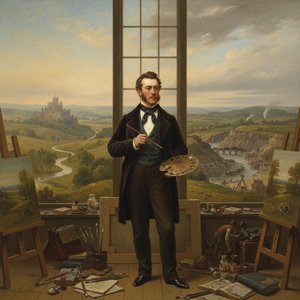
William James Müller: Navigating Victorian Sentiment & Realism in British Landscape Painting
Explore the captivating landscapes of William James Müller, the leading artist of the Bristol School. Discover his Victorian masterpieces, Egyptian travels & Lycian sketches – a journey through 19th-century art and technique.
Henry William Pickersgill: Narrative, Reform & the Victorian Domestic Interior
Explore the life & work of Henry William Pickersgill, a leading Victorian portrait artist. Discover his narrative style, realistic depictions of society, and lasting influence on British art history. Fine art reproductions available at ArtsDot.