Early Life & Artistic Training: Foundations of a Victorian Painter
William Salter may refer to: William Sawtrey (died 1401), also known as William Salter William Salter (MP) (died 1404), English politician William Salter II (1732–1802), American politician from North Carolina William Salter (artist) (1804–1875), En...
William Salter, born in 1804, emerged from a Britain undergoing profound transformation—a nation grappling with industrial expansion and shifting social structures. While biographical details remain somewhat elusive, it is clear that his artistic journey began within the established traditions of English painting. Unlike artists who benefited from formal academy training, Salter’s path appears to have been one of self-directed study and diligent observation. This independent spirit would become a defining characteristic of his work, allowing him to cultivate a unique style blending meticulous realism with a subtle yet poignant social awareness. The early 19th century art world was dominated by portraiture and landscape painting, but Salter quickly found his niche in the delicate precision of botanical illustration, a field demanding both scientific accuracy and artistic flair. His initial forays into this genre likely stemmed from a fascination with the natural world—a common pursuit among Victorian artists seeking solace and inspiration amidst urban growth.
Botanical Precision: Salter’s Masterful Floral Studies
... illustration ranges from the purely botanical to the purely artistic, from a drawing of a magnified root-section to awater-colour of a vase of roses ...
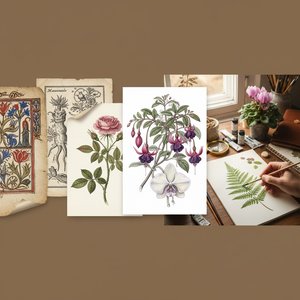
Salter's reputation rests primarily on his exquisite botanical paintings. These are not merely scientific renderings; they transcend documentation to become celebrations of natural beauty. He possessed an extraordinary ability to capture the ephemeral qualities of flowers—the velvety texture of petals, the intricate patterns of veins, and the subtle gradations of color. His technique involved painstaking attention to detail, layering delicate washes of oil paint to achieve a luminosity that rivals nature itself. The Art Of Botanical Illustration, as it was practiced in Salter’s time, required not only artistic skill but also a deep understanding of plant anatomy and morphology. He wasn't simply copying what he saw; he was interpreting and refining it through the lens of his own aesthetic sensibility. His compositions often feature single blooms or small arrangements, presented against neutral backgrounds that emphasize their form and color. This focus on individual specimens allows the viewer to appreciate the unique characteristics of each flower—its delicate structure, its subtle fragrance (imagined, perhaps), and its fleeting existence.
Portraits of Distinction: Capturing the Military Elite
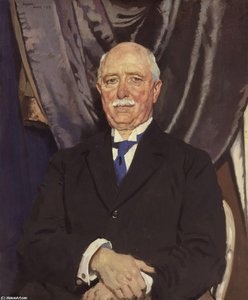
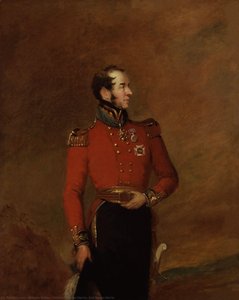 William George Harris, 2nd Baron Harris
Explore William Salter’s 1836 portrait of Baron Harris! A meticulously rendered oil painting showcasing military status & quiet contemplation. Discover Victorian art history.
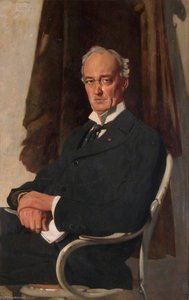
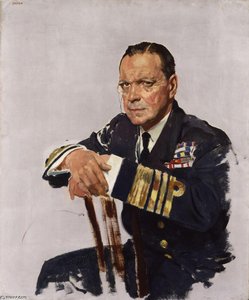
While celebrated for his botanical work, Salter also enjoyed success as a portrait painter, particularly among the upper echelons of British society. His portraits, often commissioned by military officers and landowners, reveal a keen understanding of character and social status. Works such as his 1836 portrait of William George Harris, 2nd Baron Harris, exemplify this skill. The painting depicts Harris in a pose that conveys both authority and quiet contemplation. Salter’s attention to detail is evident in the meticulous rendering of Harris' uniform—the gold braid, the polished buttons, and the subtle textures of his coat. Similarly, his 1840 portrait of Sir Colin Campbell, showcases a striking realism and masterful use of chiaroscuro, highlighting the subject’s military bearing and distinguished features. These portraits weren't simply likenesses; they were statements of power, prestige, and social standing—carefully constructed images designed to project an aura of authority and respectability. The rich crimson hues often employed in these works further enhance their sense of grandeur and importance.
Social Commentary and Realism in Salter's Work
Social realism is work produced by painters, printmakers, photographers, writers, filmmakers and some musicians that aims to draw attention to the real socio-political conditions of the working class as a means to critique the power structures behind...
Though primarily known for his refined portraits and botanical studies, a closer examination reveals subtle undertones of social commentary within Salter’s oeuvre. The Victorian era was marked by significant class disparities and widespread poverty. While Salter did not explicitly address these issues in the manner of overt social realists, his work often reflects an awareness of the changing social landscape. His portraits, for example, while celebrating the achievements of the elite, also subtly acknowledge their position within a broader societal context. The realism he employed—the meticulous attention to detail and accurate depiction of physical features—can be seen as a rejection of idealized representations that glossed over the complexities of human experience. The movement of Social Realism, though flourishing later in the century, shared Salter’s commitment to portraying the world as it was, rather than as it ought to be. His ability to capture the nuances of character and social status suggests a keen observer of human nature—someone attuned to the subtle power dynamics at play within Victorian society.
Salter's Legacy: Influence & Rediscovery
William Salter’s work, though highly regarded during his lifetime, experienced a period of relative obscurity in the 20th century. However, recent scholarship has begun to re-evaluate his contributions to Victorian art. His botanical paintings are now recognized for their scientific accuracy and artistic beauty, while his portraits offer valuable insights into the social and cultural values of the era. His influence can be seen in the work of later artists who embraced realism and sought to capture the complexities of human experience. Today, Salter’s paintings are increasingly sought after by collectors and museums—a testament to their enduring appeal and artistic merit. ArtsDot is proud to offer high-quality reproductions of his most celebrated works, allowing art enthusiasts to appreciate the beauty and subtlety of this Victorian master. Through our meticulous reproduction process, we strive to capture the essence of Salter’s original paintings—the delicate brushstrokes, the vibrant colors, and the enduring sense of grace and elegance that defines his legacy.