The Golden Age of Flora: Where Scientific Precision Meets Aesthetic Splendor
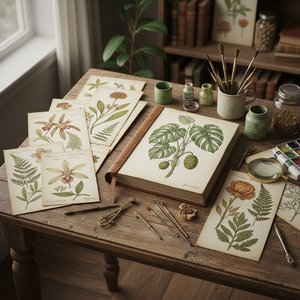
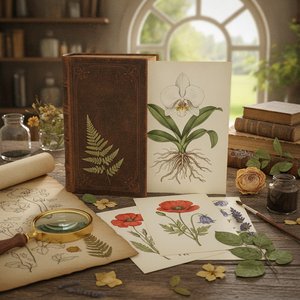
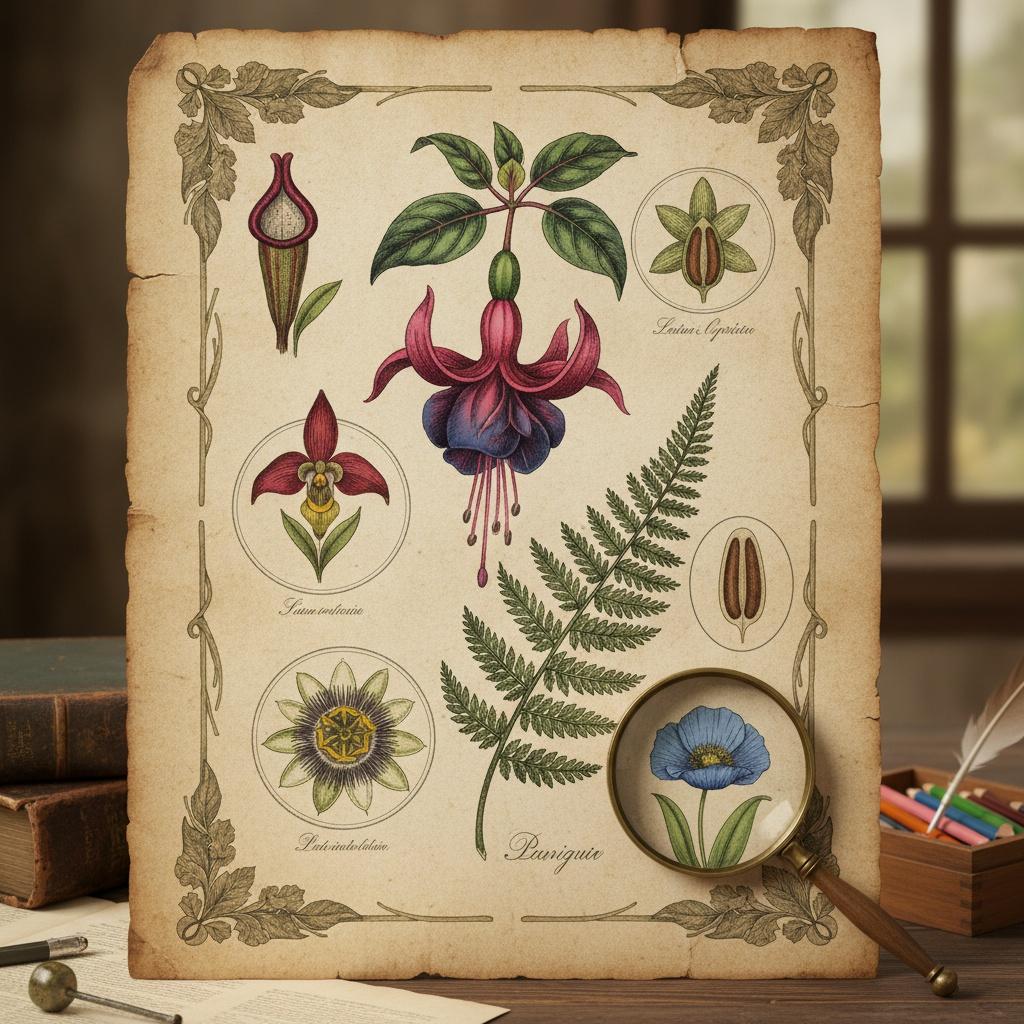
To step into the world of Victorian botanical art is to enter a realm where the rigorous demands of science and the ethereal beauty of fine art exist in perfect, breathless harmony. During the nineteenth century, the natural world was not merely observed; it was meticulously documented with an almost devotional intensity. This era, characterized by a profound thirst for discovery, saw the rise of a unique genre of illustration that served as both a botanical record and a triumph of aesthetic sensibility. Every vein in a leaf, every delicate stamen of a lily, and every subtle gradient of a petal was rendered with a level of precision that sought to capture the very essence of life itself.
This period was defined by an obsession with detail, driven by the burgeoning field of natural sciences. As explorers traversed uncharted territories, bringing back exotic specimens from distant continents, artists were tasked with translating these living wonders onto paper and canvas. The result was a collection of works that possessed a dual identity: they were epistemological tools used to categorize the flora of the empire, yet they were simultaneously masterpieces of composition and color. There is a profound elegance in this duality, a sense that the artist’s brush was guided by both the magnifying glass and the poetic soul, creating a visual language that remains as captivating today as it was during the height of the Victorian era.
Masters of the Petal: Exploring the Illustrative Legacies of North and Scott
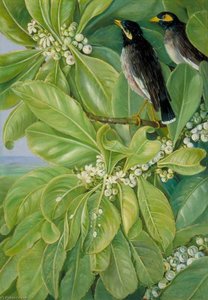
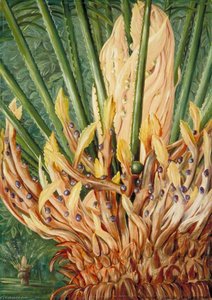
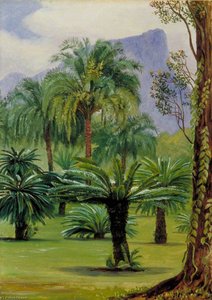
The history of botanical art is written in the delicate strokes of its most accomplished practitioners, whose names continue to resonate within the halls of art history. Among the most luminous figures was Marianne North, an artist whose adventurous spirit led her across the globe to document tropical landscapes with unparalleled vibrancy. Her works, such as the breathtaking depictions of palms in the Buitenzorg Botanic Garden in Java, transcend mere documentation; they are immersive experiences that transport the viewer to a lush, sun-drenched world. North’s ability to capture the dramatic interplay of light and shadow within complex botanical structures showcases a mastery of color that remains a benchmark for excellence.
In contrast to the sweeping landscapes of North, other artists focused on the intimate, microscopic wonders of the insect and plant kingdoms. Helena Nellie Scott, for instance, demonstrated an extraordinary command over detail in her study of the Black Jezebel Butterfly. In such works, the boundary between scientific illustration and fine art dissolves entirely. Similarly, the delicate watercolors of Sarah Ann Featon, capturing the Puawananga, offer a rare and tender glimpse into colonial botanical history through their scientific precision and soft, luminous beauty. These artists did not merely paint plants; they captured the very breath of nature, leaving behind a legacy of meticulous craftsmanship that continues to inspire collectors of classical art.
The Victorian Botanical Movement: A Confluence of Exploration and Artistry
The movement was fueled by a unique historical momentum—a convergence of imperial expansion, scientific advancement, and a burgeoning middle-class appreciation for the natural sciences. As botanical gardens became centers of global importance, the demand for high-quality illustrations grew exponentially. This era saw the rise of artists like Frederick E. Cohen, whose detailed studies bridged the gap between scientific inquiry and evocative fine art. The movement was not localized to a single nation but was a global phenomenon, reflecting the interconnectedness of the nineteenth-century world through the shared language of flora.
This era also birthed a specific aesthetic sensibility: the pursuit of the "perfect specimen." There was an inherent drama in capturing a Giant Kniphofia amidst a rocky landscape or documenting the intricate architecture of a Squaw Cabbage. This pursuit required not only artistic talent but immense physical and mental fortitude, as artists often worked under challenging conditions to ensure their observations were accurate. The movement thus became a testament to human perseverance and the enduring desire to understand the complexities of the natural world through the lens of beauty.
Curating Nature: Integrating Botanical Masterpieces into Luxury Interiors
For the discerning collector and interior designer, Victorian botanical art offers an unparalleled opportunity to infuse a space with timeless sophistication. These works possess a unique ability to ground a room, providing a sense of organic permanence and historical depth. When integrating such pieces into a modern luxury setting, one must consider the dialogue between the artwork and the architectural environment. A large-scale reproduction of a tropical landscape can serve as a dramatic focal point in a grand salon, while smaller, more intimate botanical watercolors are exquisite for creating curated vignettes in libraries or private studies.
The versatility of this genre allows for diverse stylistic approaches. One might choose to display a series of multi-panel botanical prints to create a rhythmic, contemporary flow along a wide hallway, or perhaps opt for a single, heavily textured oil reproduction that brings the tactile richness of the nineteenth century into a minimalist space. The key lies in honoring the inherent detail of the work; by utilizing proper lighting and high-quality framing—such as gold leaf or deep espresso wood—the collector ensures that the intricate brushwork and vibrant pigments are celebrated, transforming a mere room into a curated gallery of natural splendor.
Preserving the Bloom: The Enduring Value of Botanical Art in Modern Collections
In an age dominated by the ephemeral nature of digital imagery, the enduring value of botanical art lies in its physical presence and historical authenticity. A hand-painted oil reproduction is more than a decoration; it is a tangible connection to a period of profound human curiosity. The depth of tone achieved through traditional oil painting techniques—where visible brushstrokes and layered glazes create a luminosity that prints simply cannot replicate—ensures that these works remain vital and engaging for generations. Collectors are increasingly drawn to the "soul" of the piece, seeking out the subtle variations and textures that define true fine art.
As we look toward the future of art collecting, the preservation of these classical traditions remains paramount. Whether through the acquisition of museum-quality reproductions or the commissioning of bespoke works that reimagine historical styles, the passion for botanical beauty continues to flourish. By investing in works that honor the meticulous detail and scientific grace of the Victorian era, we do more than decorate our homes; we participate in a continuous lineage of appreciation for the natural world, ensuring that the elegance of the past remains a vibrant part of our modern aesthetic landscape.
ArtsDot.com stands at the forefront of this enduring passion, offering a global gateway to the Old Masters and their exquisite botanical legacies. From hand-painted oil reproductions on 100% cotton canvas to bespoke commissions that transform personal memories into historical masterpieces, we provide the discerning collector with unparalleled access to fine art. Our commitment to craftsmanship, backed by a 100% satisfaction guarantee, ensures that every piece—whether a vibrant Marianne North reproduction or a custom-designed mural—is a testament to the timeless beauty of art history.