The Rise of the Golden Age: Technological Innovation and the Printing Revolution
To understand the breathtaking complexity of Victorian illustration, one must first look toward the industrial heartbeat of the nineteenth century. This was an era defined by a profound tension between the rapid acceleration of machinery and a deep, nostalgic yearning for the organic beauty of nature. The advent of advanced printing technologies—specifically improvements in wood engraving and the development of color lithography—acted as the catalyst for what historians now call the Golden Age of Illustration. Before this period, high-quality visual art was largely the province of the elite, confined to expensive oil paintings and rare manuscripts. However, the refinement of the printing press democratized the image, allowing intricate, detailed works to flow from studios into the hands of the burgeoning middle class through periodicals and beautifully bound books.
This technological leap did more than just increase volume; it fundamentally altered the artist's approach to the page. The ability to reproduce fine lines with precision meant that illustrators could experiment with much more delicate textures, shadows, and cross-hatching. As news and literature traveled faster through publications like The Illustrated London News, the visual language of the era became a shared cultural experience. This period saw the birth of pictorial journalism, where the line between news and art began to blur, capturing significant historical events with an aesthetic gravity that transformed mere reportage into lasting visual history. The printing revolution ensured that every stroke of a pen or dip of a quill could be immortalized and distributed across the British Empire and beyond.
Masters of the Line: The Intricate Artistry of Rackham, Dulac, and Reed
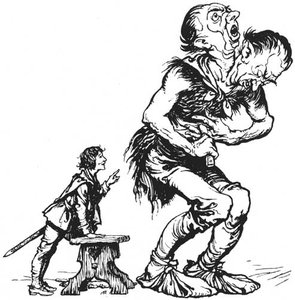
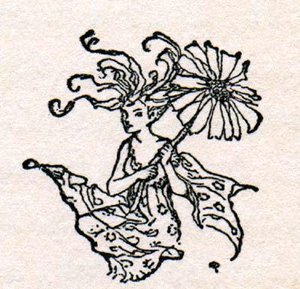
Within this era of unprecedented access, certain names emerged as titans of the medium, each wielding the pen with a unique, inimitable spirit. Arthur Rackham stands perhaps as the most iconic figure of this movement, a master of the ethereal and the grotesque. His work, characterized by its delicate pen-and-ink details and a muted, earthy palette, often breathed life into the supernatural. In pieces such as Fairy with Parasol, one observes his ability to blend the organic textures of nature with a sense of otherworldly grace, utilizing fine linework to create a world that feels both tangible and dreamlike. His influence remains a cornerstone for anyone studying the intersection of fantasy and fine art.
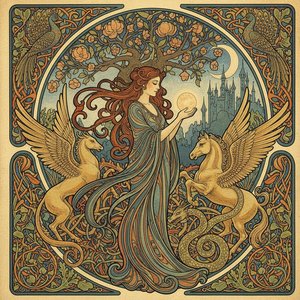
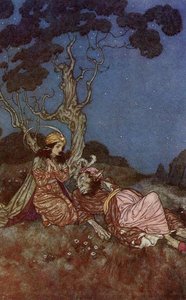
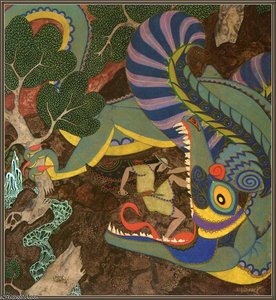
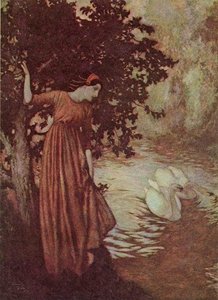
In contrast to Rackham’s more somber, woodland aesthetics, Edmund Dulac brought a luminous, almost jewel-like quality to the Golden Age. A master of symbolism and myth, Dulac’s illustrations often felt like windows into ancient legends. His work frequently embraced the flowing, organic curves of the Art Nouveau movement, utilizing color in a way that suggested deep emotional resonance and mystical significance. Similarly, across the Atlantic, Ethel Reed provided a vital link to the early American design movements. Her 1895 illustrations for stories such as Arabella & Araminta showcased an Art Nouveau poster style that was both bold and sophisticated, proving that the aesthetic language of the Golden Age was a truly global phenomenon, bridging the gap between classical European tradition and modern graphic design.
Narrative Depth: From Dickensian Realism to Art Nouveau Fantasy
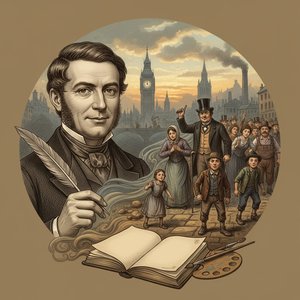
The true soul of Victorian illustration lies in its capacity for storytelling, a feat achieved through a masterful command of both realism and romanticism. The era was capable of pivoting seamlessly between the gritty, social commentary found in the works of Charles Dickens and the whimsical, escapist realms of fairy tales. Consider the vibrant, festive energy captured by John Leech in his illustrations for A Christmas Carol. In works like Mr Fezziwig’s Ball, Leech utilizes dynamic composition and intricate linework to convey a sense of communal joy and historical charm, grounding the narrative in a recognizable, albeit idealized, Victorian reality.
Yet, the same era that mastered the depiction of social truth also excelled in the creation of pure fantasy. This duality allowed illustrators to explore the human psyche through various lenses—sometimes through the lens of social reform and other times through the exploration of myth and the subconscious. The use of symbolism became a sophisticated tool; an object in a drawing was rarely just an object, but often a metaphor for virtue, decay, or magic. This depth of narrative ensured that these illustrations were not merely decorations for text, but essential components of the storytelling process itself, inviting the reader to linger on every detail to uncover the hidden layers of meaning embedded within the ink.
Pictorial Journalism: The Illustrated London News and the Birth of Visual Storytelling
While much of the Golden Age is celebrated for its fantasy, a significant portion of its legacy is rooted in the rigorous pursuit of reality. The rise of companies like The Illustrated London News Company pioneered a form of pictorial journalism that changed how the world perceived itself. Through detailed engravings, these publications captured the pulse of Victorian life—from the grandeur of royal processions to the stark realities of industrial expansion. This was art serving as a witness, providing a visual record of an era in flux.
This tradition was furthered by rivals such as The Graphic, founded in 1869. Known for its high artistic standards and biting social commentary, The Graphic utilized the power of illustration to influence public opinion and document the arts and literature of the day. The ability to present news through a highly aestheticized lens meant that even the most somber reports carried an artistic weight. This period established the precedent for modern visual media, proving that the image could be both an informative tool and a profound work of art, capable of capturing the fleeting moments of history with a permanence that text alone could never achieve.
The Legacy of Victorian Detail in Modern Art Appreciation
Today, the influence of Victorian illustration continues to resonate within the halls of contemporary design and fine art. The meticulous attention to detail, the mastery of line, and the seamless integration of ornament and narrative serve as a perennial inspiration for artists and collectors alike. We see its echoes in modern graphic design, in the revival of botanical illustrations, and in the enduring popularity of fantasy literature. The era taught us that beauty and complexity are not mutually exclusive, and that the smallest detail can hold the key to an entire world.
For the modern enthusiast, appreciating these works involves more than just a glance; it requires an engagement with the history and the craftsmanship behind every stroke. Whether through the study of museum archives or the acquisition of high-quality reproductions, the Golden Age remains a vital part of our visual heritage. At ArtsDot.com, we are dedicated to preserving this legacy by offering museum-quality, hand-painted reproductions that capture the true essence, texture, and soul of these historical masterpieces, ensuring that the intricate beauty of the Victorian era continues to inspire generations to come.