Early Life & Artistic Foundations: The Bristol School's Rising Star
 Wikipedia: William James Müller
William James Müller (28 June 1812 – 8 September 1845), also spelt Muller, was a British landscape and figure painter, the best-known artist of the Bristol School. == Life == Müller was born at Bristol, the son of J. S. Müller, a Prussian from Dan...
William James Müller, a name synonymous with the vibrant spirit of the Bristol School, emerged as a pivotal figure in 19th-century British landscape painting. Born in Bristol on June 28th, 1812, his artistic journey began not within the hallowed halls of formal academies, but amidst the burgeoning intellectual and cultural life of his hometown. His father, John Samuel Müller, a Prussian émigré with a passion for natural history and curatorial expertise at the Bristol Institution (later Museum & Art Gallery), instilled in young William an early appreciation for observation and meticulous detail – qualities that would define his later work. While initially educated at home, it was under the tutelage of James Baker Pyne that Müller received his formal artistic training. However, this apprenticeship proved somewhat unconventional; accounts suggest a frustration on the part of John Samuel Müller with the perceived lack of substantive instruction, leading to its early termination. Despite this brief formal period, Pyne’s influence – particularly an admiration for earlier masters like Claude Lorrain and Jacob van Ruisdael – laid a crucial foundation for Müller's developing aesthetic.
The Bristol School itself wasn’t a rigidly defined institution but rather an informal circle of artists who shared a common interest in depicting the local scenery of Gloucestershire and Wales. This focus on regional landscapes, coupled with a burgeoning Romantic sensibility, distinguished them from the more classically-oriented traditions prevalent in London's Royal Academy. Müller quickly became its most celebrated exponent, capturing not merely the picturesque beauty of the countryside but also a sense of atmosphere and emotional resonance that set his work apart.
The Raw Energy of 1831: Recording Societal Unrest in Oil and Watercolour
Müller’s early artistic development wasn't solely focused on idyllic scenes. The year 1831 proved to be a watershed moment, not for aesthetic refinement but for direct engagement with the tumultuous realities of Victorian society. Bristol was gripped by riots – a violent eruption of social and political discontent stemming from electoral reform debates. Unlike many artists who might have shied away from such unrest, Müller confronted it head-on. He meticulously documented the scenes in a series of “raw and brilliant oil and watercolour sketches,” capturing the chaos, tension, and human drama unfolding before him. These weren’t idealized representations; they were visceral records of a city on edge, offering a rare glimpse into the undercurrents of Victorian life.
These sketches, though perhaps not his most famous works, reveal a remarkable ability to capture immediacy and emotion. They foreshadowed a willingness to engage with contemporary events – a trait that would later manifest in his depictions of Egypt and Lycia. The 1831 riots weren’t simply subject matter; they were a formative experience that shaped Müller's artistic vision, imbuing his landscapes with a sense of authenticity and emotional depth.
A Grand Tour & the Allure of Antiquity: From Italy to Egypt and Beyond
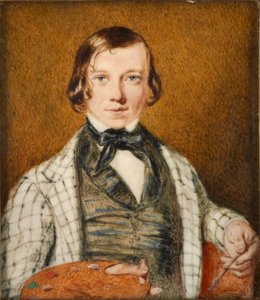 William James Müller
William James Müller (1812-1845): British Bristol School painter of vivid landscapes & Orientalist scenes – Egypt, Lycia & more. Explore historical paintings!
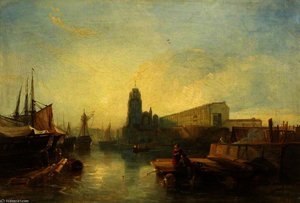
In 1833, Müller’s talent gained wider recognition with his first exhibition at the Royal Academy – *Destruction of Old London Bridge-Morning*. This success paved the way for a transformative journey through France, Switzerland, and Italy in 1834. The Italian sojourn proved particularly influential, exposing him to the classical landscapes that had captivated artists for centuries. However, it was his subsequent travels to the Middle East – first in 1838-39, then again to Lycia in 1843-44 – that truly defined his artistic trajectory.
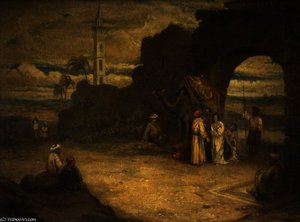
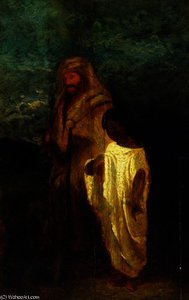
His initial expedition to Egypt took him from Athens to Alexandria and Cairo, culminating in a journey up the Nile to Luxor. He spent two weeks immersed in the ancient ruins, meticulously sketching landscapes and architectural marvels. This wasn’t merely a tourist's gaze; Müller approached his subject with an artist’s eye and an archaeologist’s curiosity. Upon his return to London, scenes of Egyptian streets and markets proved immensely popular, tapping into a Victorian fascination with the exotic East.
Lycia’s Legacy: Müller’s Masterful Sketches and Archaeological Collaboration
Müller's second journey, to Lycia in southwest Turkey (1843-44), stands as the pinnacle of his artistic achievement. He accompanied archaeologist Charles Fellows on a government expedition tasked with removing the Xanthus Marbles for the British Museum – an undertaking funded entirely by Müller himself. For three months, he dedicated himself to sketching the landscape and local people around Xanthus, Pinara, and Tlos. This wasn’t simply documentation; it was a passionate exploration of a lost civilization.
The resulting watercolours and oils are remarkable for their sensitivity and detail. Müller didn't merely record ruins; he captured the atmosphere, light, and spirit of Lycia – conveying a sense of both grandeur and melancholy. These works are considered among his finest, showcasing his mastery of landscape painting and his ability to imbue ancient sites with emotional resonance. The collaboration with Fellows was crucial, providing access and context, but it was Müller’s artistic vision that brought Lycia to life for the Victorian public.
Style & Technique: Blending Claude, Ruysdael, and a Victorian Sensibility
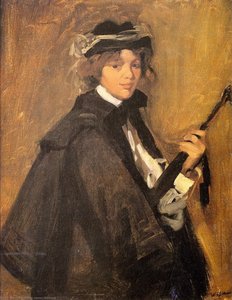
Müller's style represents a fascinating synthesis of influences. The atmospheric perspective and idealized compositions of Claude Lorrain are evident in his early landscapes, while the meticulous detail and earthy realism of Jacob van Ruisdael inform his depictions of trees, foliage, and natural textures. However, Müller wasn’t simply imitating these masters; he infused their techniques with a distinctly Victorian sensibility.
His paintings are characterized by a remarkable attention to light and shadow, creating a sense of depth and drama. He employed a layered approach to oil painting, building up color and texture to achieve a rich, luminous effect. His watercolours, renowned for their brilliance and detail, demonstrate his mastery of this medium. Furthermore, Müller’s willingness to engage with contemporary events – as seen in the 1831 riots and his Egyptian travels – added a layer of authenticity and emotional depth that set him apart from many of his contemporaries.
Posthumous Recognition & The Enduring Appeal of Müller's Landscapes
Tragically, William James Müller’s life was cut short by his untimely death in Bristol on September 8th, 1845, at the age of just thirty-three. However, his legacy endured. Following his death, demand for his work surged, leading to a proliferation of reproductions and, unfortunately, forgeries. A biography penned by Nathaniel Neal Solly in 1875 helped solidify his reputation, while subsequent studies by Cyril George Eduard Bunt (1948) and Francis Greenacre & Sheena Stoddard (1991) further illuminated his life and artistic achievements.
Today, Müller is celebrated as the best-known artist of the Bristol School – a master landscape painter who captured not only the beauty of the natural world but also the spirit of his time. His works offer a captivating glimpse into Victorian society, its fascination with antiquity, and its burgeoning artistic sensibilities. ArtsDot.com proudly offers high-quality reproductions of Müller’s masterpieces, allowing art enthusiasts to experience the enduring appeal of these remarkable landscapes firsthand. Explore our collection and discover the beauty and emotional depth of William James Müller's world.