Early Life and Training: From Banking Clerk to Aspiring Artist
Robert Lillie’s story is a compelling testament to the enduring power of artistic passion overcoming societal expectations. Born in Edinburgh in 1867, the eldest of nine children, his early life seemed destined for the pragmatic world of finance. At fifteen, he followed in his father's footsteps, securing a position as a clerk at the Saint George’s Cross branch of The British Linen Bank in Glasgow. For over four decades, Lillie diligently pursued this career path, yet beneath the surface of banking ledgers lay a burgeoning artistic sensibility. He wasn’t content to simply observe life; he felt compelled to *capture* it, to translate its quiet moments and subtle beauties onto canvas.
This dedication manifested in formal art training undertaken alongside his professional duties. Lillie earned certificates as an art teacher, eventually leading him to evening classes with the Glasgow School Board. He imparted his knowledge at Woodside School and Napiershall School, nurturing a new generation of artistic talent while simultaneously honing his own skills. This period wasn’t merely about acquiring technique; it was about cultivating a discerning eye and developing a personal aesthetic that would later define his work.
The Rise of Genre Painting in Victorian Britain: A Social Reflection
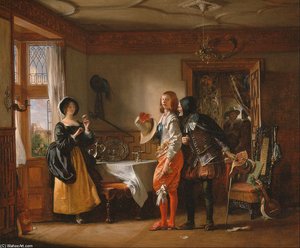
Genre art is the pictorial representation in any of various media of scenes or events from everyday life, such as markets, domestic settings, interiors, parties, inn scenes, work, and street scenes. Such representations (also called genre works, genr...
To understand Lillie's artistic trajectory, one must appreciate the context of Victorian painting. The era, defined by rapid industrialization and social change, witnessed a shift in subject matter. While historical and mythological scenes remained popular, genre painting – depictions of everyday life – gained significant traction. This wasn’t simply an aesthetic preference; it reflected a growing interest in the lives of ordinary people, a fascination with domesticity, and a desire to document the changing social landscape.
The Royal Academy of Arts initially favored idealized representations rooted in Renaissance principles, but artists increasingly sought authenticity and realism. Genre painting allowed for this exploration, offering glimpses into the homes, workplaces, and leisure activities of Victorian society. Artists like Frith and Wilkie paved the way, creating detailed narratives that resonated with a burgeoning middle class eager to see their own lives reflected in art. Lillie would become part of this tradition, though his work possesses a unique tranquility often absent from the more overtly narrative scenes of his contemporaries.
Lillie’s Scottish Landscapes: Capturing the Essence of Light and Atmosphere
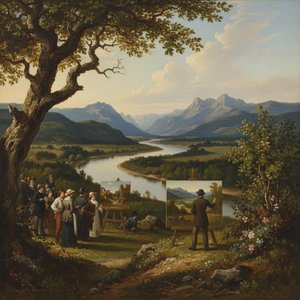
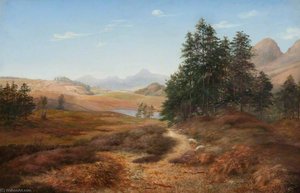
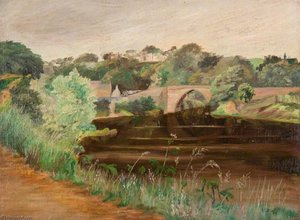
In 1902, the Lillie family relocated to Milngavie, a move that profoundly influenced the artist's subject matter. The house, named Sprouston in homage to their ancestral village near Kelso, became a sanctuary and a source of inspiration. It was here that Lillie truly embraced landscape painting, focusing on the serene beauty of the Scottish countryside. His canvases are not grand vistas or dramatic mountainscapes; rather, they capture the subtle nuances of light, atmosphere, and the quiet poetry of nature.
The Clyde at Bowling, for example, exemplifies this approach. The painting isn’t about a specific event or landmark; it's about the feeling of being present on the riverbank, experiencing the gentle play of sunlight on the water and the stillness of the surrounding landscape. Similarly, Cromarty Firth from Nairn showcases warm colors and detailed brushwork, evoking a sense of peaceful contemplation. These are paintings that invite viewers to pause, breathe, and connect with the natural world.
Domestic Interiors and Family Scenes: Narratives of Everyday Life
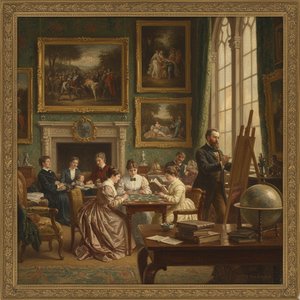
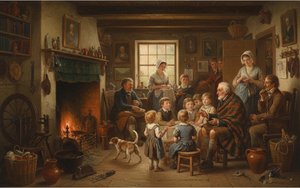
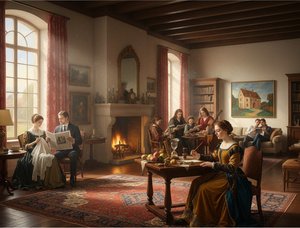
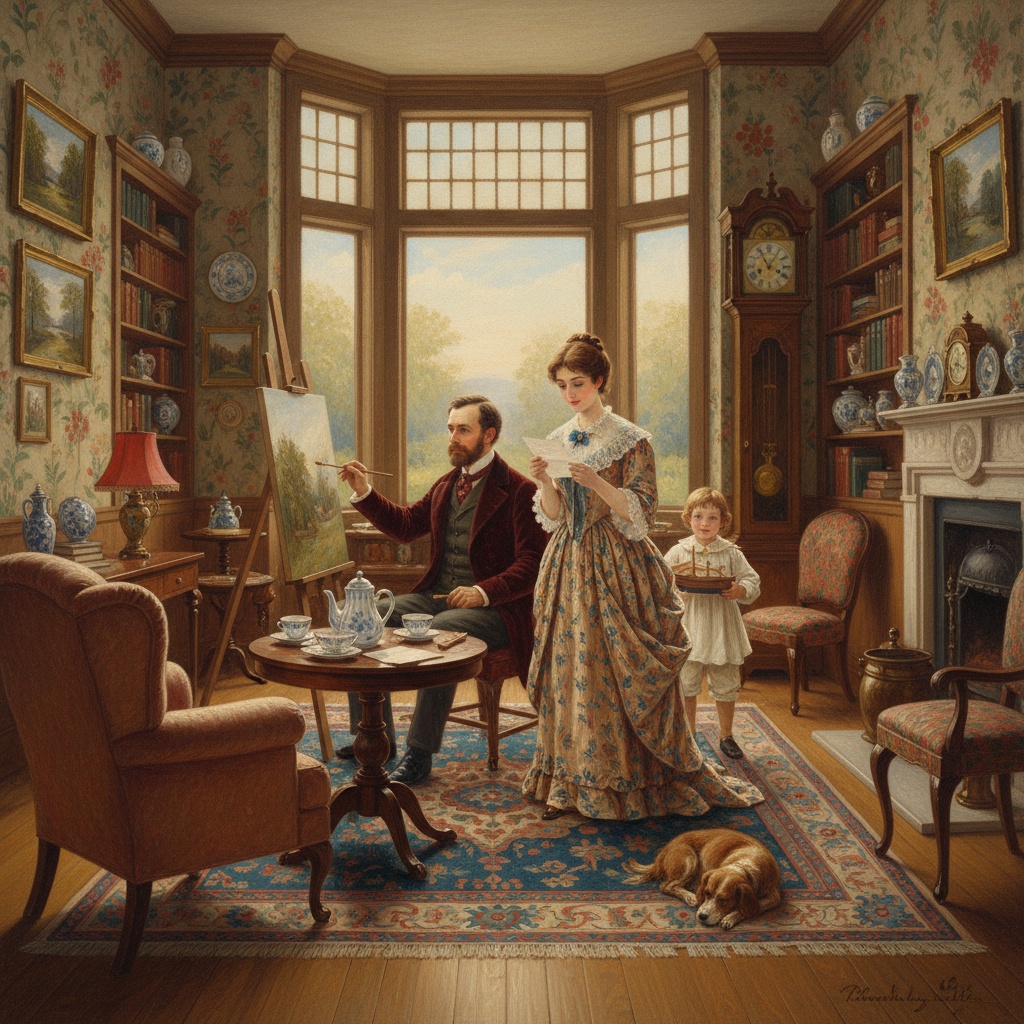
While landscapes became central to his oeuvre, Lillie also excelled at depicting domestic interiors and family scenes. These works offer intimate glimpses into Victorian life, portraying moments of quiet connection and everyday routines. Unlike some genre paintings that emphasized social commentary or moral lessons, Lillie’s depictions are often characterized by a gentle warmth and understated affection.
He masterfully captured the interplay of light and shadow within domestic spaces, creating a sense of intimacy and realism. His scenes aren't staged or overly sentimental; they feel authentic and relatable, offering viewers a glimpse into the lives of families during this period. These paintings are not about grand gestures or dramatic events; they’re about the small moments that define our relationships and shape our memories.
Technique and Style: Impressionistic Influences and Artistic Approach
Lillie's artistic style, while rooted in Victorian traditions, reveals subtle Impressionistic influences. He wasn’t a radical innovator like Monet or Renoir, but he shared their fascination with capturing the fleeting effects of light and atmosphere. His brushwork is loose and expressive, prioritizing color and texture over precise detail. This approach lends his paintings a sense of spontaneity and immediacy.
He employed a muted palette, favoring soft tones and subtle gradations of color to create a harmonious and atmospheric effect. The layering of paint creates depth and richness, while the visible brushstrokes add a tactile quality to his work. His technique wasn’t about replicating reality; it was about interpreting it through a personal lens, conveying not just what he saw but how he *felt*.
Robert Lillie's Legacy: Preserving a Vision of Victorian Scotland
After 43 years in the banking profession, Robert Lillie dedicated his life fully to painting in 1925. He continued to create until his death in 1949, leaving behind a body of work that offers a unique and compelling vision of Victorian Scotland. His paintings are not merely historical documents; they’re evocative expressions of time, place, and emotion.
Today, Robert Lillie's works are held in public collections such as East Dunbartonshire Council, offering opportunities for contemporary audiences to connect with his art. Through ArtsDot.com, these captivating scenes can be brought into your home, allowing you to experience the tranquility and beauty of Victorian Scotland firsthand. His legacy lies not just in preserving a specific moment in time but in reminding us of the enduring power of art to capture the essence of life itself.