Early Life & Artistic Foundations: From Edinburgh Apprenticeship to Landscape Promise
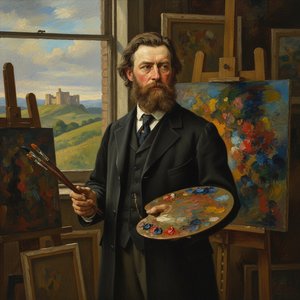
David Roberts, a name synonymous with the romantic allure of the Middle East and the meticulous documentation of ancient wonders, began his artistic journey far removed from the sun-drenched landscapes he would later immortalize. Born in 1796 in Stockbridge, Edinburgh, Roberts’s early life was one of practical apprenticeship rather than privileged study. At the age of fifteen, he entered into a seven-year indenture with Gavin Beugo, a house painter and decorator. This grounding in the technical aspects of his craft – sketching, layering paint, understanding perspective – would prove invaluable, forming the bedrock upon which his later artistic triumphs were built. His fellow apprentice, David Ramsay Hay, became a lifelong friend and companion, sharing Roberts’s burgeoning passion for art despite their humble beginnings.
Roberts supplemented his formal training with evening studies, honing his skills and developing an eye for detail that would become his hallmark. His initial foray into paid work involved redecorating Scone Palace in 1815, followed by scenery painting for James Bannister’s circus. This period, though seemingly disparate from the grand scenes he'd eventually create, was crucial. The demands of theatrical design – creating convincing illusions of space and atmosphere – instilled a sense of drama and composition that permeated his later work. He quickly recognized the power of visual storytelling, a skill honed in crafting backdrops for captivating performances.
Inspired by the works of J.M.W. Turner, Roberts began to explore landscape painting with increasing dedication. His early expeditions abroad, though limited in scope compared to his later travels, fueled a desire to capture the picturesque and exotic – a seed that would blossom into a lifelong fascination with distant lands.
The Allure of the East: Roberts’s Grand Tour and the Rise of Orientalism
In art history, literature, and cultural studies, Orientalism is the imitation or depiction of aspects of the Eastern world (or "Orient") by writers, designers, and artists from the Western world. Orientalist painting, particularly of the Middle East...
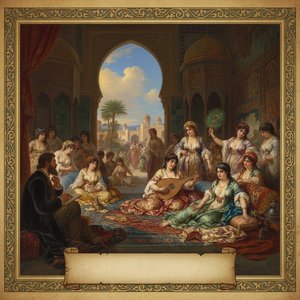
By the 1830s, Europe was gripped by “Orientalism,” a cultural phenomenon characterized by a romanticized – and often idealized – fascination with the Eastern world. This wasn't merely an aesthetic trend; it was deeply intertwined with colonial ambitions, scholarly curiosity, and a burgeoning sense of Western identity defined in opposition to the ‘Other.’ David Roberts embarked on a transformative journey to the Middle East in 1838, a voyage that would solidify his reputation as one of the foremost Orientalist painters of the era.
Roberts’s approach distinguished him from many contemporaries. He wasn't content with simply imagining exotic scenes; he sought to *document* them with unprecedented accuracy and detail. His two-year expedition took him through Egypt, Nubia, Syria, Palestine, and Arabia, a relentless pursuit of visual information fueled by meticulous sketching and observation. This commitment to realism was coupled with an artist’s sensibility – a keen eye for light, shadow, and composition that transformed his sketches into evocative representations of these ancient lands.
The context of Orientalism is important. While Roberts' work undeniably contributed to the Western fascination with the East, it also offered a relatively faithful record of sites and cultures often misrepresented or entirely fabricated in popular imagination. His paintings weren’t simply fantasies; they were based on firsthand experience, offering a glimpse into a world largely inaccessible to most Europeans.
Documenting Egypt: Precision, Detail, and a Lasting Legacy in Watercolor
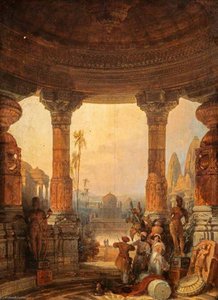
Egypt became the focal point of Roberts's artistic exploration during his Grand Tour. He was captivated by the monumental scale of its ancient monuments – the pyramids, temples, and tombs that stood as silent witnesses to millennia of history. His watercolors from this period are remarkable for their precision and detail, capturing not only the grandeur of these structures but also the subtle nuances of light and shadow that played across their surfaces.
Works like “The Great Sphinx of Giza” and “The Temple of Karnak” exemplify Roberts’s meticulous approach. He painstakingly rendered every column, hieroglyph, and architectural detail, creating images that were both visually stunning and historically informative. These weren't merely picturesque scenes; they were attempts to capture the very essence of these ancient wonders, preserving them for posterity.
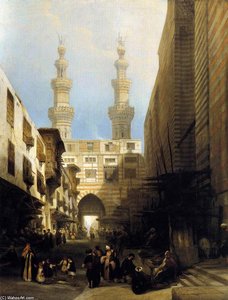
However, Roberts didn’t limit himself to grand monuments. He also depicted contemporary life in Cairo – bustling bazaars, crowded streets, and the everyday rhythms of Egyptian society. This broader perspective offered a more nuanced view of Egypt than was typically found in Western art of the time, showcasing both its ancient glories and its vibrant present.
Beyond Egypt: Syria, Nubia, and the Holy Land Through Roberts's Eyes
While Egypt undoubtedly held a special place in Roberts’s affections, his travels extended far beyond its borders. He ventured into Nubia, captivated by the stark beauty of its desert landscapes and the ancient ruins that dotted its shores. Syria offered a different aesthetic – bustling cities, dramatic mountain ranges, and a rich tapestry of cultures.
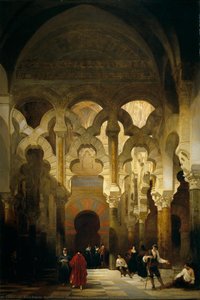
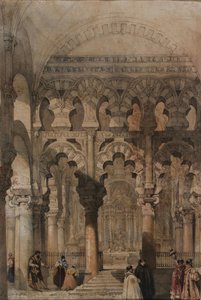
His depictions of the Holy Land were particularly poignant, capturing the spiritual significance of Jerusalem, Bethlehem, and other sacred sites. Roberts’s paintings weren't overtly religious; rather, they focused on the architectural beauty of these locations and the atmosphere of reverence that permeated them. He skillfully balanced historical accuracy with a sense of romantic idealism, creating images that resonated deeply with Victorian audiences.
Throughout his travels, Roberts consistently demonstrated an ability to capture the unique character of each location. He wasn’t simply applying a standardized Orientalist aesthetic; he was responding to the specific qualities of each landscape and culture, resulting in a diverse and compelling body of work.
Roberts as Royal Academician & The Impact of His Lithographs on Victorian Society
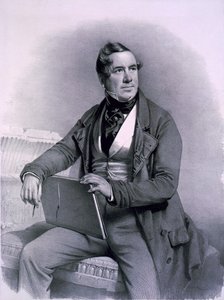 david roberts
Discover David Roberts' captivating Orientalist paintings! Explore detailed Egyptian & Near Eastern landscapes, lithographs, and his legacy as a Royal Academician.
Roberts's artistic achievements were formally recognized in 1841 with his election as a Royal Academician – a testament to his skill and reputation. This prestigious appointment solidified his position within the British art establishment and provided him with access to new opportunities and patronage.
However, it was perhaps through his lithographs that Roberts achieved his widest audience. The series *The Holy Land, Syria, Idumea, Arabia, Egypt and Nubia* (1842-1849), produced in collaboration with the master lithographer Louis Haghe, brought the wonders of the East into the drawing rooms of Victorian society. These meticulously detailed prints were both artistically impressive and commercially successful, allowing a wider audience to experience Roberts’s vision.
The impact of these lithographs cannot be overstated. They fueled public fascination with the Middle East, shaping perceptions of these regions for generations to come. They also served as invaluable visual resources for scholars, architects, and travelers, providing detailed documentation of sites that were often inaccessible or poorly understood. Roberts’s work wasn't simply art; it was a form of cultural exchange, bridging the gap between East and West.
A Master of Atmosphere: Examining Roberts’s Style and Enduring Appeal
David Roberts’s enduring appeal lies in his ability to capture not just *what* he saw but also *how* it felt. His paintings are characterized by a masterful use of light, shadow, and atmospheric perspective, creating images that evoke a sense of depth, drama, and emotional resonance.
His brushwork is often described as meticulous yet fluid, blending precision with a romantic sensibility. He wasn’t afraid to experiment with color, using subtle gradations and tonal variations to create a sense of realism and atmosphere. He also possessed a remarkable talent for composition, arranging elements within his paintings in a way that drew the viewer's eye and created a harmonious balance.
Roberts’s legacy extends beyond his technical skill. He offered a relatively nuanced and respectful portrayal of Eastern cultures at a time when Orientalism often relied on stereotypes and exoticization. His commitment to documentation, coupled with his artistic sensibility, resulted in a body of work that continues to captivate and inspire audiences today. At ArtsDot.com, we are proud to offer high-quality reproductions of Roberts’s masterpieces, allowing you to experience the grandeur and beauty of his vision firsthand.