Early Life and Artistic Foundations: Glasgow Beginnings and Aberdeen Apprenticeship
The story of James Giles, a name perhaps less immediately recognizable than some of his contemporaries, is nonetheless a compelling one—a testament to the quiet dedication and burgeoning talent that flourished within the Scottish art scene of the 19th century. Born in Glasgow on January 4th, 1801, as James William Giles, his early life offered little indication of the artistic path he would forge. His father, a designer at a local calico mill, instilled an appreciation for pattern and form, but it was the family’s relocation to Aberdeen around 1805 that truly set the stage for young James's development. The move coincided with his father’s employment in a printing factory, and though brief, this period exposed Giles to the intricacies of visual reproduction and the burgeoning world of commercial art.
The untimely death of his father cast a long shadow, forcing Giles to assume responsibility at a remarkably young age. By thirteen, he was already supporting his mother and sister through his artistic endeavors—a testament to both his precocious skill and unwavering determination. Before reaching the age of twenty, he had established a modest reputation as a drawing instructor in Aberdeen, laying the groundwork for a career built on meticulous observation and technical proficiency. This early period wasn’t merely about survival; it was an intensive apprenticeship forged by necessity, honing skills that would later define his signature style.
The Royal Scottish Academy and Patronage: Securing Recognition in Edinburgh’s Art World
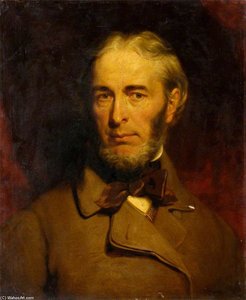
James Giles, 1801–1870, British, Scottish, Fyvie Castle, Aberdeenshire. Image credit: Aberdeen Archives, Gallery & Museums.
Giles's ambition extended beyond the confines of Aberdeen. In 1821, he married Clementina Farquharson, a widow, and embarked on a journey that would prove pivotal to his artistic ascent. A tour through Scotland followed, allowing him to immerse himself in the diverse landscapes and burgeoning cultural centers of his homeland. This was not simply a geographical exploration; it was a visual education, absorbing the nuances of light, color, and composition. Upon his return, he settled at 64 Bon Accord Street in Aberdeen—a location later commemorated with a plaque acknowledging his presence.
The true turning point came with his election to membership of the Royal Scottish Academy (RSA). This wasn’t merely an honorific title; it was a gateway to Edinburgh's influential art world, providing access to exhibitions, commissions, and—crucially—patronage. Giles proved himself not only as a skilled painter but also as a shrewd networker, actively participating in the Spalding Club, a society dedicated to preserving Scottish history and culture. This engagement with intellectual circles further solidified his position within the artistic establishment.
Landscapes of Scotland: A Poetic Realism Rooted in Place and Atmosphere
Realism, Realistic, or Realists may refer to: == In the arts == Realism (arts), the general attempt to depict subjects truthfully in different forms of the arts Arts movements related to realism include: == In philosophy == Philosophical realism ...
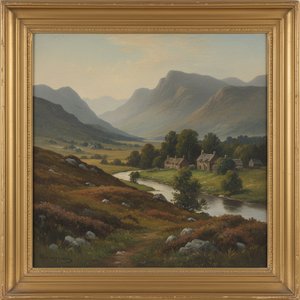
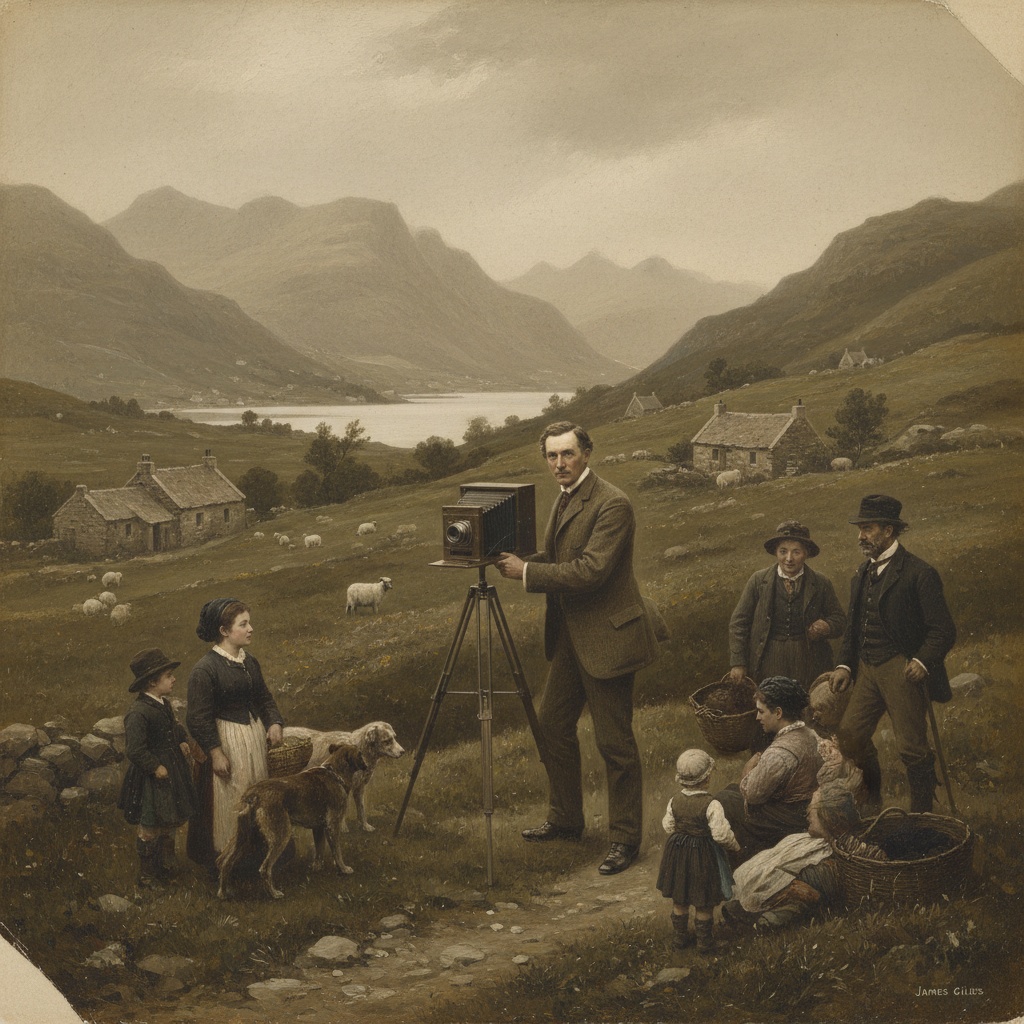
James Giles’s enduring legacy lies in his evocative depictions of the Scottish landscape. His work isn't characterized by dramatic flourishes or overt romanticism; instead, it embodies a quiet realism—a meticulous rendering of light, texture, and atmosphere that captures the very essence of place. He wasn’t interested in grand vistas but rather in the subtle beauty of moorlands, forests, and coastal scenes. His paintings are imbued with a sense of tranquility and authenticity, inviting viewers to step into the scene and experience the Scottish countryside firsthand.
Giles possessed an exceptional ability to convey the changing moods of nature—the soft glow of twilight, the brooding intensity of a storm, the crisp clarity of a winter morning. He masterfully employed layering techniques to create depth and dimension, capturing the subtle gradations of color and light that define the Scottish climate. This poetic realism wasn’t merely about accurate representation; it was about evoking an emotional response—a sense of connection to the land itself.
Commissioned by Royalty: James Giles and the Balmoral Legacy of Queen Victoria
The patronage of George Hamilton-Gordon, 4th Earl of Aberdeen (and later British Prime Minister), proved instrumental in elevating Giles’s career. Their friendship extended beyond mere professional association; it was a genuine appreciation for art and landscape design. The Earl commissioned Giles to create the gardens and parkland surrounding Haddo House, his Aberdeenshire estate—a project that showcased Giles's versatility as a town planner and landscape architect.
However, it was through the Earl’s connection to Queen Victoria that Giles achieved lasting renown. After viewing one of Giles’s paintings depicting the old Balmoral Castle, Queen Victoria decided to lease the estate without even seeing it in person—a testament to the power of his artistic vision. In 1852, she purchased Balmoral outright, and Giles was subsequently commissioned to create a series of paintings documenting the castle and its surroundings. These works remain in the royal collection today, serving as a lasting tribute to Giles’s skill and the enduring beauty of Scotland.
Beyond Landscape: Portraiture, Town Planning, and a Versatile Artistic Practice
While celebrated for his landscapes, James Giles was far from a one-dimensional artist. He demonstrated considerable talent in portraiture, capturing the likenesses of prominent Scottish figures with sensitivity and precision. His involvement in town planning—specifically, designing features like the Demeter Sculpture above Simpson House and the obelisk in Duthie Park—reveals a broader artistic sensibility, an ability to shape and enhance the environment around him.
This versatility wasn’t accidental; it stemmed from a keen intellect and a willingness to embrace new challenges. Giles was not content to confine himself to a single genre but rather sought to apply his skills to a diverse range of projects. This adaptability, combined with his shrewd business acumen, allowed him to thrive in a competitive art world.
Giles’ Enduring Influence: Rediscovering a Master of 19th-Century Scottish Art
James Giles passed away on October 6th, 1870, in Aberdeen at the age of sixty-nine. While his name may not be as widely recognized as some of his contemporaries, his work continues to resonate with those who appreciate the quiet beauty and atmospheric realism of 19th-century Scottish art. His posthumously published *Drawings of Aberdeenshire Castles*, commissioned by Lord Aberdeen, stand as a testament to his meticulous observation and artistic skill—a series of ninety watercolor sketches that offer a captivating glimpse into Scotland’s rich architectural heritage.
Today, Giles's paintings are increasingly sought after by collectors and institutions alike. ArtsDot.com offers high-quality reproductions of his most celebrated works, allowing art enthusiasts to experience the beauty and tranquility of his landscapes firsthand. By bringing these masterpieces into homes and galleries around the world, ArtsDot ensures that Giles’s legacy—a legacy rooted in place, atmosphere, and a profound appreciation for the Scottish countryside—continues to inspire generations to come.