 Preview
 Send
Send Share
Share
 Details

 Download
 Similars
 X-Ray
X-Ray Diaporama
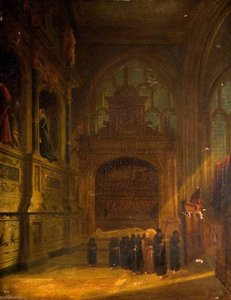
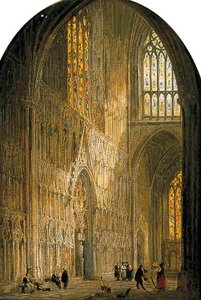
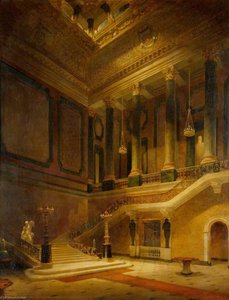
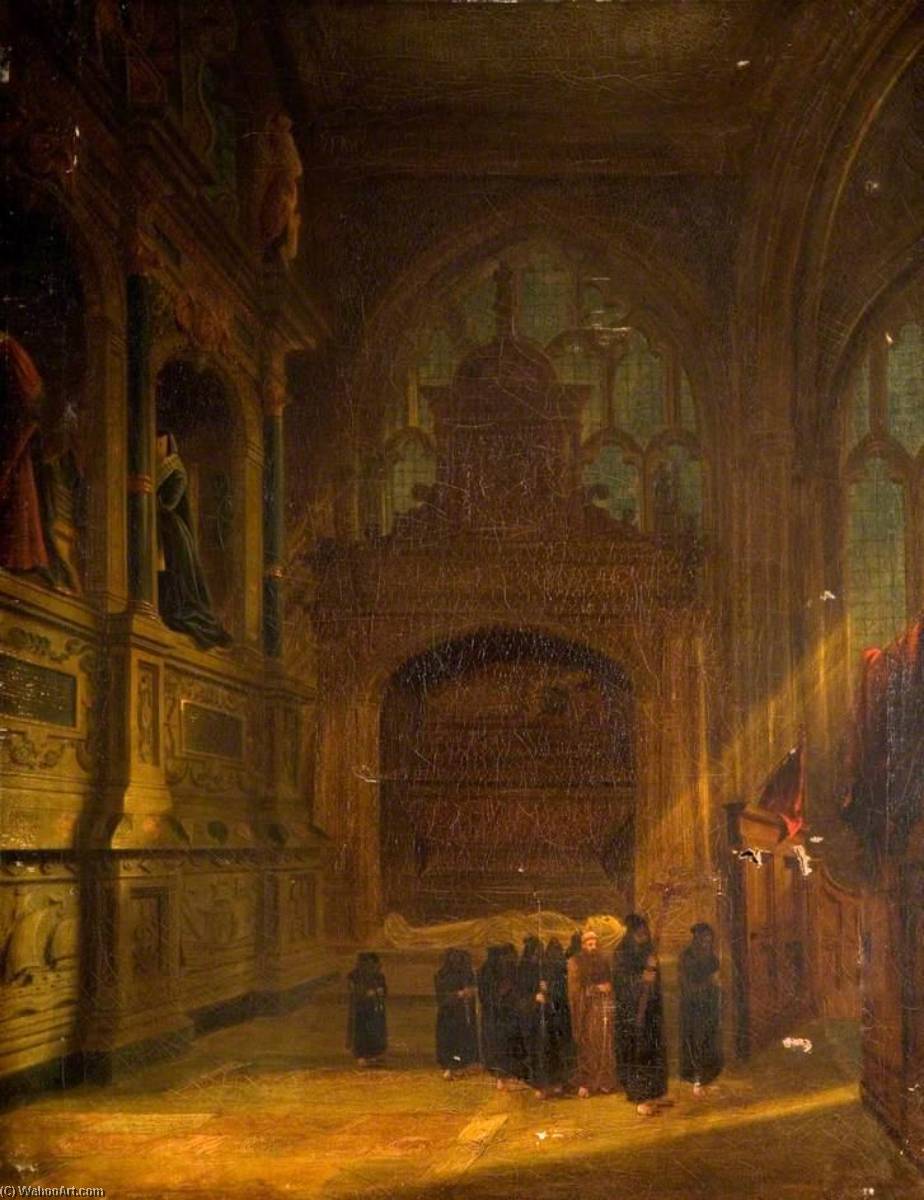
Interior of Cologne Cathedral, with a Funeral


 Read More
Hand Made Oil Reproduction
Hand-painted oil on canvas in your size and frame, made to order by our artists. ( Buy Print Buy Image)




P118B $10

P118H $10

P118W $10

P438Z $10

P508JH $12

P508YH $12

P805H $10

P805Z $10

P919BZ $10

P919G $10

P919XJ $10

P959ZH $10

P968JZ $12

W106C $8

W218G $10

W218JH $8

W218Y $10

W307PJ $10

W316G $10

W316PJ $8

W316Y $10

W398PJ $8

W4111J $10

W500HY $15

W500JH $15

W692G $12

W849H $8

W940BG $15

W953PJ $8




Pick from our preset sizes that match the artwork's original proportions.

You may enter your own dimensions to fit a specific frame or space. If your selected size does not match the original image's proportions, we will either crop the artwork or extend the painting with additional hand-painted elements. A digital mockup will be sent for your approval before production begins.
Please note that the on-screen preview does not reflect the actual cropping or extension. Only the mockup will accurately show the final composition.
While custom sizes are available, we recommend selecting a dimension from the predefined list to preserve the original proportions.
After order, ArtsDot.com team will email client for instructions and provide a mockup preview
Worldwide Delivery () in 3/4 weeks instead of standard 5 weeks. (17 August). No compromise on quality.

Free Worldwide Express Shipping

High-Quality Linen Canvas

Full Shipping Insurance

Customs Tax Refund Guarantee

True Color Matching Guarantee

60-Day Return Policy (Defects Only)

100% Money-Back Guarantee

Bulk Discount Offer
 Glass option is only available in size under 110 CM

Interior of Cologne Cathedral, with a Funeral
Reproduction Medium
Reproduction Size
-


Total Price
$ 263
Artwork Description
David Roberts’s Vision of Sacred Space
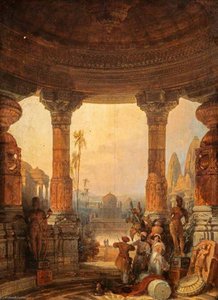
David Roberts (1796-1864) stands as a pivotal figure in 19th-century art history—a Scottish painter whose meticulous lithographs and expansive oil paintings captured the grandeur of Oriental landscapes and architectural marvels alike. More than just documenting places, Roberts sought to convey their spiritual essence, establishing himself as one of the foremost Royal Academicians of his time and profoundly influencing European artistic sensibilities. His legacy continues to inspire artists today.A Pioneer of Lithography: Capturing Light and Atmosphere
Roberts’s fame rests largely upon his groundbreaking lithograph prints—particularly *The Holy Land, Syria, Idumea, Arabia, Egypt, and Nubia*. Unlike traditional painting techniques that relied on pigment layering and blending, Roberts harnessed the transformative power of lithography. This process involved transferring ink onto a stone surface, creating an incredibly detailed image with exceptional tonal range and luminosity. The resulting prints achieved unparalleled accuracy in depicting textures—from weathered sandstone to draped fabrics—and capturing subtle nuances of light and shadow. This innovative approach allowed him to disseminate his artistic vision across Europe, reaching audiences far beyond the confines of London’s Royal Academy.Detailed Observation: Roberts' Approach to Landscape Painting
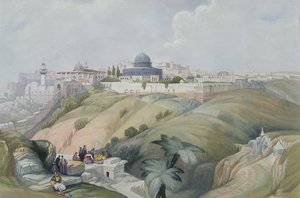
Roberts’s paintings weren’t merely scenic representations; they were meticulously crafted studies informed by exhaustive observation. He spent considerable time sketching and documenting sites during his expeditions—a practice that mirrored the scientific spirit of the era. Unlike Romantic painters who prioritized emotional expression, Roberts focused on capturing the precise geometry and materiality of his subjects. His canvases showcase a remarkable level of technical skill—evident in the careful rendering of architectural details like arches and columns—and an unwavering commitment to portraying landscapes with breathtaking realism. Consider *The Holy Land*, where Roberts’s masterful brushstrokes convey not only the visual splendor but also the palpable atmosphere of ancient Jerusalem.Symbolism Within Grandeur: Reflecting Religious Belief
Roberts' artistic endeavors weren't solely driven by aesthetic considerations; they were imbued with a deep respect for religious tradition. His depictions of churches and monasteries—such as Cologne Cathedral—were intended to inspire contemplation and reverence. The cathedral itself, depicted in stunning detail, serves as a powerful symbol of faith and architectural achievement. Roberts’s compositions subtly convey the solemnity of ritual and the grandeur of divine presence—reflecting the spiritual values prevalent during his lifetime. He skillfully utilized perspective and light to emphasize the scale and majesty of these sacred spaces, inviting viewers to engage with their symbolic significance.Influence Beyond His Time: Shaping European Perception
David Roberts’s work exerted a considerable influence on subsequent generations of artists—particularly those interested in Orientalism. His lithographs played a crucial role in disseminating images of distant lands and cultures among European audiences—challenging preconceived notions and fostering intellectual curiosity. Furthermore, his meticulous technique served as an exemplar for painters striving to achieve comparable levels of realism and tonal accuracy. Roberts’s legacy extends beyond the realm of art itself—inspiring travelers, scholars, and designers alike to appreciate the beauty and complexity of the world around them. His enduring appeal testifies to the power of observation, technical mastery, and artistic vision.Related Artworks
Artist Biography
David Roberts: A Life in Art
David Roberts (1796-1864) was a Scottish painter celebrated for his detailed Orientalist scenes and meticulous lithographs. His work provides invaluable visual documentation of the Middle East during the 19th century, bridging artistic representation with historical record.
Early Life and Career
Born on October 24, 1796, in Stockbridge near Edinburgh, Roberts’s early life was marked by practical training. At the age of ten, he began an apprenticeship with house painter and decorator Gavin Beugo. This foundational experience instilled a strong technical skill set, which he supplemented through evening art studies.
His initial professional work included redecorating Scone Palace in 1815. He then transitioned to scene painting for James Bannister’s circus, honing his skills in creating immersive environments. These early experiences laid the groundwork for his later success as a prominent Orientalist painter.
Artistic Journey and Influences
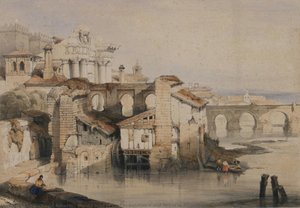
Roberts' artistic development was shaped by a growing fascination with different cultures and landscapes. While initially focused on theatrical scenery, he gradually shifted towards more independent artistic pursuits. His travels to Spain in 1832 were formative, sparking an interest in architectural detail and exotic locales.
However, it was his extensive tours of Egypt and the Near East (1838-1840) that truly defined his career. These journeys provided him with a wealth of sketches and observations which he later translated into his most famous works. His style wasn’t heavily influenced by any single artist, but rather developed from careful observation and technical mastery.
Notable Works and Achievements
Roberts is best known for The Holy Land, Syria, Idumea, Arabia, Egypt, and Nubia – a series of meticulously detailed lithograph prints. These images captured the grandeur of ancient sites and the vibrancy of contemporary life in the region.
- Lithographs: His lithographs were widely circulated and became highly influential in shaping European perceptions of the Middle East.
- Paintings: He also produced numerous oil paintings, often large-scale works depicting expansive landscapes and architectural marvels.
In 1841, Roberts was elected as a Royal Academician – a significant recognition of his contributions to the art world.
Artistic Style and Characteristics
Roberts’s artistic style is characterized by:
- Orientalism: A strong focus on depicting scenes from the Middle East, reflecting the European fascination with “the Orient.”
- Attention to Detail: His work is renowned for its precision and accuracy in rendering architectural details, costumes, and landscapes.
- Landscaping & Townscapes: He skillfully combined romantic sensibilities with detailed observation, creating evocative depictions of both natural environments and urban settings.
Legacy and Historical Significance
David Roberts’s work played a crucial role in popularizing the Middle East among European audiences. His images provided a visual window into a region that was largely unknown to many, influencing travel, scholarship, and artistic representation.
His lithographs served as important historical documents, preserving images of sites that have since changed or been lost. He left an indelible mark on the art world, inspiring subsequent generations of artists and continuing to captivate viewers today.
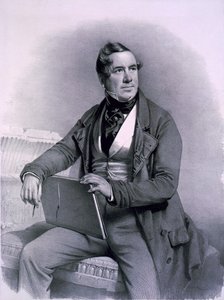
David Roberts
1796 - 1864 , United Kingdom
Quick Facts
- Birth Date: October 24, 1796
- Birth Place: Stockbridge, United Kingdom
- Death Date: 1864
- Influenced: Jenaro Pérez Villaamil, Alexander Nasmyth
- Movement: Orientalism
- Name: David Roberts
- Nationality: Scottish
- Notable Works: The Holy Land, Syria, Idumea, Arabia, Egypt, and Nubia
Related Articles

David Roberts: A Scottish Pioneer of Topographical Art & Orientalist Vision
Explore the captivating world of David Roberts, a pioneering Scottish painter renowned for his detailed Orientalist scenes & stunning Egyptian landscapes. Discover his legacy and find museum-quality reproductions at ArtsDot.

Giclée Prints: Archival Quality & Aesthetic Nuances for the Discerning Collector
Explore the world of giclée prints with ArtsDot. Learn about archival quality, aesthetic nuances & investment potential. Expert guidance for discerning art collectors seeking museum-quality reproductions and lasting value.

Top 10 Lithographs That Revolutionized Art | ArtsDot
Explore 10 legendary lithographs by Toulouse-Lautrec, Munch & Picasso that redefined art! Discover the stories behind these iconic prints and find museum-quality reproductions for your home decor at ArtsDot.com. Explore the full collection online.

The Enduring Legacy of Fine Art Prints: Technique, History & Aesthetic Impact
Explore the rich history & techniques of fine art prints. Discover investment potential, assess authenticity, and learn how to preserve your collection with expert guidance. Trusted insights for discerning collectors.

Echoes of Time: Exploring the Enduring Appeal & Historical Context of Vintage Art Prints
Explore the captivating world of vintage art prints! Discover their history, collecting tips & enduring appeal. Expert insights on chromolithography and building a legacy collection with ArtsDot.