 Preview
 Send
Send Share
Share
 Details

 Download
 Similars
 X-Ray
X-Ray Diaporama
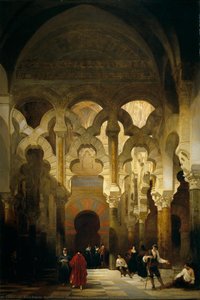
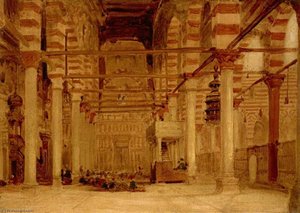
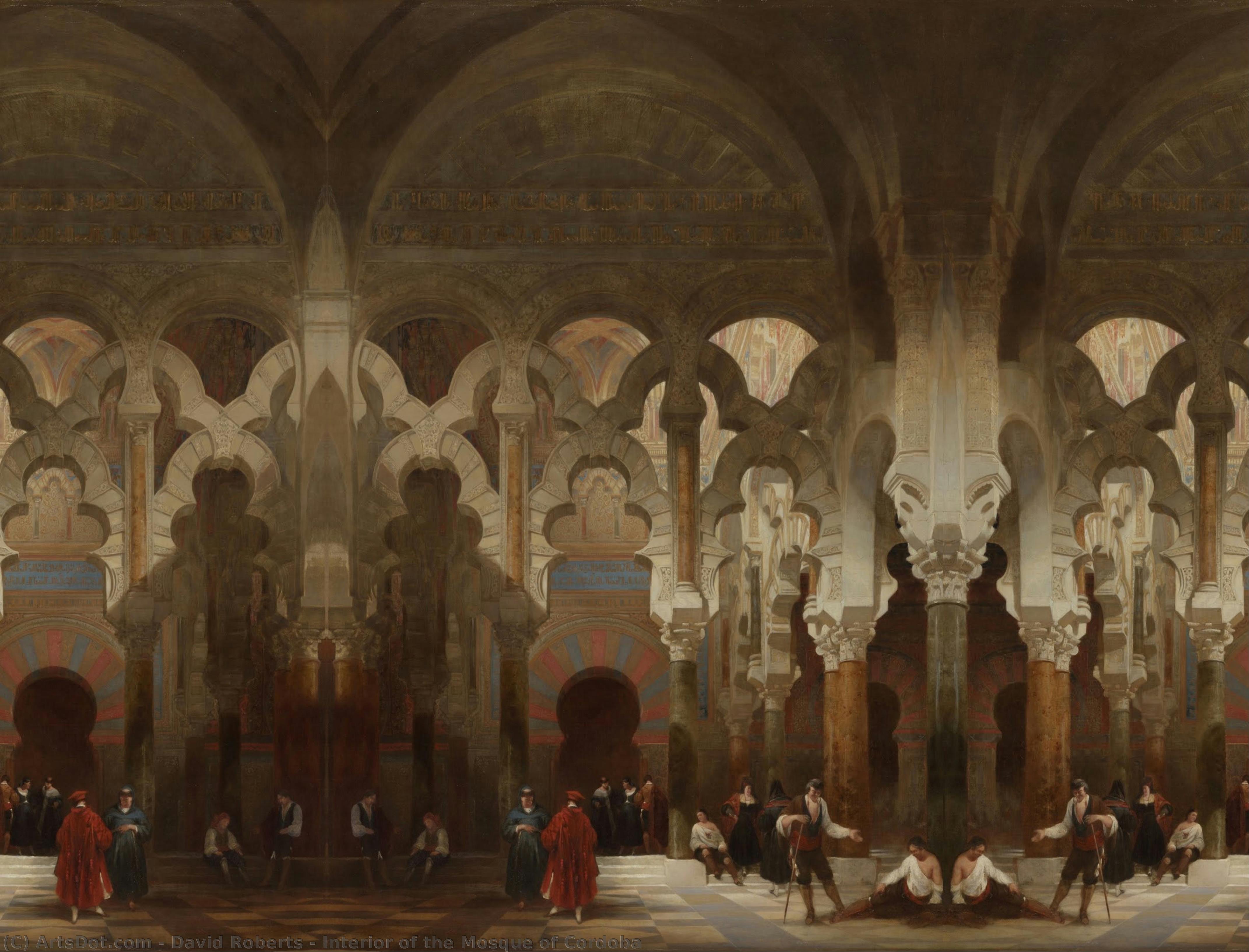
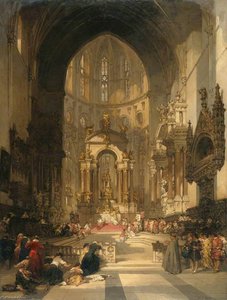
Interior of the Mosque of Cordoba


 Read More
Hand Made Oil Reproduction
Hand-painted oil on canvas in your size and frame, made to order by our artists. ( Buy Print Buy Image)




P118B $10

P118H $10

P118W $10

P438Z $10

P508JH $12

P508YH $12

P805H $10

P805Z $10

P919BZ $10

P919G $10

P919XJ $10

P959ZH $10

P968JZ $12

W106C $8

W218G $10

W218JH $8

W218Y $10

W307PJ $10

W316G $10

W316PJ $8

W316Y $10

W398PJ $8

W4111J $10

W500HY $15

W500JH $15

W692G $12

W849H $8

W940BG $15

W953PJ $8




Pick from our preset sizes that match the artwork's original proportions.

You may enter your own dimensions to fit a specific frame or space. If your selected size does not match the original image's proportions, we will either crop the artwork or extend the painting with additional hand-painted elements. A digital mockup will be sent for your approval before production begins.
Please note that the on-screen preview does not reflect the actual cropping or extension. Only the mockup will accurately show the final composition.
While custom sizes are available, we recommend selecting a dimension from the predefined list to preserve the original proportions.
After order, ArtsDot.com team will email client for instructions and provide a mockup preview
Worldwide Delivery () in 3/4 weeks instead of standard 5 weeks. (17 August). No compromise on quality.

Free Worldwide Express Shipping

High-Quality Linen Canvas

Full Shipping Insurance

Customs Tax Refund Guarantee

True Color Matching Guarantee

60-Day Return Policy (Defects Only)

100% Money-Back Guarantee

Bulk Discount Offer
 Glass option is only available in size under 110 CM

Interior of the Mosque of Cordoba
Reproduction Medium
Reproduction Size
-


Total Price
$ 263
Artwork Description
A Window into Faith and Majesty: David Roberts’ Interior of the Mosque of Córdoba
David Roberts' "Interior of the Mosque of Córdoba" stands as a testament to Victorian fascination with the Orient and a remarkable achievement in lithographic artistry. Completed around 1860, this monumental print captures not merely architectural space but also the spirit of Islamic Spain—a realm steeped in history, spirituality, and artistic grandeur. Roberts’s meticulous rendering elevates it beyond a simple depiction; it's an immersive experience for the viewer, transporting them back to a pivotal moment in European cultural consciousness.The Artist’s Vision: Romantic Orientalism
Roberts belonged to a burgeoning movement known as Romantic Orientalism—a trend that sought to portray Eastern cultures with sensitivity and accuracy, blending scientific observation with imaginative embellishment. Unlike earlier depictions often fueled by prejudice or exotic fantasy, Roberts approached his subject matter with scholarly rigor. He consulted architectural drawings and texts to ensure the print faithfully represented the mosque’s structure and atmosphere. This dedication to detail distinguishes him from many of his contemporaries and underscores his commitment to artistic integrity. His style leans heavily into atmospheric perspective—a technique pioneered by Turner—creating a hazy, ethereal quality that imbues the scene with an aura of solemn reverence.Lithography: Precision and Scale
Roberts’s mastery lay primarily in lithography, a printing process that allowed for unparalleled scale and tonal subtlety. Unlike engraving, which relies on incising lines into metal plates, lithography utilizes stone—typically limestone—to transfer images onto paper. This method produced prints of astonishing clarity and depth, capturing the nuances of light and shadow with remarkable precision. The sheer size of “Interior of the Mosque” – approximately 36 x 54 inches – exemplifies this technological prowess and speaks to Roberts’s ambition to convey the grandeur of Córdoba Cathedral. The process itself demanded considerable skill and patience from engravers and printers, reflecting the Victorian era's fascination with innovation and craftsmanship.Symbolism Within Space: Light and Reflection
Beyond its technical brilliance, “Interior of the Mosque” is rich in symbolic meaning. The diffused light filtering through arched windows symbolizes divine illumination—a central concept within Islamic theology. Roberts skillfully depicts reflections on polished surfaces, mirroring the mosque’s interior and reinforcing its sense of serenity and contemplation. Furthermore, the presence of nine figures engaged in prayer underscores the importance of faith and devotion. These individuals are not merely subjects of observation; they embody the spiritual essence of the space itself. The inclusion of decorative elements like vases and a clock subtly hints at Western influences alongside Islamic traditions—a reflection of Córdoba’s role as a crossroads of cultures during its golden age.Emotional Resonance: A Moment Frozen in Time
Ultimately, Roberts succeeds in evoking a profound emotional response. The print captures not just the visual splendor of Córdoba Mosque but also its intangible atmosphere—a palpable sense of peace and solemn beauty. Viewers are invited to step into this sacred space, imagining themselves amidst worshippers immersed in prayer. “Interior of the Mosque” transcends mere representation; it aspires to communicate an experience of transcendence—a reminder of humanity’s connection to something larger than itself. It remains a captivating artwork for collectors and interior designers alike who appreciate both artistic excellence and historical significance.Related Artworks
Artist Biography
David Roberts: A Life in Art
David Roberts (1796-1864) was a Scottish painter celebrated for his detailed Orientalist scenes and meticulous lithographs. His work provides invaluable visual documentation of the Middle East during the 19th century, bridging artistic representation with historical record.
Early Life and Career
Born on October 24, 1796, in Stockbridge near Edinburgh, Roberts’s early life was marked by practical training. At the age of ten, he began an apprenticeship with house painter and decorator Gavin Beugo. This foundational experience instilled a strong technical skill set, which he supplemented through evening art studies.
His initial professional work included redecorating Scone Palace in 1815. He then transitioned to scene painting for James Bannister’s circus, honing his skills in creating immersive environments. These early experiences laid the groundwork for his later success as a prominent Orientalist painter.
Artistic Journey and Influences
Roberts' artistic development was shaped by a growing fascination with different cultures and landscapes. While initially focused on theatrical scenery, he gradually shifted towards more independent artistic pursuits. His travels to Spain in 1832 were formative, sparking an interest in architectural detail and exotic locales.
However, it was his extensive tours of Egypt and the Near East (1838-1840) that truly defined his career. These journeys provided him with a wealth of sketches and observations which he later translated into his most famous works. His style wasn’t heavily influenced by any single artist, but rather developed from careful observation and technical mastery.
Notable Works and Achievements
Roberts is best known for The Holy Land, Syria, Idumea, Arabia, Egypt, and Nubia – a series of meticulously detailed lithograph prints. These images captured the grandeur of ancient sites and the vibrancy of contemporary life in the region.
- Lithographs: His lithographs were widely circulated and became highly influential in shaping European perceptions of the Middle East.
- Paintings: He also produced numerous oil paintings, often large-scale works depicting expansive landscapes and architectural marvels.
In 1841, Roberts was elected as a Royal Academician – a significant recognition of his contributions to the art world.
Artistic Style and Characteristics
Roberts’s artistic style is characterized by:
- Orientalism: A strong focus on depicting scenes from the Middle East, reflecting the European fascination with “the Orient.”
- Attention to Detail: His work is renowned for its precision and accuracy in rendering architectural details, costumes, and landscapes.
- Landscaping & Townscapes: He skillfully combined romantic sensibilities with detailed observation, creating evocative depictions of both natural environments and urban settings.
Legacy and Historical Significance
David Roberts’s work played a crucial role in popularizing the Middle East among European audiences. His images provided a visual window into a region that was largely unknown to many, influencing travel, scholarship, and artistic representation.
His lithographs served as important historical documents, preserving images of sites that have since changed or been lost. He left an indelible mark on the art world, inspiring subsequent generations of artists and continuing to captivate viewers today.
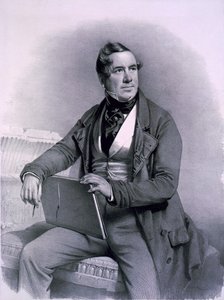
David Roberts
1796 - 1864 , United Kingdom
Quick Facts
- Birth Date: October 24, 1796
- Birth Place: Stockbridge, United Kingdom
- Death Date: 1864
- Influenced: Jenaro Pérez Villaamil, Alexander Nasmyth
- Movement: Orientalism
- Name: David Roberts
- Nationality: Scottish
- Notable Works: The Holy Land, Syria, Idumea, Arabia, Egypt, and Nubia
Related Articles

David Roberts: A Scottish Pioneer of Topographical Art & Orientalist Vision
Explore the captivating world of David Roberts, a pioneering Scottish painter renowned for his detailed Orientalist scenes & stunning Egyptian landscapes. Discover his legacy and find museum-quality reproductions at ArtsDot.
Hubert Robert: Picturing Ruins, Preserving Memory – A Study of Romantic Antiquarianism & Artistic Innovation
Explore the captivating world of Hubert Robert, master of Romantic landscape painting & 'capriccio' ruins. Discover his historical context, artistic innovations, and collecting insights with ArtsDot.
Jacques-Louis David: Neoclassical Ideals & Revolutionary Witness
Explore the life & art of Jacques-Louis David, leading Neoclassical painter of the French Revolution. Discover iconic works like 'The Death of Marat' and his lasting impact on art history. Expert analysis & high-quality reproductions at ArtsDot.
Gerard David: Bridging Late Medieval Tradition with Early Renaissance Humanism
Explore the captivating world of Gerard David, a pivotal figure bridging late medieval artistry with the Early Renaissance. Discover his innovative techniques, religious masterpieces, and enduring legacy – a must-read for discerning art collectors.
David Bomberg: Reassessing the Pioneering Spirit of Early British Abstraction
Explore the groundbreaking work of David Bomberg, a pivotal figure in British abstraction. Discover his artistic evolution, influences, and lasting legacy through insightful analysis & expert commentary.