The Slade Rebel: Bomberg’s Early Years and Artistic Formation
 Wikipedia: David Bomberg
David Garshen Bomberg (5 December 1890 – 19 August 1957) was a British painter, and one of the Whitechapel Boys. Bomberg was one of the most audacious of the exceptional generation of artists who studied at the Slade School of Art under Henry Tonks, ...
David Garshen Bomberg, born in Birmingham in 1890 to Polish Jewish immigrants, emerged as a fiercely independent voice within the British art scene of the early 20th century. His origins – a large family struggling for stability in the industrial heartland and later, the vibrant but impoverished East End of London – profoundly shaped his artistic sensibility. Unlike many of his contemporaries who enjoyed privileged educations, Bomberg’s path to artistry was forged through sheer determination and an innate hunger for expression. A chance encounter with John Singer Sargent at the Victoria & Albert Museum proved pivotal, securing him a place at the prestigious Slade School of Art in 1911. However, even within this established institution, Bomberg quickly distinguished himself as a radical spirit.
The Slade under Henry Tonks was renowned for its rigorous academic training, emphasizing draughtsmanship and observation. Yet, Bomberg found himself increasingly drawn to the burgeoning avant-garde movements sweeping across Europe – particularly Cubism and Futurism. He wasn’t merely interested in replicating forms; he sought to dismantle them, to capture the underlying energy and dynamism of modern life. This rebellious streak led to his expulsion in 1913, a testament to his audacity in challenging conventional approaches. The agreement amongst senior teachers—Tonks, Frederick Brown, and Philip Wilson Steer—underscores the extent to which Bomberg’s vision clashed with the established order.
From Cubism to Vorticism: Experimentation and the Search for a New Visual Language
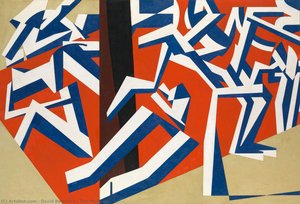
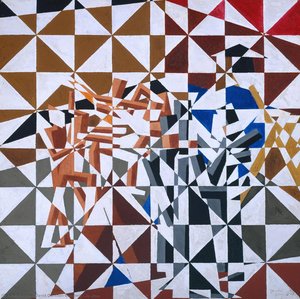
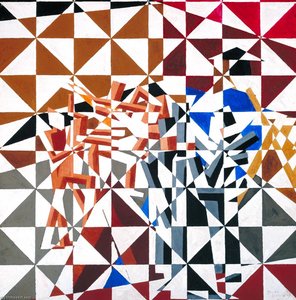 Ju Jitsu
Explore David Bomberg’s ‘Ju Jitsu’ (1913) – a dynamic abstract geometric composition blending Cubism & Constructivism. Discover its warm color palette, fragmented figures, and unique artistic style.
Following his departure from the Slade, Bomberg embarked on a period of intense experimentation. A brief but formative sojourn in Paris in 1913-14 brought him into contact with artists like Derain, Modigliani, and Picasso, further fueling his exploration of abstraction. He absorbed the lessons of Cubism – its fragmentation of form, multiple perspectives, and rejection of traditional representation – but he wasn’t content to simply imitate. Bomberg sought a uniquely British response to these European innovations.
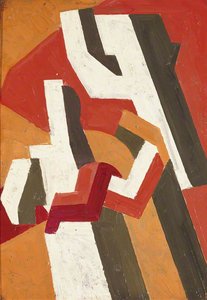
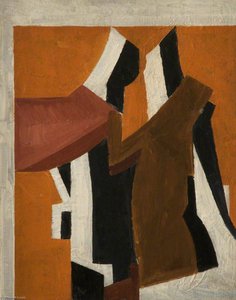
This search led him towards Vorticism, a short-lived but influential English modernist movement founded by Wyndham Lewis. Works like Ju Jitsu (1913) exemplify this period – dynamic abstract geometric compositions blending Cubist principles with the machine aesthetic of Futurism. The warm color palette and fragmented figures convey a sense of raw energy, reflecting Bomberg’s fascination with physicality and movement. He wasn't simply depicting objects; he was attempting to capture their essence, their underlying structure and force. Paintings from this era are characterized by bold brushwork and a deliberate rejection of naturalistic color in favor of heightened emotional impact.
War, Displacement, and Transformation: The Shift in Bomberg’s Aesthetic
The outbreak of World War I irrevocably altered the course of Bomberg’s artistic journey. His service with the Royal Engineers on the Western Front proved a deeply traumatic experience, shattering his faith in the progressive ideals that had previously informed his work. The horrors of trench warfare led to a profound disillusionment with the machine age and a rejection of abstraction in favor of more representational forms.
This shift wasn’t abrupt; it was a gradual process of reckoning. His postwar paintings reflect a growing concern with human suffering and the weight of history. The angular, fragmented style of his earlier work gave way to a more emotionally charged realism, albeit one still imbued with a distinctive sense of urgency and power. He began to focus on depicting scenes of everyday life – laborers, barges, and urban landscapes – imbuing them with a newfound sense of gravity and compassion.
‘Spirit in the Mass’: Landscapes and the Pursuit of Emotional Resonance
The 1920s saw Bomberg embark on a series of travels that would profoundly influence his later work. A pivotal journey to Palestine in 1923-27 marked a turning point, as he began to paint en plein air for the first time. He wasn’t interested in capturing picturesque views; rather, he sought to convey the ‘spirit in the mass’ – the energy and weight of a place, its history and atmosphere.
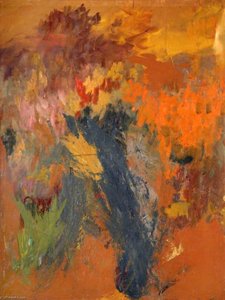
His landscapes from this period are characterized by broad, gestural brushstrokes and rich, vivid color. He prioritized emotional resonance over precise representation, aiming to capture the essence of a location rather than its superficial details. Subsequent travels in Spain – to Toledo, Cuenca, and Ronda – further refined his approach, leading to paintings that pulsate with life and intensity. Players (formerly ‘Fiesta’, 1920) exemplifies this mature style—a dynamic oil painting showcasing Expressionist color and bold brushwork, capturing a fleeting moment of human interaction with raw energy.
Bomberg as Educator: A Lasting Legacy Through His Students
Despite facing ongoing critical neglect throughout much of his life, Bomberg found fulfillment in teaching. From 1945 to 1953, he held a post at the Borough Polytechnic Institute in London, where he profoundly influenced a younger generation of artists. His pupils – including Leon Kossoff, Cliff Holden, Dorothy Mead, and Frank Auerbach – became known for their expressive figuration and commitment to direct observation.
Bomberg’s teaching philosophy was unconventional; he encouraged his students to embrace their own individuality and to reject academic conventions. He instilled in them a passion for painting from life and a willingness to take risks. His emphasis on emotional honesty and the pursuit of ‘spirit in the mass’ resonated deeply with these artists, shaping their distinctive styles and contributing to the development of a uniquely British postwar aesthetic.
Rediscovery and Reassessment: David Bomberg’s Place in Modern British Art
--- title: Curving Round: David Sylvester and the ‘Rediscovery’ of David Bomberg – Tate Papers | Tate author: Lee Hallman url: https://www.tate.org.uk/research/tate-papers/21/curving-round-david-sylvester-and-the-rediscovery-of-david-bomberg hostname...
David Bomberg died in virtual obscurity in 1957. For decades, his work remained largely unknown outside a small circle of admirers. However, beginning in the 1980s, a concerted effort to reassess his legacy began to gain momentum. Richard Cork’s research and Tate’s first solo exhibition in 1988 played a crucial role in bringing Bomberg’s paintings to wider attention.
Today, David Bomberg is widely recognized as one of the most significant twentieth-century British artists. His pioneering spirit, his unwavering commitment to artistic independence, and his profound emotional depth continue to inspire generations of painters. His journey – from Cubist beginnings to expressive landscapes – represents a remarkable testament to the power of art to transform personal experience into universal truths. At ArtsDot.com, we are proud to offer high-quality reproductions of Bomberg’s iconic works, allowing you to experience firsthand the brilliance of this often-overlooked master.