 Preview
 Send
Send Share
Share
 Details

 Download
 Similars
 X-Ray
X-Ray Diaporama
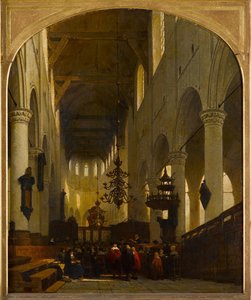
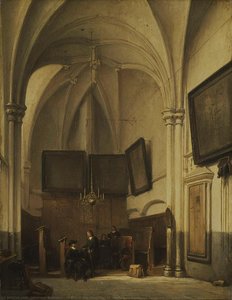
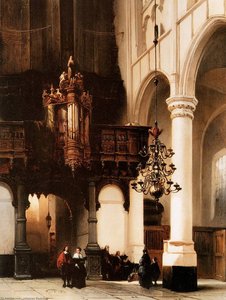
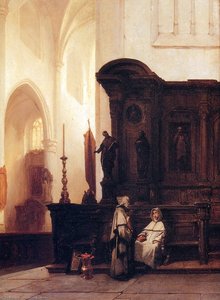
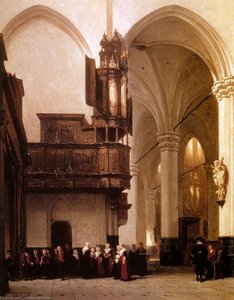
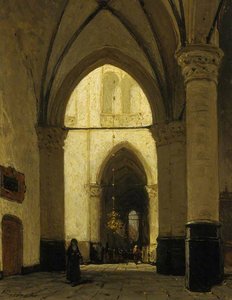
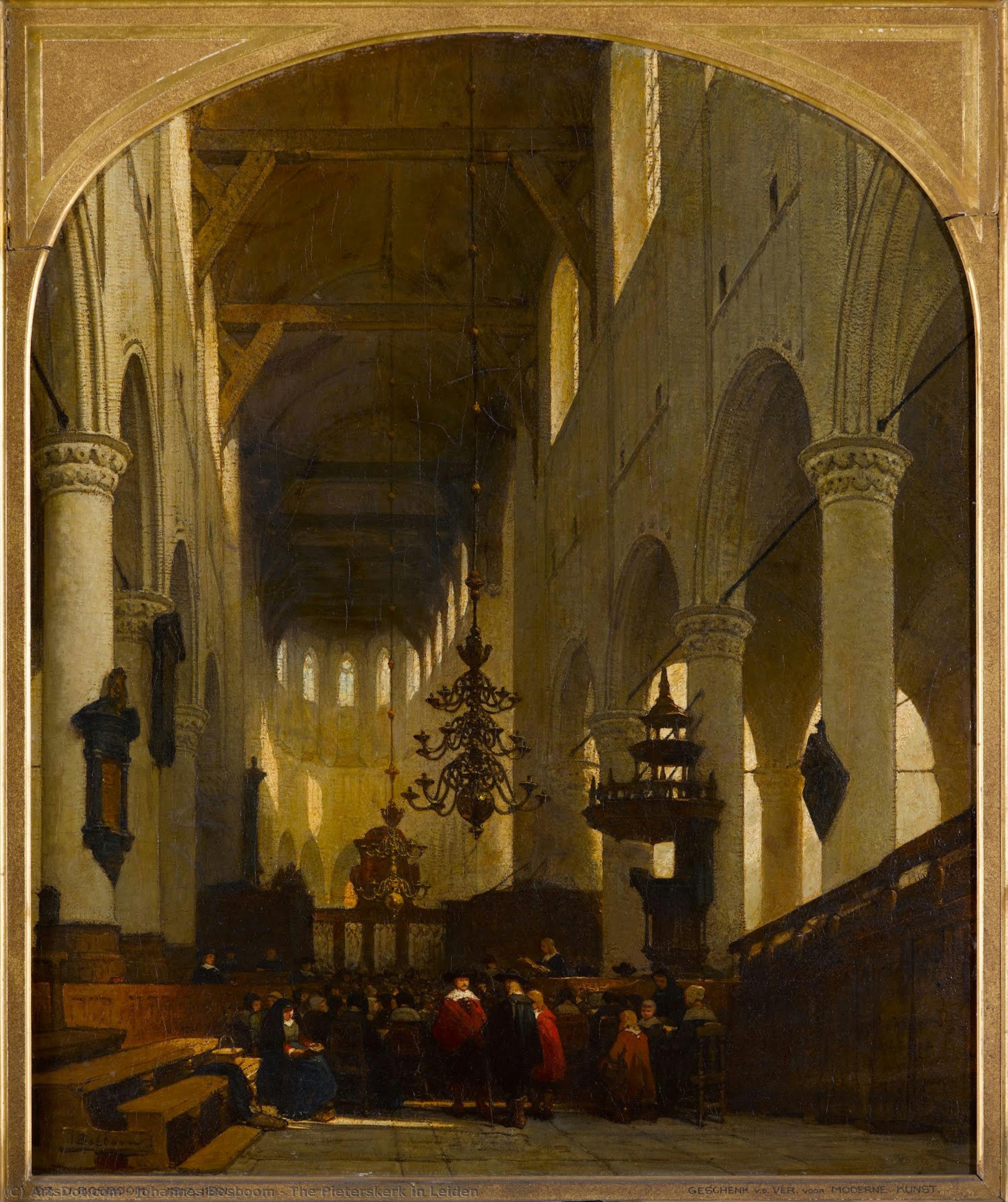
The Pieterskerk in Leiden
 Acrylic
- WallArt
- Romantic Interior Painting
 1868
1868 1080.0 x 1213.0 cm
 Kunstmuseum
 Read More
Hand Made Oil Reproduction
Hand-painted oil on canvas in your size and frame, made to order by our artists. ( Buy Print Buy Image)




P118B $10

P118H $10

P118W $10

P438Z $10

P508JH $12

P508YH $12

P805H $10

P805Z $10

P919BZ $10

P919G $10

P919XJ $10

P959ZH $10

P968JZ $12

W106C $8

W218G $10

W218JH $8

W218Y $10

W307PJ $10

W316G $10

W316PJ $8

W316Y $10

W398PJ $8

W4111J $10

W500HY $15

W500JH $15

W692G $12

W849H $8

W940BG $15

W953PJ $8




Pick from our preset sizes that match the artwork's original proportions.

You may enter your own dimensions to fit a specific frame or space. If your selected size does not match the original image's proportions, we will either crop the artwork or extend the painting with additional hand-painted elements. A digital mockup will be sent for your approval before production begins.
Please note that the on-screen preview does not reflect the actual cropping or extension. Only the mockup will accurately show the final composition.
While custom sizes are available, we recommend selecting a dimension from the predefined list to preserve the original proportions.
After order, ArtsDot.com team will email client for instructions and provide a mockup preview
Worldwide Delivery () in 3/4 weeks instead of standard 5 weeks. (16 August). No compromise on quality.

Free Worldwide Express Shipping

High-Quality Linen Canvas

Full Shipping Insurance

Customs Tax Refund Guarantee

True Color Matching Guarantee

60-Day Return Policy (Defects Only)

100% Money-Back Guarantee

Bulk Discount Offer
 Glass option is only available in size under 110 CM

The Pieterskerk in Leiden
Reproduction Medium
Reproduction Size
-


Total Price
$ 263
Artwork Description
Johannes Bosboom’s Reverent Rendering of Leiden’s Pieterskerk
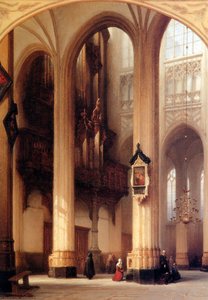
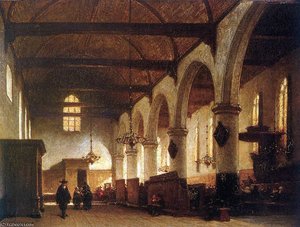
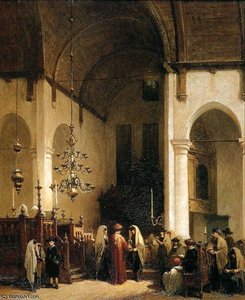
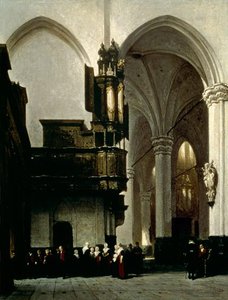
The Pieterskerk in Leiden, captured by Johannes Bosboom in 1868, isn't merely a depiction of a building; it’s an embodiment of Romantic idealism distilled onto canvas. Bosboom, deeply influenced by Wijnand Nuijen’s approach to light and atmosphere—a deliberate rejection of strict perspectival realism—transformed the nave and chancel into a luminous tableau designed to evoke spiritual contemplation. Rather than presenting a straightforward architectural representation, he prioritized creating a theatrical space mirroring stage sets, emphasizing foreground, middle-ground, and background elements to heighten visual depth.- Style: Hague School – Characterized by tonal harmonies and subtle modeling of form, prioritizing mood over precise detail.
- Technique: Bosboom employed oil paint on canvas with meticulous layering—a technique that allowed him to achieve the ethereal quality of light emanating from an unseen source. This masterful manipulation of color and texture contributes significantly to the painting’s emotive power.
- Symbolism: The pervasive light symbolizes divine grace and illuminates the sacred rituals unfolding within the church walls.
- Emotional Impact: Bosboom’s painting invites viewers to immerse themselves in a tranquil atmosphere, fostering feelings of serenity and spiritual connection.
Related Artworks
Artist Biography
Johannes Bosboom: Capturing the Soul of Dutch Interiors
Johannes Bosboom, a name perhaps less familiar than some of his contemporaries within the Hague School, nevertheless stands as a quietly profound figure in Dutch art history. Born in The Hague in 1817, Bosboom dedicated his life to meticulously observing and rendering the serene beauty of church interiors and evocative landscapes, earning him a unique place within the artistic landscape of 19th-century Netherlands. His work isn’t characterized by dramatic narratives or bold brushstrokes; rather, it's a subtle exploration of light, shadow, and atmosphere—a masterful manipulation of tonal values that invites viewers into a contemplative space.
Bosboom’s artistic journey began under the tutelage of Bartholomeus van Hove at the tender age of fourteen. This early apprenticeship proved formative, immersing him in the world of theatrical scenery painting – a demanding environment where he honed his skills in composition and color theory alongside Van Hove's son, Hubertus. Further formal training followed at the Hague Academy of Art from 1831 to 1835 and again between 1839 and 1840, providing him with a solid foundation in technique while also fostering connections with fellow artists like Anthonie Waldorp and Wijnand Nuyen. A pivotal moment arrived in 1835 when he traveled to Düsseldorf, Cologne, and Koblenz, capturing the evocative watercolor view of the Mosel Bridge at Koblenz – a piece that would later be acquired by Andreas Schelfhout, who became a lifelong confidante and friend, offering invaluable support and encouragement throughout Bosboom’s career.
Bosboom's artistic focus quickly settled on church interiors. This choice wasn’t merely stylistic; it represented a deliberate exploration of spatial atmosphere. Drawing inspiration from the seventeenth-century masters Pieter Saenredam and Emanuel de Witte, he sought to recreate the feeling of reverence and stillness found within these sacred spaces. He meticulously studied the interplay of light filtering through stained glass windows, the subtle gradations of color in the stone walls, and the way shadows danced across the floor – translating these observations onto canvas with remarkable accuracy and sensitivity. His paintings aren’t literal depictions but rather carefully constructed evocations, designed to transport the viewer into a realm of quiet contemplation.
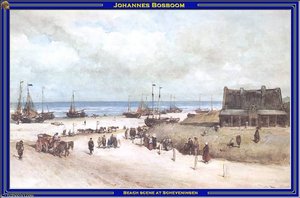
While often categorized within the Hague School, Bosboom's approach distinguished him from some of his peers. He wasn’t interested in capturing fleeting moments or dramatic scenes; instead, he focused on creating an enduring sense of atmosphere and mood. His meticulous attention to detail and his masterful use of light and shadow place him firmly within the mainstream of this artistic movement, yet his unique sensibility ensured that his work retained a distinct character. In 1873, during a sojourn in Scheveningen, he shifted his focus to watercolors of coastal scenes – dunes, beaches, and the sea – suggesting a possible influence on later artists like Hendrik Willem Mesdag and Jacob Maris who similarly explored the beauty of the Dutch coastline.
Honors and Recognition
Bosboom’s dedication to his craft was recognized with several honors throughout his career. In 1886, he was appointed an Officer in the Order of Leopold, a prestigious distinction acknowledging his contributions to the arts and culture of the Netherlands. This recognition further solidified his position as a respected figure within the artistic community.
Notable Works
Bosboom’s oeuvre is characterized by a remarkable consistency in subject matter – primarily church interiors – yet each painting possesses its own unique character and charm. Some of his most celebrated works include:
- Bakenesserkerk interior (1870): A serene depiction of the Bakenesser Church, showcasing Bosboom’s mastery of light and shadow.
- Interior of the Dom in Trier (1880): A meticulously rendered view of the Trier Cathedral, capturing its grandeur and spiritual atmosphere.
- Interieur van een boerendeel bij hilversum (Interior of a Farmhouse near Hilversum): A quieter scene, demonstrating his ability to capture the essence of rural life.
- Zicht te koblenz (View at Koblenz): A watercolor capturing the Mosel Bridge and surrounding landscape.
Legacy and Influence
Johannes Bosboom’s legacy extends beyond the individual paintings that grace museum collections. His meticulous observation, his profound understanding of light and shadow, and his unwavering commitment to capturing the essence of space have had a lasting influence on Dutch art. He demonstrated that beauty could be found in the quietest corners, in the subtle details of everyday life—a lesson that continues to resonate with artists today. While perhaps not as widely celebrated as some of his contemporaries, Bosboom’s work remains a testament to the power of observation and the enduring appeal of serene, contemplative art.
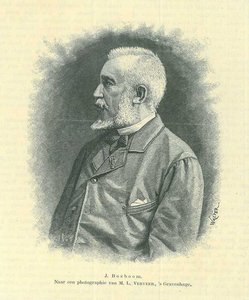
Johannes Bosboom
1817 - 1891 , Netherlands
Quick Facts
- Artistic Movement Or Style: Hague School
- Artists Or Movements Influenced By This Artist:
- Pieter Saenredam
- Emanuel de Witte
- Artists Who Influenced This Artist:
- Bartholomeus van Hove
- Andreas Schelfhout
- Date Of Birth: Feb 18, 1817
- Date Of Death: Sept 14, 1891
- Full Name: Johannes Bosboom
- Nationality: Dutch
- Notable Artworks:
- Interior of St Bavo
- View of Mosel Bridge
- Paris Quay Interior
- Place Of Birth: The Hague, Netherlands
Related Articles
The Hague School: Realism, Atmosphere & the Dawn of Dutch Impressionism
Explore the Hague School's pivotal role in Dutch art history. Discover realism, atmospheric landscapes & its influence on Impressionism. Learn about key artists like Mauve & Maris with ArtsDot.
Johannes Bosboom: Light, Landscape & the Dutch Realist Tradition
Explore the captivating world of Johannes Bosboom, a master of Dutch Realism renowned for his evocative church interiors & landscapes. Discover his life, techniques, and enduring legacy with ArtsDot.

Dutch Masters: 10 Golden Age Paintings That Still Inspire |
Journey into the Dutch Golden Age! Explore 10 iconic paintings by Rembrandt, Vermeer & Hals. Discover the stories behind these Baroque masterpieces and find museum-quality art reproductions to elevate your home decor on .
Jan Hendrik Weissenbruch: A Master of Dutch Realism & Atmospheric Light
Explore the captivating world of Jan Hendrik Weissenbruch, a master of Dutch Realism. Discover his atmospheric landscapes, influences, and legacy within the Hague School. Learn about this 19th-century artist's unique style & enduring impact.

Dutch Baroque Masters: 10 Paintings That Shaped an Era | ArtsDot
Journey through the Golden Age with our guide to the Top 10 Dutch Baroque masterpieces! Explore iconic paintings by Rembrandt, Vermeer & Frans Hals. Find museum-quality art reproductions and elevate your home decor at ArtsDot.com.