 Preview
 Send
Send Share
Share
 Details

 Download
 Similars
 X-Ray
X-Ray Diaporama
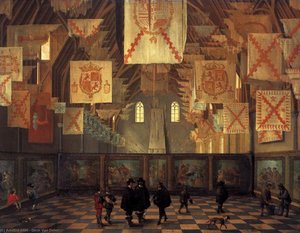
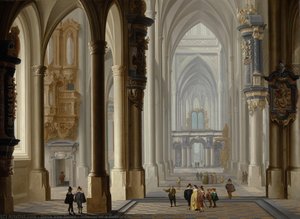
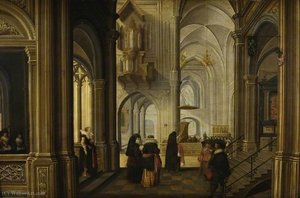
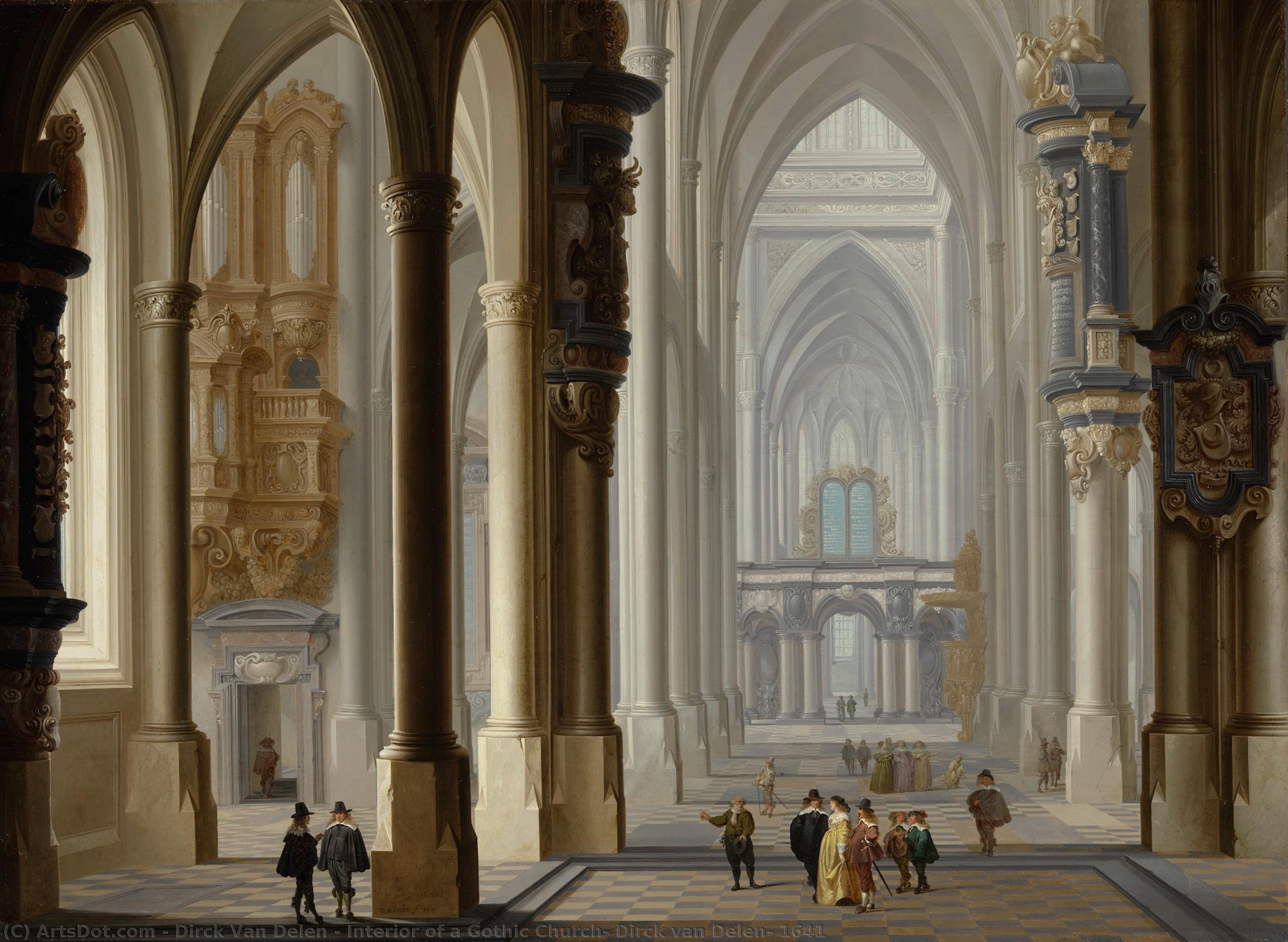
Interior of a Gothic Church, Dirck van Delen, 1641


 Read More
Hand Made Oil Reproduction
Hand-painted oil on canvas in your size and frame, made to order by our artists. ( Buy Print Buy Image)




































Pick from our preset sizes that match the artwork's original proportions.

You may enter your own dimensions to fit a specific frame or space. If your selected size does not match the original image's proportions, we will either crop the artwork or extend the painting with additional hand-painted elements. A digital mockup will be sent for your approval before production begins.
Please note that the on-screen preview does not reflect the actual cropping or extension. Only the mockup will accurately show the final composition.
While custom sizes are available, we recommend selecting a dimension from the predefined list to preserve the original proportions.
After order, ArtsDot.com team will email client for instructions and provide a mockup preview
Worldwide Delivery () in 3/4 weeks instead of standard 5 weeks. (17 August). No compromise on quality.

Free Worldwide Express Shipping

High-Quality Linen Canvas

Full Shipping Insurance

Customs Tax Refund Guarantee

True Color Matching Guarantee

60-Day Return Policy (Defects Only)

100% Money-Back Guarantee

Bulk Discount Offer
 Glass option is only available in size under 110 CM

Interior of a Gothic Church, Dirck van Delen, 1641
Reproduction Medium
Reproduction Size
-


Total Price
$ 338
Artwork Description
A Glimpse into 17th-Century Dutch Church Life: "Interior of a Gothic Church"
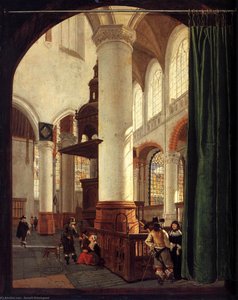
Dirck van Delen's "Interior of a Gothic Church," painted in 1641, offers a captivating and meticulously detailed view into the heart of a Dutch Protestant church. This isn’t merely a depiction of architecture; it's a window into the religious and social life of the era, rendered with remarkable realism characteristic of the Dutch Golden Age.
Architectural Grandeur & Artistic Technique
The painting showcases an imaginary interior, viewed from a slightly elevated perspective that emphasizes the church’s impressive scale. Towering Gothic arches, ornate columns adorned with epitaphs (memorial plaques), and intricate architectural details dominate the scene. Van Delen masterfully employs linear perspective to create a sense of depth, drawing the viewer's eye towards the choir area where the Tables of the Law are displayed above a pulpit. The light streaming in from large windows illuminates the stone surfaces and figures within, creating dramatic contrasts between light and shadow – a hallmark of Baroque painting.
- Style: Realism with strong perspective and detail characteristic of 17th-century Dutch Golden Age painting.
- Technique: Oil paint on canvas, evident in the smooth brushstrokes and rich textures.
- Composition: Primarily linear, emphasizing depth through receding rows of pillars and a vanishing point in the distance.
Figures & Collaboration: A Touch of Human Presence
While Van Delen was the master architect behind this scene, the figures populating the church were added by Anthonie Palamedesz, a painter from Delft. This collaboration highlights the common practice among Dutch artists to specialize in different aspects of a painting – architecture versus figurative work. The inclusion of these figures brings the scene to life, suggesting a congregation engaged in worship or perhaps a special event. The period clothing further grounds the artwork within its historical context.
Symbolism & Emotional Resonance
Beyond its aesthetic appeal, "Interior of a Gothic Church" carries significant symbolic weight. The church itself represents faith, authority, and community – central tenets of Dutch society in the 17th century. The grand architecture evokes a sense of awe and reverence, while the carefully rendered details invite contemplation. The muted earth tones—browns, beiges, and grays—contribute to a feeling of solidity and age, reinforcing the enduring nature of faith and tradition.
Historical Context & Artistic Legacy
Dirck van Delen (1605-1671) specialized exclusively in architectural paintings, demonstrating his mastery of perspective and detail. Working from Arnemuiden near Middelburg, he was influenced by artists like Frans Hals and Hendrick Aerts. His work, alongside that of contemporaries like Pieter Neefs the Elder, helped define a genre celebrated for its realism and meticulous observation of architectural spaces. "Interior of a Gothic Church" stands as a testament to Van Delen's skill and provides valuable insight into the religious landscape of 17th-century Netherlands.
Related Artworks
Artist Biography
Dirck van Delen: Architect of Illusion
The Dutch Golden Age produced a dazzling array of artists, but few captured the imagination quite like Dirck van Delen (1605-1671). More than simply a painter, Van Delen was an architect of illusion, meticulously crafting impossible palaces and breathtaking church interiors that defied reality. His work, largely confined to architectural fantasies, offers a unique window into the aspirations and artistic sensibilities of 17th-century Europe – a period obsessed with grandeur, perspective, and the sublime.
Born in Heusden, Netherlands, Van Delen’s early life remains somewhat shrouded in mystery. The precise details of his apprenticeship are debated by art historians, with speculation centering on potential tutelage under both Frans Hals and Hendrick Aerts, though a more plausible influence stemmed from studies under Pieter van Bronckhorst and Bartholomeus van Bassen in Delft. This connection to Delft is significant, as it suggests an early exposure to the burgeoning artistic trends of the Low Countries – particularly the meticulous draftsmanship and architectural precision championed by figures like Jan van Londerseel whose prints profoundly shaped the visual language of his work.
Van Delen’s career unfolded primarily in Arnemuiden, where he served as toll house master and later held a prominent position on the town council. This civic engagement provided him with stability while allowing him to dedicate himself to his art. He married three times and, despite having no known children who survived beyond infancy, established a legacy through his pupils – Daniël de Blieck and Hans Jurriaensz. van Baden – who carried forward elements of his distinctive style.
The Architect’s Palette: Style and Technique
Van Delen's artistic identity is firmly rooted in the Baroque period, yet he developed a highly individual approach. His paintings are characterized by an almost obsessive attention to detail, meticulously rendering every column, cornice, and decorative element within his imagined architectural spaces. Unlike many of his contemporaries who focused on narrative scenes or portraiture, Van Delen’s subjects were entirely self-contained – grand palaces and imposing churches designed solely for the pleasure of the viewer.
His palette was remarkably consistent throughout his career, favoring a restrained yet sophisticated range of colors: cool blues and greens contrasted with warm ochres and reds, often punctuated by shimmering gold leaf. He expertly manipulated light and shadow to create an illusion of depth and volume, employing techniques borrowed from the Flemish masters but infused with his own unique sensibility. The influence of Hendrick Aerts is particularly evident in Van Delen’s early works, characterized by a meticulous rendering of architectural details and a subtle use of perspective.
Notably, Van Delen's work frequently involved collaborations with other artists, most notably Gonzales Coques and Pieter Codde. While the exact nature of these partnerships remains debated, it is believed that Van Delen primarily focused on painting the figures within his compositions, relying on the skills of others to execute the architectural elements. This division of labor reflects a pragmatic approach to artistic production – one that allowed him to concentrate on his core strength: creating compelling and believable illusions.
Imaginary Realms: Themes and Symbolism
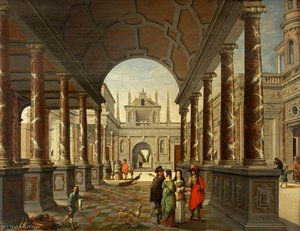
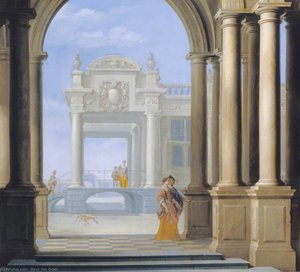
Van Delen’s architectural fantasies are not merely decorative exercises; they are imbued with symbolic meaning. His palaces, often adorned with elaborate sculptures and opulent furnishings, represent the ideals of wealth, power, and divine authority – qualities highly valued during the Dutch Golden Age. The inclusion of figures within these spaces—often engaged in courtly activities or religious ceremonies—suggests a desire to explore the relationship between human ambition and spiritual aspiration.
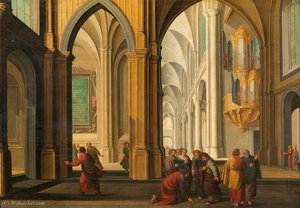
His church interiors, equally impressive in their scale and detail, evoke a sense of awe and reverence. These meticulously rendered spaces, filled with soaring arches, stained glass windows, and intricate ornamentation, represent the glory of God and the enduring power of faith. The use of perspective is particularly striking, creating an illusion of vastness that draws the viewer into the heart of the architectural space.
A fascinating aspect of Van Delen’s work is his occasional inclusion of still lifes – notably a single flower arrangement—which stand in stark contrast to his predominantly architectural subjects. These intimate scenes offer a glimpse into a more personal side of the artist, suggesting an appreciation for beauty and natural forms.
Legacy and Influence
Despite his relative obscurity during his lifetime, Dirck van Delen’s work has gained increasing recognition in recent decades. His meticulously rendered architectural fantasies continue to captivate viewers with their illusionistic qualities and their evocative portrayal of the Dutch Golden Age. He is considered a key figure in the development of Dutch Baroque painting, particularly for his pioneering use of perspective and his ability to create convincing illusions of space.
Van Delen’s influence can be seen in the work of subsequent generations of Dutch artists, including Pieter van Bronckhorst and Bartholomeus van Bassen. His legacy endures as a testament to the power of artistic imagination – a reminder that even the most impossible dreams can be rendered with breathtaking detail and skill.
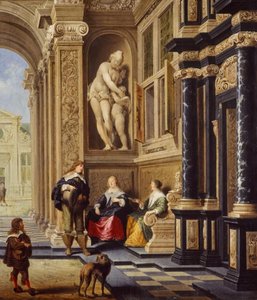
Dirck van Delen
1605 - 1671 , Netherlands
Quick Facts
- Artistic Movement Or Style: Baroque
- Artists Or Movements Influenced By This Artist: ['Jan van Goyen']
- Artists Who Influenced This Artist:
- Hendrick Aerts
- Pieter van Bronckhorst
- Date Of Birth: c. 1605
- Date Of Death: May 16, 1671
- Full Name: Dirck Christiaensz van Delen
- Nationality: Dutch
- Notable Artworks:
- Interior with Ladies and Cavalier
- Gallery Paintings
- Place Of Birth: Heusden, Netherlands
Related Articles

Dutch Masters: 10 Golden Age Paintings That Still Inspire |
Journey into the Dutch Golden Age! Explore 10 iconic paintings by Rembrandt, Vermeer & Hals. Discover the stories behind these Baroque masterpieces and find museum-quality art reproductions to elevate your home decor on .

Golden Age Reflections: Dutch Baroque Painting & Cultural Innovation
Explore the Dutch Golden Age of painting! Discover key artists like Vermeer & ter Borch, their innovative techniques, and the rich cultural context behind these Baroque masterpieces. Learn about collecting & appreciating this iconic art period.

Illuminating Innovation: Exploring the Dutch Golden Age of Painting
Explore the Dutch Golden Age of painting with ArtsDot. Discover Rembrandt, Vermeer & other Masters. Learn about key characteristics, iconic artworks, and lasting influence. Expert insights for collectors & enthusiasts.
Golden Light & Dutch Skies: Bringing the Magic of Dutch Golden Age Landscapes into Your Home
Transform your home with the breathtaking light of Dutch Golden Age landscapes. Discover how hand-painted oil reproductions of masterworks like Ruisdael and Vermeer bring timeless elegance, atmosphere, and soulful texture to modern interiors. Elevate your space with museum-quality art.
Illuminating Realism: Exploring the Dutch Golden Age of Painting (1600-1700)
Explore the Dutch Golden Age of painting (1600-1700) with ArtsDot. Discover Rembrandt, Vermeer & other masters. Learn about techniques, history & find museum-quality reproductions.