 Preview
 Send
Send Share
Share
 Details

 Download
 Similars
 X-Ray
X-Ray Diaporama
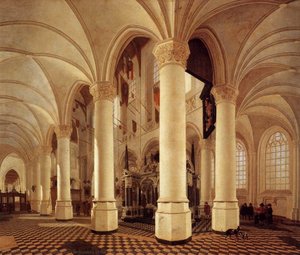
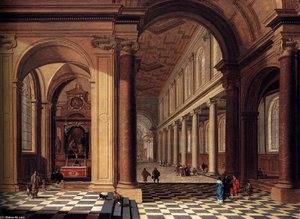
Imaginary Gothic Church
 Acrylic On Canvas
- WallArt
- Baroque
 1637
1637 251.0 x 216.0 cm
 Rijksmuseum
 Read More
Hand Made Oil Reproduction
Hand-painted oil on canvas in your size and frame, made to order by our artists. ( Buy Print Buy Image)




P118B $10

P118H $10

P118W $10

P438Z $10

P508JH $12

P508YH $12

P805H $10

P805Z $10

P919BZ $10

P919G $10

P919XJ $10

P959ZH $10

P968JZ $12

W106C $8

W218G $10

W218JH $8

W218Y $10

W307PJ $10

W316G $10

W316PJ $8

W316Y $10

W398PJ $8

W4111J $10

W500HY $15

W500JH $15

W692G $12

W849H $8

W940BG $15

W953PJ $8




Pick from our preset sizes that match the artwork's original proportions.

You may enter your own dimensions to fit a specific frame or space. If your selected size does not match the original image's proportions, we will either crop the artwork or extend the painting with additional hand-painted elements. A digital mockup will be sent for your approval before production begins.
Please note that the on-screen preview does not reflect the actual cropping or extension. Only the mockup will accurately show the final composition.
While custom sizes are available, we recommend selecting a dimension from the predefined list to preserve the original proportions.
After order, ArtsDot.com team will email client for instructions and provide a mockup preview
Worldwide Delivery () in 3/4 weeks instead of standard 5 weeks. (17 August). No compromise on quality.

Free Worldwide Express Shipping

High-Quality Linen Canvas

Full Shipping Insurance

Customs Tax Refund Guarantee

True Color Matching Guarantee

60-Day Return Policy (Defects Only)

100% Money-Back Guarantee

Bulk Discount Offer
 Glass option is only available in size under 110 CM

Imaginary Gothic Church
Reproduction Medium
Reproduction Size
-


Total Price
$ 363
Artwork Description
Imaginary Gothic Church: A Vision of Faith and Architectural Grandeur
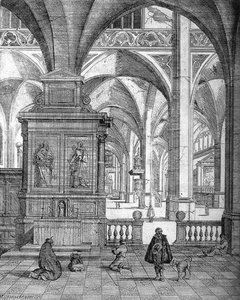
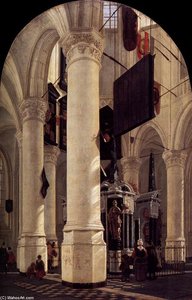
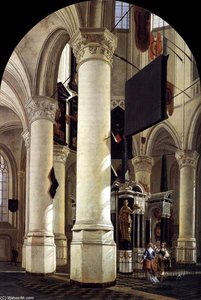
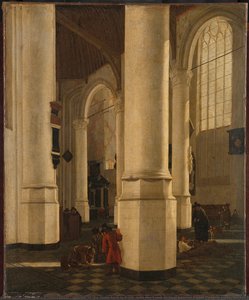
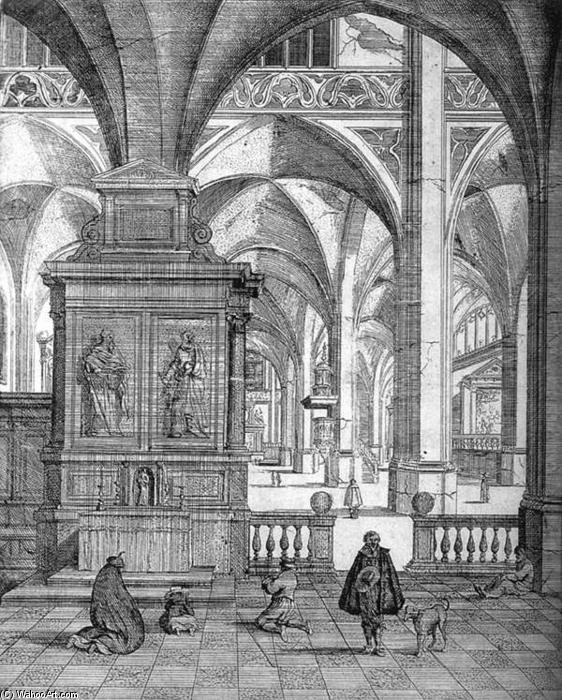
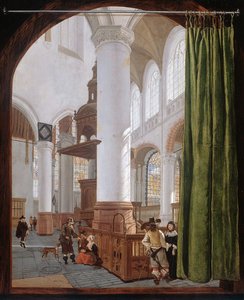
The artwork "Imaginary Gothic Church," executed by Gerard Houckgeest in 1637, stands as an exceptional testament to the artistic sensibilities of the Dutch Golden Age. More than just a depiction of ecclesiastical architecture, it embodies a profound exploration of faith, stability, and the sublime—themes central to Baroque aesthetics and deeply rooted in the spiritual landscape of seventeenth-century Europe. This engraving, meticulously crafted after an original painting by Pieter Saenredam, captures not merely the physical structure but also its emotive essence, inviting contemplation on divine majesty.Composition and Perspective: Mastering Depth
Houckgeest’s compositional genius is immediately apparent in the artwork's central focus—a towering altar dominating the middle ground. Surrounding it are receding arches and columns that skillfully employ linear perspective to create an illusion of vastness and depth, mirroring the grandeur of cathedral spaces. The artist’s deliberate positioning of figures within the foreground draws the viewer’s gaze inward, fostering a sense of immersion in this sacred realm. Diagonal lines contribute dynamism, emphasizing the architectural scale and enhancing the overall visual impact.Detailed Realism and Baroque Technique: A Symphony of Line
Houckgeest's technique exemplifies the hallmark precision characteristic of Baroque engraving—a painstaking process involving cross-hatching and stippling to achieve nuanced tonal variations. These meticulous marks capture the textures of stone, highlighting intricate carvings on the altar and architectural elements with remarkable accuracy. The artist’s dedication to detail reflects a broader artistic commitment to representing reality as faithfully as possible while simultaneously elevating it to an idealized form—a stylistic hallmark of the period.Symbolism and Emotional Resonance: Echoes of Divine Presence
Beyond its technical prowess, “Imaginary Gothic Church” resonates with powerful symbolic significance. The architecture itself symbolizes faith, resilience, and transcendence—concepts paramount in the religious fervor of the time. The kneeling figures evoke feelings of humility, devotion, and contemplation, conveying a palpable sense of spiritual reverence. Houckgeest’s masterful rendering captures not only visual beauty but also an emotional depth that speaks to the human yearning for connection with something greater than oneself.Historical Context: Pieter Saenredam's Influence
The artwork’s genesis lies in Pieter Saenredam’s original painting, “St Bavo’s in Haarlem,” which served as inspiration for Houckgeest’s engraving. Saenredam’s celebrated depictions of churches—particularly St Bavo’s Cathedral—established a precedent for architectural interiors as subjects of artistic exploration during the Baroque era. Houckgeest skillfully adapted Saenredam's vision, transforming it into a stunning monochrome print that continues to inspire admiration for its compositional brilliance and technical mastery.Further Exploration: The Mauritshuis Collection
A remarkable specimen of Dutch Baroque art, “Imaginary Gothic Church” resides within the Mauritshuis’s collection in Amsterdam—a testament to Houckgeest's enduring legacy as a master of architectural representation. Visiting this museum offers an unparalleled opportunity to experience firsthand the grandeur and spiritual depth captured by Houckgeest’s engraving and to appreciate its place within the broader artistic panorama of the seventeenth century.Related Artworks
Artist Biography
The Architect of Light and Devotion
In the heart of the Dutch Golden Age, a period defined by unparalleled prosperity and intellectual awakening, Gerard Houckgeest emerged as a master of a most specialized and profound genre. Born in The Hague around 1600, Houckgeest did not merely paint scenes; he constructed worlds of stone, light, and spirit. His journey into the heights of artistic achievement began under the guidance of Bartholomeus van Bassen, a seminal figure whose influence anchored Houckgeest within the prestigious Delft workshop tradition. This lineage provided him with more than just technical skill; it instilled in him a reverence for architectural precision and a unique ability to manipulate light to evoke the divine.
As his career progressed through the mid-1s60s, Houckgeest’s presence moved across the landscape of the Netherlands, leaving his mark in Delft, Steenbergen, and Bergen op Zoom. These locations were not merely geographic milestones but stages for a profound stylistic evolution. While his early works reflected the disciplined foundations of his training, his mature period saw him embracing the dramatic flourishes of the Baroque. Through the masterful use of chiaroscuro, he learned to weave shadows and brilliance together, creating a sense of depth that pulled the viewer into the very heart of the structures he depicted.
A Mastery of Sacred Space
Houckgeest’s true legacy lies in his unparalleled ability to capture the soul of ecclesiastical interiors. To him, a church was not simply a collection of masonry and timber, but a vessel for theological contemplation. He approached the rendering of vaulted ceilings, ornate pulpits, and stained glass windows with an almost scientific accuracy, yet he never allowed technical perfection to overshadow emotional resonance. His paintings serve as windows into the 17th-century Dutch psyche, where the physical grandeur of Renaissance architecture met the quiet, introspective nature of Protestant devotion.
One cannot discuss his achievements without reflecting on his ability to blend reality with symbolism. In works such as his celebrated depictions of the Oude Kerk in Delft, Houckgeest achieved a breathtaking realism that documented the historical and funerary importance of these spaces. By meticulously recreating elements like the Tomb of Vice-Admiral Pieter Pietersz Heijn, he anchored his art in the tangible history of his nation while simultaneously inviting the observer to meditate on themes of mortality and eternal grace. His brushwork transformed cold stone into a medium of warmth and light, making the monumental feel intimate.
Legacy and Historical Significance
Beyond the confines of the church, Houckgeest’s exploration of Renaissance buildings allowed him to engage with the humanist ideals of his era. He possessed a rare talent for portraying the intersection of human ingenuity and divine inspiration. His work stands as a testament to a time when art, architecture, and faith were inextricably linked. Through his meticulous attention to detail and his command over atmospheric perspective, he influenced a generation of painters who sought to capture the majesty of the built environment.
Today, the works of Gerard Houckgeest remain vital components of the global art canon, preserved in prestigious institutions such as the Mauritshuis. His contribution to the Dutch Golden Age is characterized by several enduring hallmarks:
- Architectural Veracity: A commitment to portraying structural elements with a level of detail that serves both historical record and aesthetic beauty.
- The Dramaturgy of Light: The use of light as a narrative tool to guide the eye and evoke spiritual awe.
- Cultural Documentation: Providing an invaluable visual archive of the religious and civic architecture of the 17th-century Netherlands.
In the quiet majesty of his painted interiors, we find more than just historical documentation; we find a profound meditation on the way light interacts with the structures we build to honor our highest ideals.
Gerard Houckgeest
1600 - 1661 , Netherlands
Quick Facts
- Artistic Movement Or Style: Dutch Golden Age
- Artists Or Movements Influenced By This Artist: ['Baroque Painting']
- Artists Who Influenced This Artist: ['Bartholomäus van Bassen']
- Date Of Birth: The Hague, Netherlands (1600)
- Date Of Death: 1661
- Full Name: Gerard Houckgeest
- Nationality: Dutch
- Notable Artworks: ['Interior of the Oude Kerk in Delft']
- Place Of Birth: The Hague
Related Articles

Dutch Masters: 10 Golden Age Paintings That Still Inspire |
Journey into the Dutch Golden Age! Explore 10 iconic paintings by Rembrandt, Vermeer & Hals. Discover the stories behind these Baroque masterpieces and find museum-quality art reproductions to elevate your home decor on .

Golden Age Reflections: Dutch Baroque Painting & Cultural Innovation
Explore the Dutch Golden Age of painting! Discover key artists like Vermeer & ter Borch, their innovative techniques, and the rich cultural context behind these Baroque masterpieces. Learn about collecting & appreciating this iconic art period.

Illuminating Innovation: Exploring the Dutch Golden Age of Painting
Explore the Dutch Golden Age of painting with ArtsDot. Discover Rembrandt, Vermeer & other Masters. Learn about key characteristics, iconic artworks, and lasting influence. Expert insights for collectors & enthusiasts.
Illuminating Realism: Exploring the Dutch Golden Age of Painting (1600-1700)
Explore the Dutch Golden Age of painting (1600-1700) with ArtsDot. Discover Rembrandt, Vermeer & other masters. Learn about techniques, history & find museum-quality reproductions.
Golden Light & Dutch Skies: Bringing the Magic of Dutch Golden Age Landscapes into Your Home
Transform your home with the breathtaking light of Dutch Golden Age landscapes. Discover how hand-painted oil reproductions of masterworks like Ruisdael and Vermeer bring timeless elegance, atmosphere, and soulful texture to modern interiors. Elevate your space with museum-quality art.