The Rise of Realism: Challenging Tradition in Dutch Art
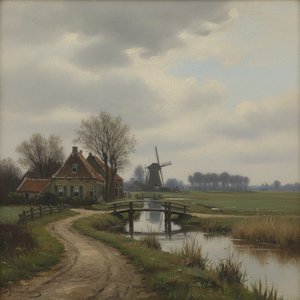
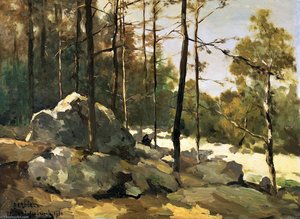
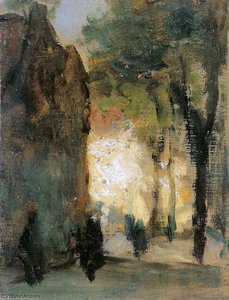
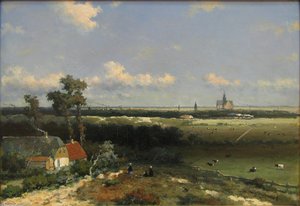
The Hague School (Dutch: Haagse School) is a group of artists who lived and worked in The Hague between 1860 and 1890. Their work was heavily influenced by the realist painters of the French Barbizon school. The painters of the Hague school generally...
For centuries, Dutch art had been synonymous with meticulous detail, the Golden Age masters celebrated for their precise renderings of everyday life and biblical scenes. But by the mid-19th century, a quiet revolution was brewing, one that would challenge these established norms and pave the way for a new era in Dutch painting: the rise of Realism. This wasn’t a sudden upheaval, but rather a gradual shift away from idealized representations towards a more honest depiction of the world – a desire to capture not just *what* things looked like, but *how* they felt. The economic and political shifts of the time undoubtedly played a role; a growing sense of social consciousness fostered an interest in portraying the lives of ordinary people, their struggles and triumphs rendered with unflinching accuracy. This burgeoning movement found fertile ground in The Hague, a city that would soon become synonymous with this new artistic vision.
The earlier Romantic period had offered a brief respite from strict academic constraints, but it often remained tethered to historical or literary themes. What the emerging artists of The Hague sought was something more immediate, more grounded in their own experiences and surroundings. They looked not to grand narratives, but to the quiet beauty of the Dutch countryside, the ruggedness of the coastline, and the dignity of labor. This wasn’t simply about rejecting tradition; it was about finding a new way to connect with their audience, to evoke empathy and understanding through authentic portrayals of life as it truly was.
Barbizon's Influence & The Hague School’s Distinctive Palette
The seeds of this Realist movement were sown in France, specifically within the Barbizon school. Artists like Théodore Rousseau and Jean-François Millet championed painting *en plein air* – directly from nature – and focused on rural life with a similar commitment to authenticity. Their influence on Dutch artists was profound, providing both inspiration and a technical foundation. However, the Hague School wasn’t merely an imitation of Barbizon; it developed its own unique character, shaped by the specific light, landscape, and cultural context of Holland.
One of the most striking characteristics of the Hague School is its relatively somber color palette – earning it the nickname “The Gray School.” This wasn’t a result of technical limitations, but rather a deliberate aesthetic choice. The Dutch skies are often overcast, the light diffused and muted, and the artists sought to capture this atmospheric quality with remarkable sensitivity. They employed subtle gradations of tone, focusing on the interplay of light and shadow to create a sense of depth and mood. This emphasis on atmosphere wasn’t simply about replicating visual reality; it was about conveying a particular emotional state – a feeling of tranquility, melancholy, or quiet contemplation.
Masters of Atmosphere: Key Artists and Their Signature Styles
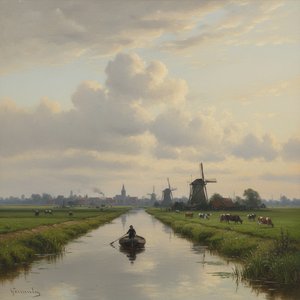
Several artists stand out as central figures in the Hague School, each bringing their own unique perspective to this shared vision. Johannes Warnardus Bilders, often considered a forerunner of the movement, mentored Anton Mauve and played a crucial role in shaping its aesthetic direction. His landscapes are characterized by a sense of spaciousness and a masterful use of light. Anton Mauve, perhaps the most commercially successful artist associated with the school, captured the beauty of rural life with remarkable detail and sensitivity, often depicting scenes of shepherds, cattle, and windmills bathed in soft, golden light.
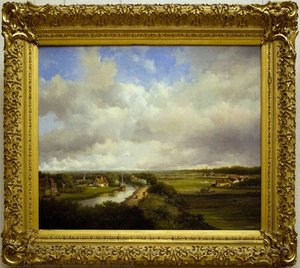
Jacob Maris brought a more poetic sensibility to the Hague School, his paintings characterized by their atmospheric brushstrokes and muted realism. His coastal scenes evoke a sense of solitude and contemplation, capturing the ever-changing moods of the North Sea. Johan Hendrik Weissenbruch, known for his serene landscapes like “View of Haarlem,” demonstrated an exceptional ability to capture the subtle nuances of light and weather. These artists, along with others like Andreas Schelfhout and Jozef Israëls, collectively defined the aesthetic character of the Hague School.
Painting 'En Plein Air': Capturing the Fleeting Light of Holland
Aerial perspective, or atmospheric perspective, is the effect the atmosphere has on the appearance of an object as viewed from a distance. As the distance between an object and a viewer increases, the contrast between the object and its background de...
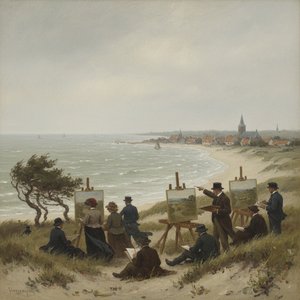
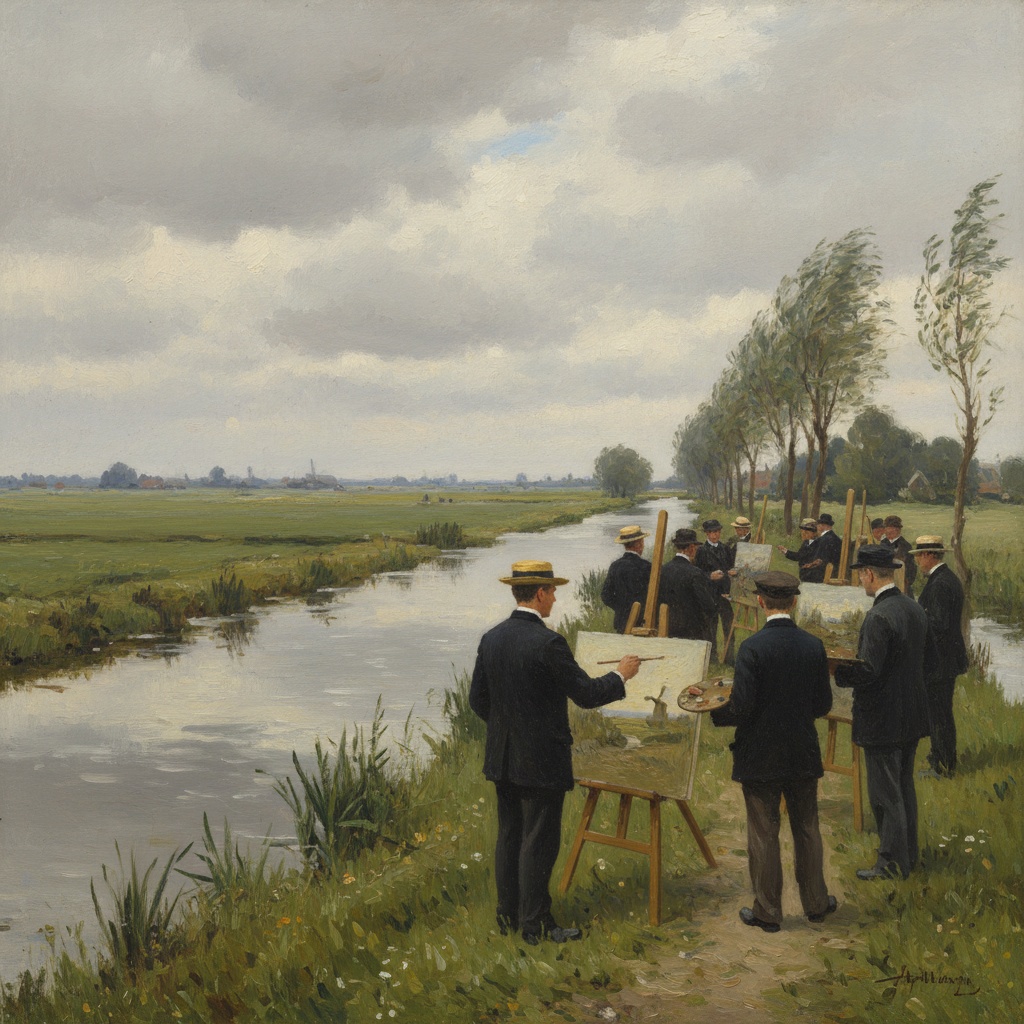
Central to the Hague School’s approach was the practice of painting *en plein air* – working directly from nature. This wasn't simply about capturing a visual likeness; it was about immersing oneself in the environment, experiencing the changing light and atmosphere firsthand. The Dutch landscape presented unique challenges for outdoor painters: the flat terrain, the expansive skies, and the often-overcast weather demanded a different approach than the sun-drenched landscapes of Southern Europe.
Artists developed techniques to capture these subtle nuances – layering thin washes of color to create atmospheric perspective, using broken brushstrokes to suggest movement and texture, and carefully observing the interplay of light and shadow. Aerial perspective, or atmospheric perspective, became a key tool in their arsenal, allowing them to convey depth and distance by reducing contrast and shifting colors towards the background. This wasn’t about photographic accuracy; it was about capturing the *feeling* of being present in the landscape, conveying its unique atmosphere and mood.
Beyond Landscapes: Daily Life and Social Commentary in Hague School Works
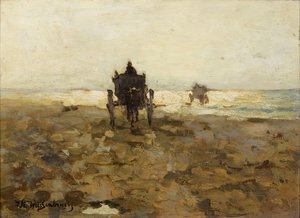
While landscapes dominated the oeuvre of the Hague School artists, they weren't solely focused on depicting scenic beauty. Many also turned their attention to scenes of daily life, portraying the lives of ordinary people with dignity and compassion. Jacob Maris’s “Collecting Shellfish”, for example, offers a glimpse into the hardscrabble existence of coastal fishermen, capturing their resilience and quiet determination.
This focus on social realism wasn't always overtly political, but it reflected a growing awareness of the challenges faced by working-class communities. The artists weren’t necessarily advocating for specific reforms, but they were challenging traditional notions of beauty and subject matter, elevating the lives of ordinary people to the level of artistic significance. This subtle form of social commentary contributed to the school's enduring appeal.
The Legacy of The Hague School: A Bridge to Dutch Impressionism
The Hague School’s influence on subsequent generations of Dutch artists was profound. It laid the groundwork for the emergence of Amsterdam Impressionism, with artists like Vincent van Gogh building upon its foundations while pushing the boundaries of color and expression even further. The school's emphasis on painting *en plein air*, capturing atmospheric effects, and portraying everyday life paved the way for a new era in Dutch art.
Today, the works of the Hague School continue to captivate audiences with their quiet beauty, subtle realism, and evocative atmosphere. They offer a glimpse into a bygone era, a time when artists sought to connect with their audience through honest portrayals of life as it truly was. At ArtsDot.com, we are proud to offer high-quality reproductions of these masterpieces, allowing you to experience the beauty and tranquility of the Dutch countryside in your own home. Explore our collection today and discover the enduring legacy of The Hague School.