 Preview
 Send
Send Share
Share
 Details

 Download
 Similars
 X-Ray
X-Ray Diaporama
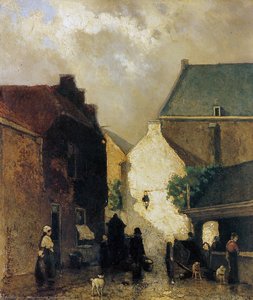
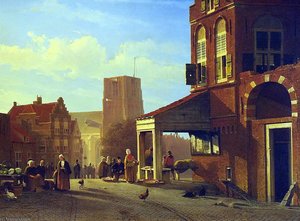
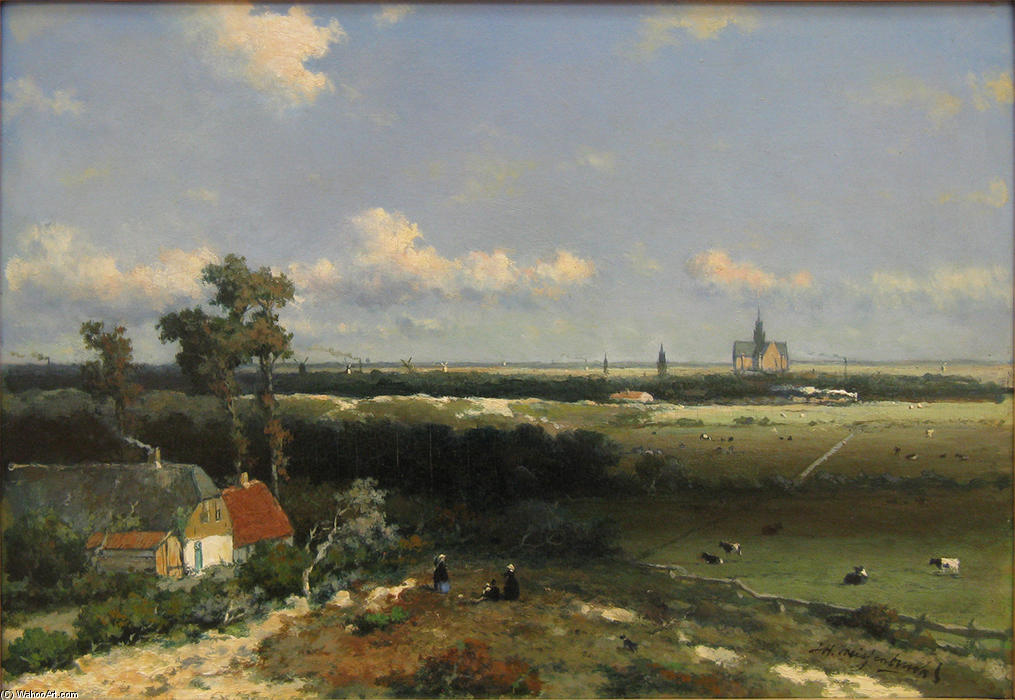
View of Haarlem


 Read More
Hand Made Oil Reproduction
Hand-painted oil on canvas in your size and frame, made to order by our artists. ( Buy Print Buy Image)




































Pick from our preset sizes that match the artwork's original proportions.

You may enter your own dimensions to fit a specific frame or space. If your selected size does not match the original image's proportions, we will either crop the artwork or extend the painting with additional hand-painted elements. A digital mockup will be sent for your approval before production begins.
Please note that the on-screen preview does not reflect the actual cropping or extension. Only the mockup will accurately show the final composition.
While custom sizes are available, we recommend selecting a dimension from the predefined list to preserve the original proportions.
After order, ArtsDot.com team will email client for instructions and provide a mockup preview
Worldwide Delivery () in 3/4 weeks instead of standard 5 weeks. (17 August). No compromise on quality.

Free Worldwide Express Shipping

High-Quality Linen Canvas

Full Shipping Insurance

Customs Tax Refund Guarantee

True Color Matching Guarantee

60-Day Return Policy (Defects Only)

100% Money-Back Guarantee

Bulk Discount Offer
 Glass option is only available in size under 110 CM

View of Haarlem
Reproduction Medium
Reproduction Size
-


Total Price
$ 288
Artwork Description
A Serene Glimpse of Rural Life: "View of Haarlem" by Johan Hendrik Weissenbruch
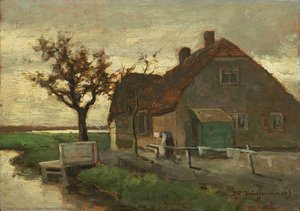
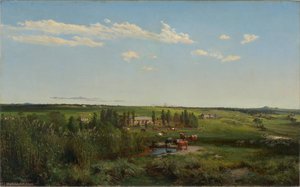
This captivating landscape painting, “View of Haarlem,” offers a tranquil window into 19th-century Dutch rural life. Created in 1848 by Johan Hendrik Weissenbruch, it depicts a sweeping vista of rolling hills and fields bathed under a cloudy sky. A prominent church steeple punctuates the distant horizon, anchoring the composition while a charming cottage with a red roof and surrounding trees occupy the foreground, populated by figures that suggest everyday life – farmers or villagers enjoying a moment's respite. The scene evokes a sense of peace and harmony, inviting viewers to immerse themselves in the beauty of the Dutch countryside.Style & Technique: Realism Embracing Impressionistic Touches
Weissenbruch’s “View of Haarlem” firmly resides within the realm of Realism, characterized by its meticulous attention to detail and faithful representation of observed reality. However, a closer look reveals subtle hints of Impressionism. The artist skillfully employs atmospheric perspective – diminishing details and softening colors in the distance – to create a convincing sense of depth. Noticeable brushstrokes contribute texture and a slightly blurred quality, particularly evident in the rendering of foliage and clouds. The painting is executed in oil paints on canvas, allowing for rich color blending and nuanced tonal variations. The predominant use of horizontal lines emphasizes the expansive landscape, while vertical elements like the steeple and trees provide visual counterpoints, creating a balanced and harmonious composition.Historical Context & The Hague School
This artwork emerged during a period of significant artistic transition in the Netherlands. Weissenbruch was a prominent figure within the Hague School, a movement that championed realistic depictions of Dutch landscapes, often focusing on everyday scenes and atmospheric conditions. Rejecting the more dramatic and idealized styles prevalent earlier, the Hague School artists sought to capture the subtle beauty of their surroundings with honesty and sensitivity. The late 1840s witnessed a growing appreciation for plein air painting (painting outdoors), which influenced Weissenbruch’s approach and contributed to the naturalistic quality of “View of Haarlem.” His work reflects a shift towards portraying the Dutch countryside not as a backdrop, but as a subject worthy of artistic exploration in its own right.Symbolism & Emotional Impact
Beyond its aesthetic appeal, "View of Haarlem" carries symbolic weight. The church steeple represents faith and community, while the rural setting embodies themes of simplicity, hard work, and connection to nature. The figures in the foreground suggest a sense of belonging and shared experience within this idyllic landscape. The muted color palette – primarily browns, greens, and blues – contributes to the painting's tranquil atmosphere, evoking feelings of serenity, nostalgia, and quiet contemplation. Ultimately, Weissenbruch’s masterpiece invites viewers to appreciate the enduring beauty of rural life and find solace in the natural world.Related Artworks
Artist Biography
Early Life and Training
Jan Hendrik Weissenbruch, born June 19, 1824, in The Hague, Netherlands, descended from a family steeped in artistic tradition. His father, Johannes Weissenbruch, was a chef and restaurateur who possessed a passion for painting—a hobby that instilled in young Jan Hendrik an early appreciation for visual art. Among his father’s collection were notable works by Andreas Schelfhout and Bartholomäus van Hove, artists whose atmospheric landscapes profoundly influenced Weissenbruch's formative years. This exposure to celebrated painters shaped his artistic sensibilities from the outset. Johannes Low, a respected drawing instructor, recognized Jan Hendrik’s talent and provided him with invaluable training in 1843. Simultaneously, he enrolled in evening classes taught by Bartholomäus van Hove at the Hague Academy of Art, furthering his artistic education within a vibrant artistic milieu.Artistic Style and Influences
Weissenbruch’s initial artistic style mirrored the Romantic School's aesthetic—particularly Schelfhout’s meticulous attention to detail. His landscapes captured the grandeur of Dutch skies with remarkable precision, reflecting Schelfhout’s admiration for Jacob van Ruisdael, whom he encountered at a young age during a visit to the Mauritshuis in The Hague. This encounter solidified Weissenbruch's fascination with seventeenth-century landscape painting and its expressive qualities. As his artistic vision matured, Weissenbruch gradually embraced looser brushstrokes and broader color palettes—techniques that imbued his paintings with an ethereal atmosphere reminiscent of Ruisdael’s monumental canvases. He skillfully blended Romantic idealism with Impressionistic observation, creating a distinctive style that resonated deeply within the Hague School movement.Notable Works
Weissenbruch's oeuvre encompasses a diverse range of landscapes and genre scenes—primarily watercolors—that exemplify his mastery of capturing the beauty of the Dutch countryside. Among his most celebrated paintings are “Road Near The Canal,” depicting a tranquil waterway bordered by lush vegetation; “Landscape With Mill Near Schiedam,” showcasing a picturesque windmill amidst rolling hills; and “Forest View Near Barbizon,” an homage to Impressionist techniques applied to French landscapes. These works demonstrate Weissenbruch’s ability to convey mood and atmosphere with remarkable subtlety—a hallmark of his artistic approach. His meticulous observation of light and color, combined with expressive brushwork, cemented his reputation as one of the Hague School's foremost practitioners.Legacy
Jan Hendrik Weissenbruch stands as a pivotal figure in Dutch art history—a cornerstone of the Hague School, which flourished between 1860 and 1900. His watercolors are characterized by their delicate brushstrokes and profound sensitivity to natural light—qualities that continue to inspire artists today. He was recognized as one of the most important painters of his time, earning acclaim both domestically and internationally. Weissenbruch’s influence extended beyond his own artistic output; he mentored prominent artists such as Anton Mauve and Victor Bauffe, shaping the trajectory of Dutch landscape painting for decades to come. His legacy resides not only in his stunning visual creations but also in his contribution to fostering a distinctive artistic tradition—one that prioritizes observation, emotion, and the evocative portrayal of nature’s grandeur. Weissenbruch's paintings can be found in museums across Europe, including the Rijksmuseum Amsterdam and the Mauritshuis, ensuring that his artistic vision endures for generations.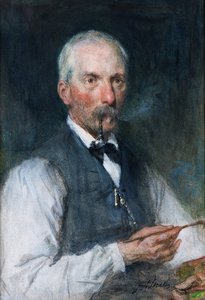
johan hendrik weissenbruch
1824 - 1903 , Netherlands
Quick Facts
- Artistic Movement Or Style: Hague School
- Artists Or Movements Influenced By This Artist: ['Anton Mauve']
- Artists Who Influenced This Artist:
- Andreas Schelfhout
- Jacob van Ruisdael
- Date Of Birth: June 19, 1824
- Full Name: Jan Hendrik Weissenbruch
- Nationality: Dutch
- Notable Artworks:
- Road near the canal
- Landscape with mill near schiedam
- Forest view near barbizon
- Place Of Birth: The Hague, Netherlands
Related Articles
Johan Hendrik Weissenbruch: Capturing Dutch Light & Atmosphere – A Master of Realism
Discover Johan Hendrik Weissenbruch (1824-1903), a leading Dutch Hague School painter renowned for his atmospheric watercolours & oil landscapes. Explore his beautiful depictions of the Dutch countryside and skies – a master of light & detail.
Jan Hendrik Weissenbruch: A Master of Dutch Realism & Atmospheric Light
Explore the captivating world of Jan Hendrik Weissenbruch, a master of Dutch Realism. Discover his atmospheric landscapes, influences, and legacy within the Hague School. Learn about this 19th-century artist's unique style & enduring impact.
The Hague School: Realism, Atmosphere & the Dawn of Dutch Impressionism
Explore the Hague School's pivotal role in Dutch art history. Discover realism, atmospheric landscapes & its influence on Impressionism. Learn about key artists like Mauve & Maris with ArtsDot.

Beyond the Horizon: 10 Landscape Masterpieces for Your Home Decor
Journey through 10 breathtaking landscape paintings by Monet, Van Gogh & more! Explore iconic artworks, artistic techniques & find inspiration for your home decor. Museum-quality reproductions at ArtsDot.com. Discover all masterpieces on ArtsDot.com
Charles Leickert: Capturing the Dutch Golden Age Light – A Comprehensive Study of Technique, Context, and Legacy
Explore the captivating winter landscapes of Charles Leickert, a master of Dutch Golden Age light & atmosphere. Discover his techniques, symbolism, and lasting legacy – a comprehensive study for art enthusiasts and collectors.