The Hague School Context: A Foundation for Van Houten's Realism
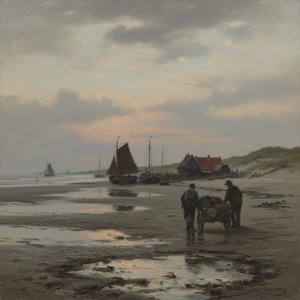
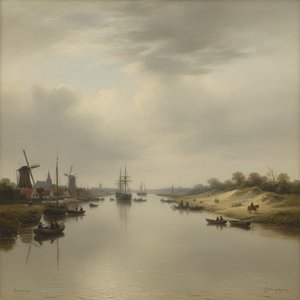
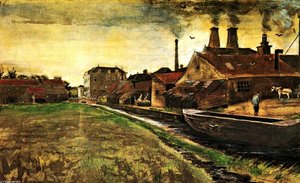
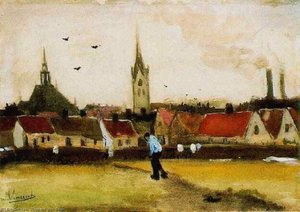
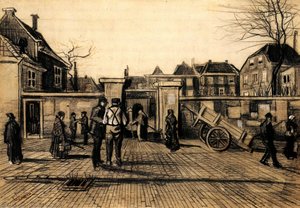
To understand Georges van Houten is to first appreciate the artistic milieu from which he emerged – the Dutch Hague School. Flourishing between roughly 1860 and 1890, this group of painters represented a significant shift in Dutch art, moving away from the historical and mythological grand narratives favored by earlier generations. Following periods of economic and political instability that had diminished artistic activity after the Golden Age, artists sought a renewed connection with their immediate surroundings. Inspired by the Barbizon school in France, they embraced realism, focusing on the everyday lives of ordinary people and the unvarnished beauty of the Dutch countryside. This wasn’t merely a stylistic choice; it was a conscious rejection of academic artifice, a desire to depict the world as it *was*, not as it was idealized. The Hague itself, with its proximity to both urban life and the expansive coastal landscapes, provided fertile ground for this new artistic vision. The school's emphasis on capturing light and atmosphere—often in muted, somber tones that earned them the nickname “the Gray School”—laid the groundwork for Van Houten’s distinctive style.
Early Life & Influences: Shaping an Artistic Vision
Born in 1872, George Hendrik Breitner initially followed a conventional path, studying at the Hague Academy of Drawing. However, like many aspiring artists of his time, he found the formal curriculum restrictive and sought further training elsewhere. This period of exploration was crucial to shaping his artistic identity. He absorbed influences from various sources – the meticulous detail of earlier Dutch masters, the plein air techniques of the Barbizon painters, and a growing interest in photography, which would become an important part of his practice. Breitner’s early works demonstrate a fascination with urban scenes, particularly those of Amsterdam and The Hague. These weren't romanticized depictions; they were honest portrayals of working-class life, capturing the grit and energy of the city streets. This commitment to depicting reality, coupled with an emerging sensitivity to light and color, would become hallmarks of his mature style. His travels and studies fostered a unique perspective, blending observation with a growing emotional depth.
Intimate Portraits: Capturing Character and Emotion in Van Houten’s Work
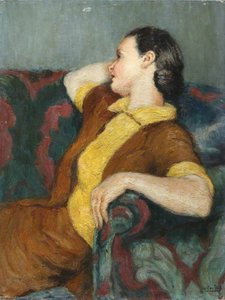 Reclining Lady in Brown and Yellows
Explore 'Reclining Lady in Brown & Yellows' by Georges van Houten – an intimate oil portrait blending realism & Expressionism. Discover its textured impasto and serene subject matter.
While Breitner is perhaps best known for his cityscapes, his portraits reveal a profound ability to capture the inner lives of his subjects. Unlike the formal, often idealized portraiture of previous eras, Van Houten sought to convey personality and emotion through subtle gestures, nuanced expressions, and carefully chosen settings. Reclining Lady in Brown & Yellows, for example, is a masterclass in intimacy. The textured impasto—the thick application of paint—creates a sense of physicality and immediacy, drawing the viewer into the subject’s private world. The serene expression and relaxed pose suggest a moment of quiet contemplation. Similarly, Lady in a Red Vest showcases Van Houten's skill in capturing subtle emotion through color and light. The rich texture of the painting adds depth and complexity, while the woman’s gaze invites us to connect with her on a personal level. These portraits aren’t simply representations of individuals; they are explorations of human character.
Landscapes of the Everyday: Finding Beauty in Dutch Scenes
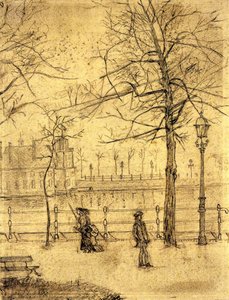
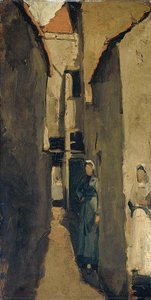 Neighborhood Street in The Hague or Scheveningen, George Hendrik Breitner, c. 1880 - c. 1923
George Hendrik Breitner (1872 – 1946) was a prominent Dutch painter and photographer, considered one of the most important figures in Dutch realism. He is renowned for his depictions of urban life, particularly scenes from Amsterdam and The Hague. B
Van Houten's landscapes share the same commitment to realism and emotional depth as his portraits. He found beauty not in grand vistas or dramatic scenery, but in the ordinary scenes of Dutch life – fields, canals, windmills, and coastal views. He wasn’t interested in creating picturesque postcards; he sought to capture the atmosphere and mood of a particular place at a specific moment in time. Neighborhood Street in The Hague or Scheveningen, exemplifies this approach. The painting depicts a seemingly unremarkable street scene, yet it is imbued with a sense of quiet dignity and authenticity. The muted colors and subtle lighting create a melancholic atmosphere, reflecting the changing seasons and the passage of time. His landscapes are not merely depictions of nature; they are reflections on the human condition.
Van Houten’s Technique: Impasto, Color, and Atmospheric Effects
Central to Van Houten's distinctive style is his masterful use of technique. He employed a thick impasto—a hallmark of his work—to create texture and depth, giving his paintings a sense of physicality and immediacy. This wasn’t simply an aesthetic choice; it allowed him to capture the play of light on surfaces and convey a sense of atmosphere. His color palette, while often subdued, was carefully chosen to evoke specific emotions and moods. He favored earth tones—browns, yellows, grays—but also used subtle variations in hue to create depth and complexity. The influence of the Hague School is evident in his emphasis on capturing light and atmosphere, but Van Houten brought a unique sensibility to this approach, blending realism with elements of Expressionism. His brushwork is often loose and gestural, conveying a sense of movement and energy.
Legacy & Rediscovery: The Enduring Appeal of a Dutch Master
While Georges van Houten enjoyed recognition during his lifetime, his work has experienced a renewed appreciation in recent years. He stands as a pivotal figure bridging the gap between the traditions of the Hague School and the emerging modern movements of the early 20th century. His commitment to depicting reality with honesty and emotional depth continues to resonate with audiences today. The enduring appeal of Van Houten’s work lies in its ability to capture the beauty of everyday life, to find poetry in the ordinary, and to convey a sense of human connection. His paintings offer a glimpse into a bygone era, but they also speak to universal themes of love, loss, and the search for meaning. Discovering Van Houten is discovering a master who quietly observed the world around him and transformed it into something truly extraordinary. Explore the collection of Georges van Houten artworks available at ArtsDot.com and bring a piece of Dutch realism into your home.