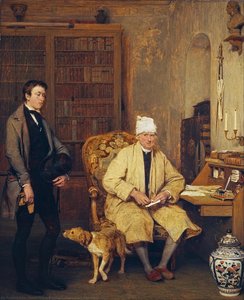
Early Life & Artistic Foundations: The Scottish Roots of a Genre Master
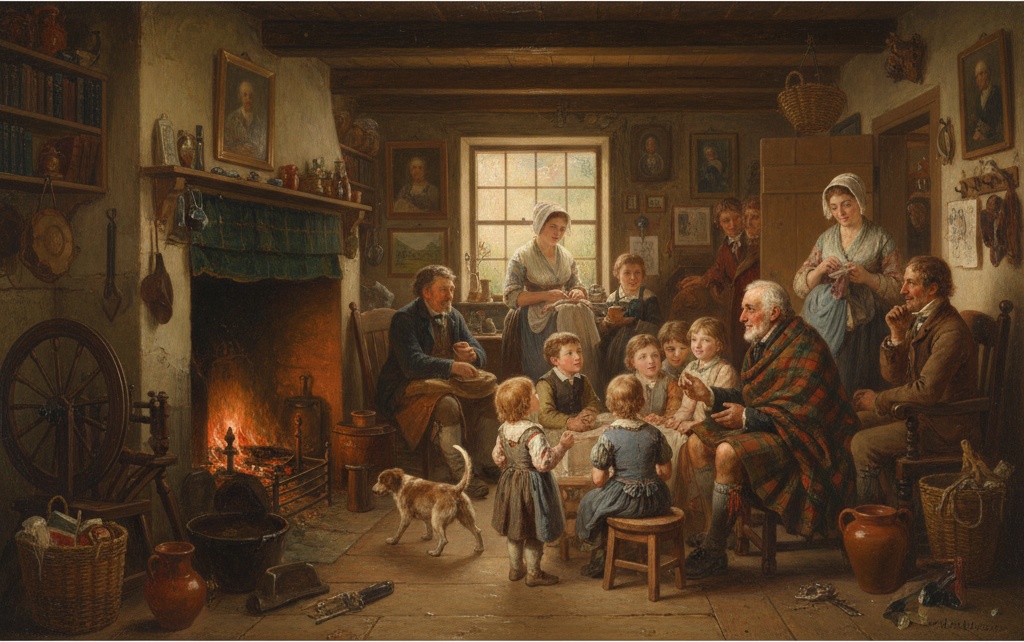
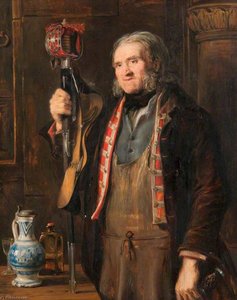 The Veteran Highlander
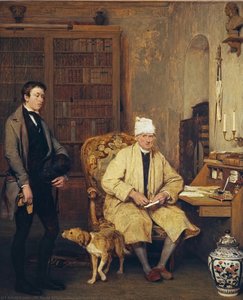
Explore Sir David Wilkie’s ‘The Veteran Highlander’! A stunning 18th-century portrait showcasing realism & dramatic lighting. Discover this captivating oil painting's rich details and historical significance.
Sir David Wilkie, born in the humble village of Pitlessie, Fife, in 1785, emerged from an environment steeped in the quiet dignity of rural Scotland. His father, a parish minister, initially envisioned a life of theological devotion for his son, but young David’s burgeoning passion for art proved undeniable. This early resistance to formal expectations would become a defining characteristic of Wilkie's career – a willingness to forge his own path and depict subjects often overlooked by the established artistic hierarchies. His initial training at the Trustees’ Academy in Edinburgh provided a foundational skillset, yet it was the keen observation of everyday life—the bustling fairs, the intimate gatherings within modest homes—that truly ignited his creative spirit. The influence of artists like Alexander Carse and David Allan, who focused on scenes from Scottish life, proved pivotal, instilling in Wilkie a belief that profound beauty and compelling narratives could be found not in grand historical events, but in the lives of ordinary people.
The Rise of Genre Painting: Wilkie's Departure from Historical Convention
 Wikipedia: David Wilkie (artist)
Sir David Wilkie (18 November 1785 – 1 June 1841) was a Scottish painter, especially known for his genre scenes. He painted successfully in a wide variety of genres, including historical scenes, portraits, including formal royal ones, and scenes fro...
The early 19th century art world was largely dominated by history painting – monumental canvases depicting biblical scenes or heroic feats. Wilkie’s emergence as a prominent artist represented a significant shift in this landscape. He wasn’t dismissing historical themes entirely, but he dared to elevate the everyday to the level of artistic importance previously reserved for tales of kings and battles. Paintings like Pitlessie Fair (1805) weren't simply depictions of rural commerce; they were vibrant microcosms of Scottish society, teeming with character and brimming with anecdotal detail. This focus on genre scenes – paintings representing scenes from everyday life – resonated deeply with a burgeoning middle class eager to see their own experiences reflected in art. Wilkie’s success wasn’t merely about novelty; it was about capturing the *spirit* of an era, portraying the complexities of human interaction and the subtle dramas unfolding within seemingly ordinary moments.
Narrative Detail as Social Commentary: Decoding the Stories Within His Scenes
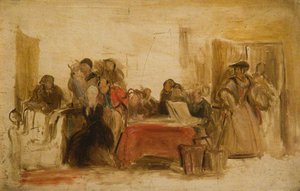
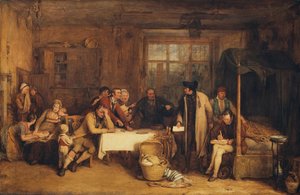
What truly set Wilkie apart was his masterful use of narrative detail. He wasn’t content to simply *show* a scene; he meticulously crafted it to tell a story, often layered with social commentary. Consider The Village Politicians (1806), where the arrival of news sparks animated debate amongst a group of villagers. This isn't just a depiction of gossip and speculation; it’s an exploration of how information – or misinformation – shapes public opinion and influences community dynamics. Similarly, in works like The Rent Day (1813), Wilkie subtly critiques the often-harsh realities of land ownership and the power imbalances inherent in rural society. His paintings weren't overtly political manifestos, but they offered a nuanced and insightful glimpse into the social fabric of his time, prompting viewers to question established norms and empathize with those whose voices were rarely heard.
Royal Patronage and Public Acclaim: Wilkie’s Influence on Victorian Taste
Wilkie's talent didn’t go unnoticed by the upper echelons of British society. His appointment as Principal Painter in Ordinary to both King William IV and Queen Victoria cemented his status as a leading artist of the era. Commissions for royal portraits followed, but even these works were infused with Wilkie’s characteristic attention to detail and psychological insight. Perhaps his most celebrated painting, The Chelsea Pensioners reading the Waterloo Dispatch (1822), exemplifies this blend of artistic skill and social awareness. The scene depicts elderly veterans reacting to news of Wellington's victory at Waterloo, capturing a range of emotions – pride, grief, relief, and quiet contemplation. This work resonated profoundly with the public, becoming an iconic image of national identity and solidifying Wilkie’s reputation as “the people’s painter.” His success helped popularize genre painting, influencing a generation of artists to turn their attention towards scenes from everyday life.
Wilkie's Technique & Legacy: A Lasting Impact on 19th-Century Art
Wilkie’s technique was characterized by meticulous observation and a remarkable ability to capture the subtleties of human expression. He drew inspiration from Dutch and Flemish masters like Adriaen van Ostade, David Teniers, and Rembrandt, adopting their use of dramatic lighting and rich detail. However, he wasn't simply imitating these artists; he infused his work with a distinctly British sensibility, focusing on contemporary subjects and incorporating elements of humor and sentiment. His influence extended far beyond the immediate circle of his contemporaries. Artists like John Phillip, known for his vibrant depictions of Spanish life, and Alexander Johnston, who focused on scenes from 19th-century Britain, were directly inspired by Wilkie’s approach to genre painting. His legacy lies not only in the beauty and technical skill of his works but also in his ability to elevate the everyday to the level of artistic significance, paving the way for a more democratic and socially conscious art world.
Beyond Scotland: European Influences and the Pursuit of Authenticity
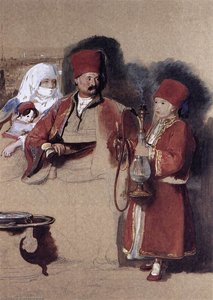
While deeply rooted in Scottish life, Wilkie wasn’t immune to the allure of continental Europe. Extensive travels through France, Italy, and Spain between 1825 and 1828 exposed him to a wealth of artistic traditions and broadened his perspective. He was particularly captivated by the works of Titian, Correggio, and Velázquez, which inspired him to tackle more ambitious historical subjects and experiment with a broader range of painting techniques. However, even during these travels, Wilkie remained committed to his core principle: the pursuit of authenticity. He sought to understand the cultures he depicted, immersing himself in local life and capturing the nuances of everyday experience. His final journey to the Middle East in 1840, undertaken with the intention of developing a new approach to religious painting, tragically ended at sea. Though cut short, this quest for authentic representation underscores Wilkie’s unwavering dedication to his art – a dedication that continues to resonate with audiences today.