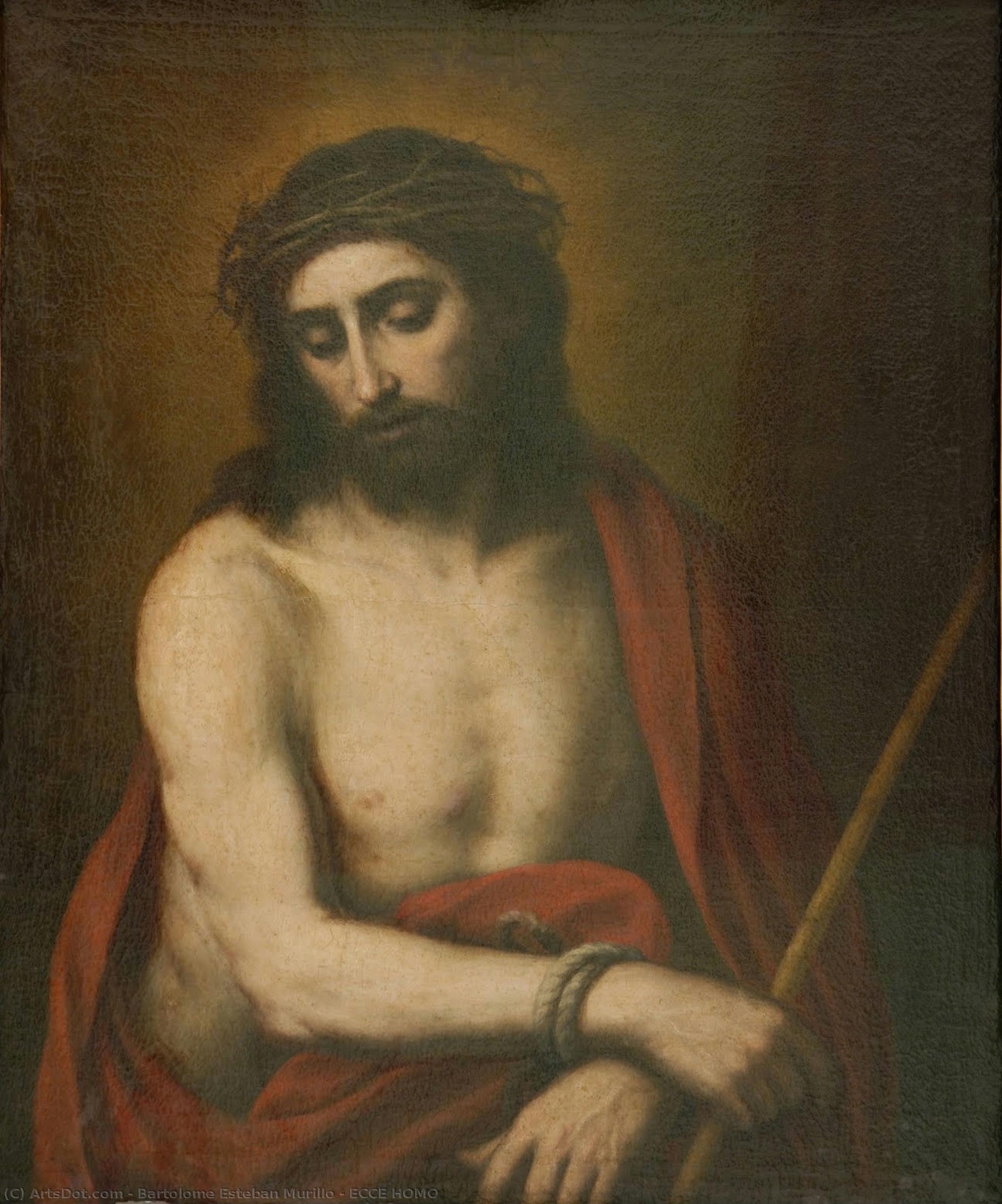
Bartolomé Esteban Murillo’s "ECCE HOMO" presents a dramatic portrait of Jesus Christ in a dark room, showcasing his iconic pose and red robe, typical of the Spanish Baroque period. Discover this captivating artwork and bring its timeless beauty into your space.
ECCE HOMO: A Portrait of Timeless Humanity by Bartolomé Esteban Murillo
- Subject: This arresting depiction of Jesus Christ, rendered in the iconic “ECCE HOMO” pose – Latin for "Here is the man" – immediately draws the viewer into a profound and deeply personal encounter. The subject, presented with an almost unnerving directness, embodies humility, sacrifice, and ultimately, divine grace.
- Artist: Bartolomé Esteban Murillo (1618-1682), born in Seville, Spain, was a pivotal figure of the Spanish Baroque period. His work reflects the religious fervor and social complexities of his time, yet possesses an enduring humanity that transcends historical context.
- Size & Date: Measuring 67 x 81 cm, this painting dates from an unknown period within Murillo’s prolific career, likely produced during his peak artistic output. The intimate scale invites a close and contemplative viewing experience.
A Study in Baroque Drama and Symbolism
Murillo masterfully employs the conventions of Baroque art to create a scene brimming with dramatic intensity. The dark, almost claustrophobic setting – punctuated by the stark white of Jesus’s robe – heightens the sense of isolation and vulnerability. The inclusion of a cross and a book immediately anchors the image within a Christian narrative, referencing both Christ's sacrifice and his role as the Word of God. The staff, a symbol of authority and power, subtly underscores the immense weight of Jesus’s mission. Murillo’s use of tenebrism – dramatic contrasts between light and dark – further amplifies this emotional impact, directing the viewer’s gaze directly to the central figure.
Technique and Materiality
- Medium: Executed in oil on canvas, the painting showcases Murillo's meticulous attention to detail and his skillful manipulation of color. The rich red of Jesus’s robe is particularly striking, potentially symbolizing blood, martyrdom, or divine royalty.
- Brushwork: Murillo’s brushstrokes are characterized by a smooth, polished surface achieved through layering and glazing – a technique that lends the painting an almost luminous quality. This careful application of paint contributes to the overall sense of realism and emotional depth.
- Composition: The composition is carefully balanced, with Jesus positioned centrally within the frame, his gaze unwavering and compelling. The background elements are deliberately understated, serving only to enhance the impact of the central figure.
Historical Context and Emotional Resonance
Created during a period of significant religious upheaval in Spain – marked by the Counter-Reformation – Murillo’s “ECCE HOMO” reflects the Church's renewed emphasis on piety, devotion, and the direct relationship between individuals and God. The painting’s emotional power lies in its ability to evoke a sense of empathy and reverence for the subject. It is not merely a portrait; it is an invitation to contemplate themes of sacrifice, redemption, and the enduring human condition. This piece resonates with viewers across centuries, offering a timeless meditation on faith, humanity, and the profound mystery at the heart of Christian belief.