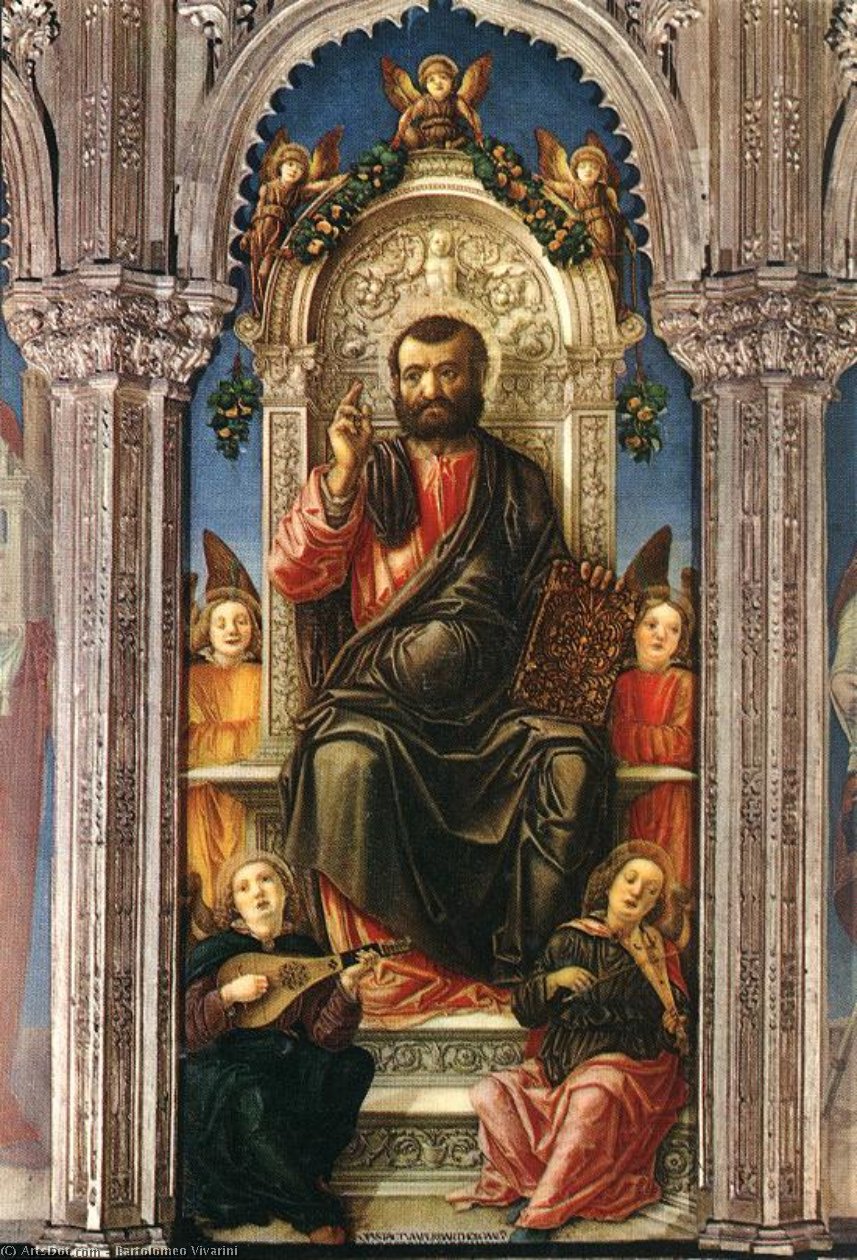
A Vision of Devotion: The Triptych of St Mark
In the heart of the Venetian Renaissance, where the light of the Adriatic meets the profound spiritual fervor of the era, Bartolomeo Vivarini crafted a masterpiece of incomparable grace. The Triptych of St Mark, completed in 1474, stands as a luminous testament to the power of sacred narrative and the meticulous skill of the Vivarini workshop. This oil-on-wood triptych does not merely depict a scene; it invites the viewer into a celestial encounter. At its center, St Mark is captured in a moment of profound sanctity, seated upon an ornate chair with hands raised in a gesture of prayerful intercession. The composition is a delicate dance of figures, where angels and children drift through the space, their presence bridging the gap between the earthly realm and the divine.
The artistry of Vivarini is revealed through a masterful command of light and texture. As one gazes upon this work, the rich, saturated colors characteristic of the Venetian school emerge, casting a warm, golden glow over the entire scene. The artist employs a technique that emphasizes depth and volume, making the central figure of the Saint feel tangibly present within the frame. A subtle yet significant detail—a book or scroll resting near the center—serves as a focal point for contemplation, suggesting that the Saint’s prayer is rooted in sacred scripture. This interplay of light and shadow, known as chiaroscuro, lends a dramatic weight to the figures, ensuring that every fold of fabric and every angelic countenance carries emotional resonance.
Symbolism and the Renaissance Spirit
Beyond its visual splendor, the Triptych of St Mark is steeped in the symbolic language of the 15th century. Every element within the frame is a deliberate choice intended to evoke reverence. The surrounding figures, from the ethereal angels to the innocent children, represent a hierarchy of spiritual existence, all converging toward the central act of devotion. This arrangement creates a sense of rhythmic movement that guides the eye across the three panels, a hallmark of the triptych format which was designed to facilitate both private meditation and public worship. The presence of the sacred text acts as an anchor, reminding the faithful of the intellectual and spiritual foundations of their faith.
For the discerning collector or interior designer, this piece offers more than just historical significance; it provides a profound emotional atmosphere. A high-quality reproduction of this work brings with it a sense of timelessness and tranquility, making it an ideal centerpiece for spaces dedicated to reflection, study, or sophisticated elegance. The painting’s ability to command attention through its serene beauty allows it to integrate seamlessly into luxurious settings, where it can serve as a window into the soul of the Italian Renaissance. To possess such a work is to hold a fragment of history, a piece of the very light that once illuminated the altars of Venice.