A Moment Frozen in Time: The Poignant Realism of Benjamin Duterrau
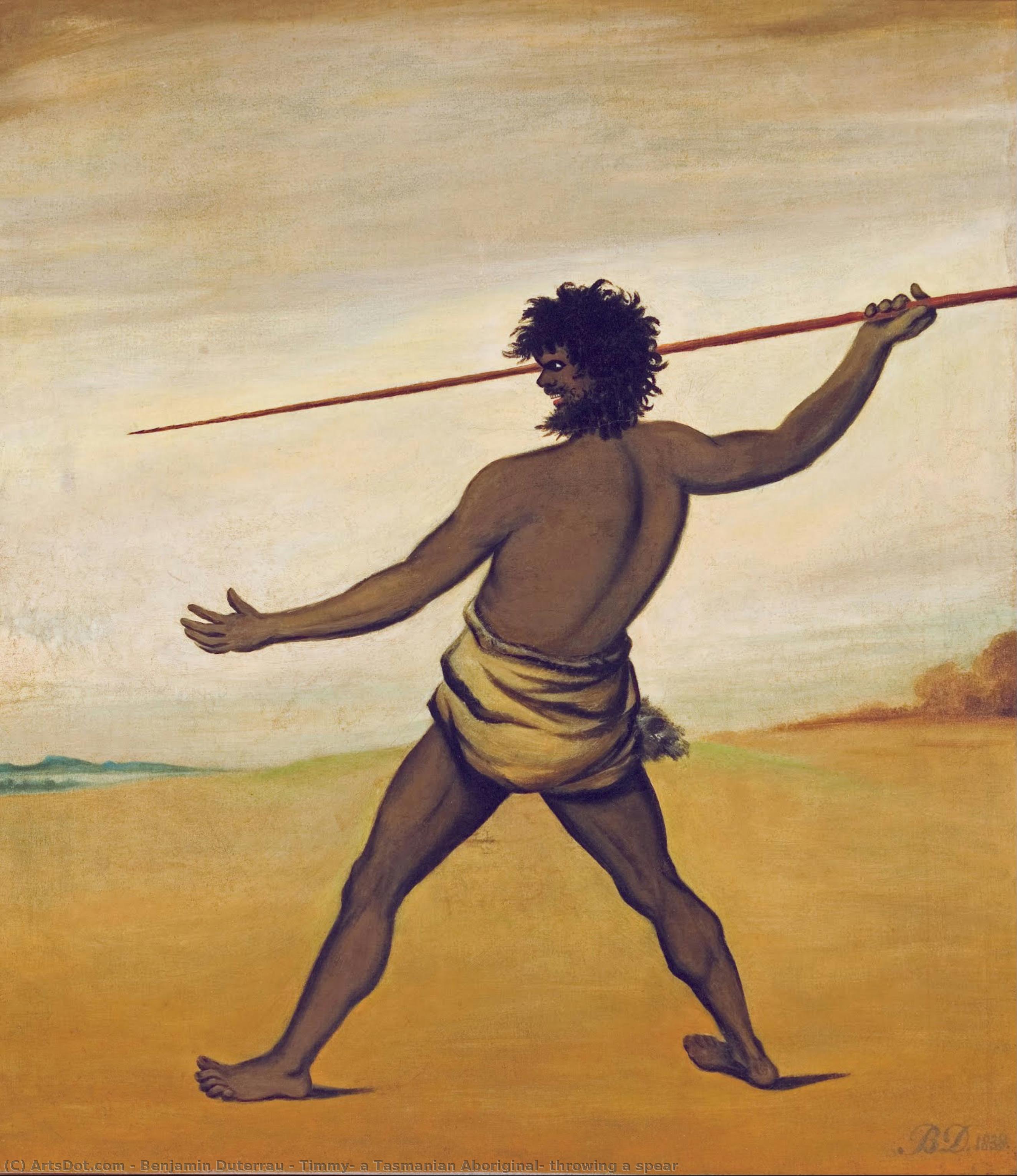
In the quiet, atmospheric depths of "Timmy, a Tasmanian Aboriginal, throwing a spear," we are transported back to the year 1838, witnessing a singular moment of focused intensity. This evocative oil painting by the renowned Benjamin Duterrau serves as more than just a portrait; it is a window into a vanishing world. The composition centers on Timmy, a solitary figure captured in the precise, muscular tension of mid-throw. As his spear cuts through the stillness, the viewer is drawn into a narrative of survival, skill, and the profound connection between man and the untamed landscape of colonial Tasmania. The painting possesses a haunting, historical gravity, achieved through a muted palette that evokes the soft, diffused light of an overcast coastal day.
Duterrau’s technique reflects his prestigious lineage, having studied under masters such as Thomas Gainsborough and William Hogarth. In this work, we see a masterful application of oil on canvas, where layered brushstrokes build a sense of physical presence and rugged texture. The artist employs a realistic style that prioritizes ethnographic documentation, yet he imbues the scene with an undeniable artistic soul. While the lines are primarily linear—defining the sharp trajectory of the spear and the sturdy form of the man—the background dissolves into a soft, atmospheric haze. This use of perspective, where the distant coastline fades into a bluish mist, creates a breathtaking sense of depth, making the sandy beach feel vast and the world beyond it infinitely mysterious.
Beyond its technical brilliance, the painting carries deep symbolic weight. The act of throwing the spear is not merely a display of hunting prowess; it represents the fundamental rhythm of life and the enduring spirit of the Tasmanian Aboriginal people. There is a profound dignity in Timmy’s posture, a quiet strength that resists the colonial gaze of the era. For the collector or interior designer, this piece offers a sophisticated blend of historical importance and aesthetic serenity. Its subdued tones and classical composition make it an exquisite centerpiece for a curated gallery wall or a refined study, providing a contemplative focal point that invites long periods of reflection on the intersection of human history and the natural world.