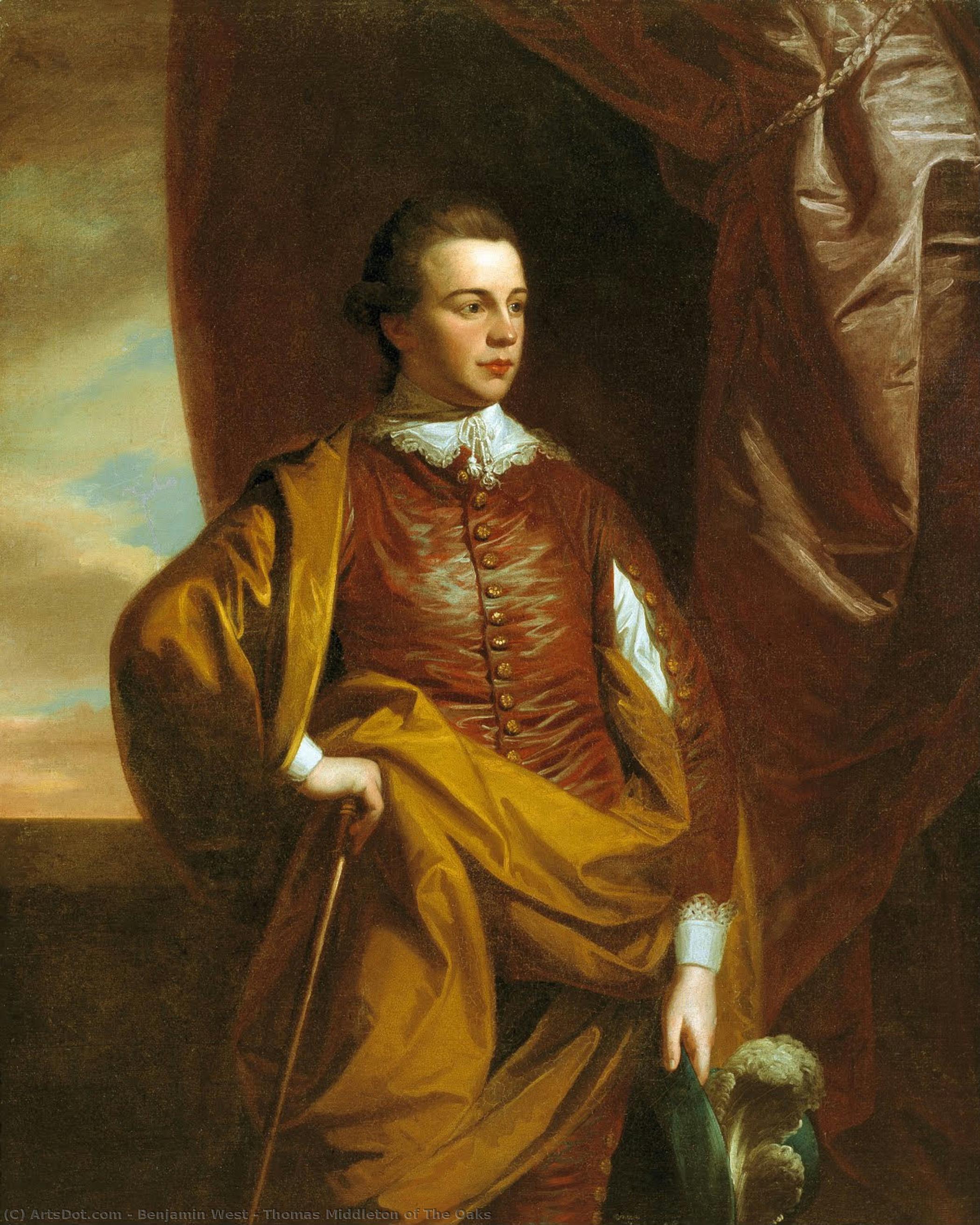
Benjamin West’s 1770 portrait of Thomas Middleton, a Charlestonian gentleman in a red coat, captures the elegance of the American Enlightenment era. This striking piece showcases West's neoclassical style and offers a glimpse into the life of a prominent South Carolina family.
Discover Benjamin West (1738-1820), a pioneering American artist & Royal Academy president! Explore his historical paintings, Neoclassical style & lasting legacy.
Discover American art at Charleston's Gibbes Museum! Explore rotating exhibits & a permanent collection featuring Southern artists, historical portraits, and contemporary works in a Beaux-Arts setting.
A Portrait of Colonial Ambition: Thomas Middleton of The Oaks
Benjamin West’s “Thomas Middleton of The Oaks” offers a captivating glimpse into the world of 18th-century South Carolina society, a world steeped in privilege, political intrigue, and burgeoning revolutionary sentiment. Painted between 1770 and 1772, this portrait transcends a simple likeness; it's a carefully constructed representation of a young man poised on the cusp of adulthood, reflecting his family’s esteemed lineage and the shifting tides of colonial identity.
- Subject: The painting depicts Thomas Middleton, son of Henry Middleton – a prominent planter – and younger brother of Arthur Middleton, one of South Carolina's signers of the Declaration of Independence. This familial connection immediately elevates the portrait’s significance within the context of American history.
- Appearance: Dressed in the fashionable attire of the period—a vibrant red coat, a crisp white collar, and a powdered wig – Thomas embodies the elegance and status associated with Charleston's elite. The inclusion of a cane suggests both authority and refinement, while the subtle mustache adds an air of cultivated sophistication.
West’s Neoclassical Style and American Connections
Benjamin West was a pivotal figure in bridging the gap between European artistic traditions and emerging American styles. His work during this period exemplifies his mastery of Neoclassicism, characterized by its emphasis on classical ideals, precise draftsmanship, and restrained emotion. West’s decision to paint the Middletons after his relocation to England marks a significant chapter in his career, representing one of his last major commissions before he fully embraced the transatlantic art world. The Middletons were uniquely positioned as West's primary patrons during this time, solidifying his connection to American society and providing him with invaluable insight into the evolving tastes and values of the colonies.
The painting’s composition—the man standing beside a curtain—creates a sense of contained space, drawing attention to the subject while subtly hinting at the secrets and complexities hidden behind formal appearances. The careful placement of the birds adds another layer of visual interest, suggesting themes of liberty and freedom – symbolic elements frequently employed in portraiture during this era.
Symbolism and Historical Context
The date of 1770 is crucial to understanding the painting’s significance. It was created just before the outbreak of hostilities between Britain and its American colonies, a period marked by increasing tensions and shifting loyalties. Thomas Middleton's return from England in January 1774, coinciding with West’s artistic activity, underscores this historical moment. The red coat, a color often associated with military power, subtly foreshadows the coming conflict.
- Birds: The presence of two birds is particularly noteworthy. Birds have long been symbols of freedom and liberty in Western art, aligning with the burgeoning revolutionary ideals taking root across the colonies.
- Curtain: The curtain itself can be interpreted as a symbol of concealment or privacy, reflecting the social constraints placed upon individuals within this hierarchical society.
Emotional Impact and Artistic Technique
"Thomas Middleton of The Oaks" is more than just a portrait; it’s a window into a bygone era. West's meticulous attention to detail—the texture of the fabric, the sheen of the wig, the subtle nuances of Thomas Middleton’s expression—demonstrates his exceptional technical skill and his ability to capture not only physical likeness but also the character and spirit of his subject. The painting’s enduring appeal lies in its ability to evoke a sense of timeless elegance and to transport us back to a pivotal moment in American history, offering a tangible connection to the lives and aspirations of those who shaped the nation.