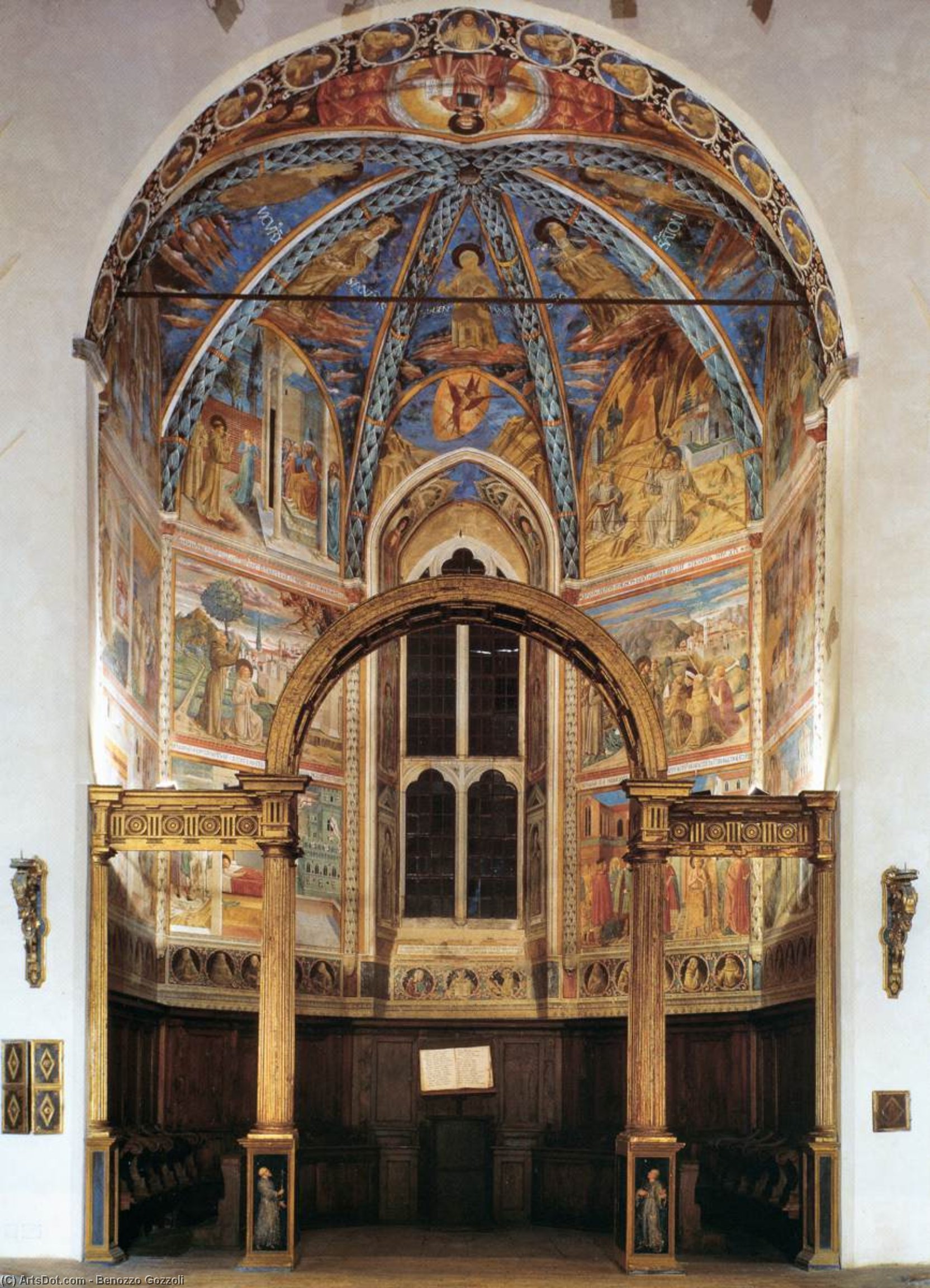
Benozzo Gozzoli’s ‘View of the Main Apsidal Chapel,’ created in 1452, showcases intricate frescoes illustrating St. Francis' life journey and spiritual significance within San Damiano church. Featuring Byzantine influences and detailed depictions of processions, it exemplifies Gozzoli’s innovative narrative style.
Explore Benozzo Gozzoli's magnificent 'View of the Main Apsidal Chapel,' a masterpi
View of the Main Apsidal Chapel by Benozzo Gozzoli
The fresco “View of the Main Apsidal Chapel,” executed in 1452 by Florentine Renaissance artist Benozzo Gozzoli, stands as a testament to the artistic fervor and spiritual contemplation characteristic of its era. Commissioned for the Palazzo Medici-Riccardi chapel in Florence, this monumental artwork embodies the influence of International Gothic style while simultaneously pioneering narrative innovation—a bold departure from conventional fresco techniques.
- Style & Technique: Gozzoli’s masterful approach blends elements of Byzantine architecture with Early Renaissance elegance. He employs meticulous detail and vibrant color palettes to depict a grand interior space, reflecting the grandeur of papal patronage during Lorenzo Medici's reign. The fresco utilizes tempera paint on plaster, ensuring exceptional luminosity and preserving the artwork’s original vibrancy over centuries.
- Historical Context: Created amidst the burgeoning humanist movement in Florence, “View of the Main Apsidal Chapel” reflects a shift towards portraying human figures with psychological realism—a significant advancement from preceding artistic traditions. The chapel itself served as a focal point for liturgical celebrations and symbolized the Medici family’s piety and commitment to religious devotion.
- Narrative Innovation: Gozzoli distinguishes himself through an unconventional storytelling method, mirroring the journey of faith from earthly origins to divine ascension. Unlike typical fresco cycles that begin at the top, this masterpiece commences at the bottom left corner with St Francis' birth—a deliberate choice reflecting the saint’s pilgrimage toward God.
- Symbolism & Composition: The fresco’s central scene depicts St Francis before the crucifix in San Damiano, symbolizing repentance and divine grace. Surrounding him are depictions of saints from the Franciscan Order, meticulously arranged to convey a profound theological message about redemption and spiritual aspiration. The inclusion of portraits by Dante, Giotto and Petrarch underscores Gozzoli's engagement with humanist ideals—celebrating intellectual achievement alongside religious faith.
- Emotional Impact: “View of the Main Apsidal Chapel” evokes a sense of solemn reverence and contemplative beauty. Its luminous colors and intricate architectural details transport viewers to a sacred space, fostering reflection on themes of piety, compassion, and divine providence. It remains an enduring symbol of Florentine Renaissance artistic excellence and spiritual aspiration.
Inspired by the monumental fresco cycle of St Francis in Assisi—executed decades earlier—Gozzoli’s work demonstrates a profound understanding of Byzantine iconography and narrative conventions. However, he transcends mere imitation, injecting his own stylistic vision into the composition, resulting in an artwork that is both historically informed and emotionally resonant.
The chapel's stained glass window, now replaced by an unpainted arched window, served as a visual reminder of St Francis’s unwavering faith—a testament to the saint’s devotion and his belief in divine providence. Gozzoli skillfully captures this spiritual essence through subtle gestures and expressive facial expressions, conveying the profound impact of religious experience.
“View of the Main Apsidal Chapel” continues to captivate audiences today as a masterpiece of Early Renaissance art—a testament to Gozzoli’s artistic genius and his enduring contribution to Florentine cultural heritage. Its luminous colors, meticulous detail, and evocative narrative invite contemplation on themes of faith, compassion, and human aspiration.