


A Sanctuary of Spirit and Stone
In the sun-drenched hill town of Montefalco, where the air carries the heavy, sweet scent of Sagrantino grapes, stands San Francesco—a profound testament to the enduring marriage of faith and artistry. This is not merely a museum, but a living chronicle of Umbrian devotion, housed within a 14th-century Gothic masterpiece that once served as a Franciscan convent and Roman Catholic church. To enter its doors is to step through a portal dated to 1585 and into a realm where the austere strength of medieval architecture meets the luminous grace of the Renaissance. The building itself, constructed between 1335 and 1338, provides a solemn, rhythmic backdrop for the treasures within, offering an immersive experience that transports the visitor back to an era when art was the primary language of the divine.
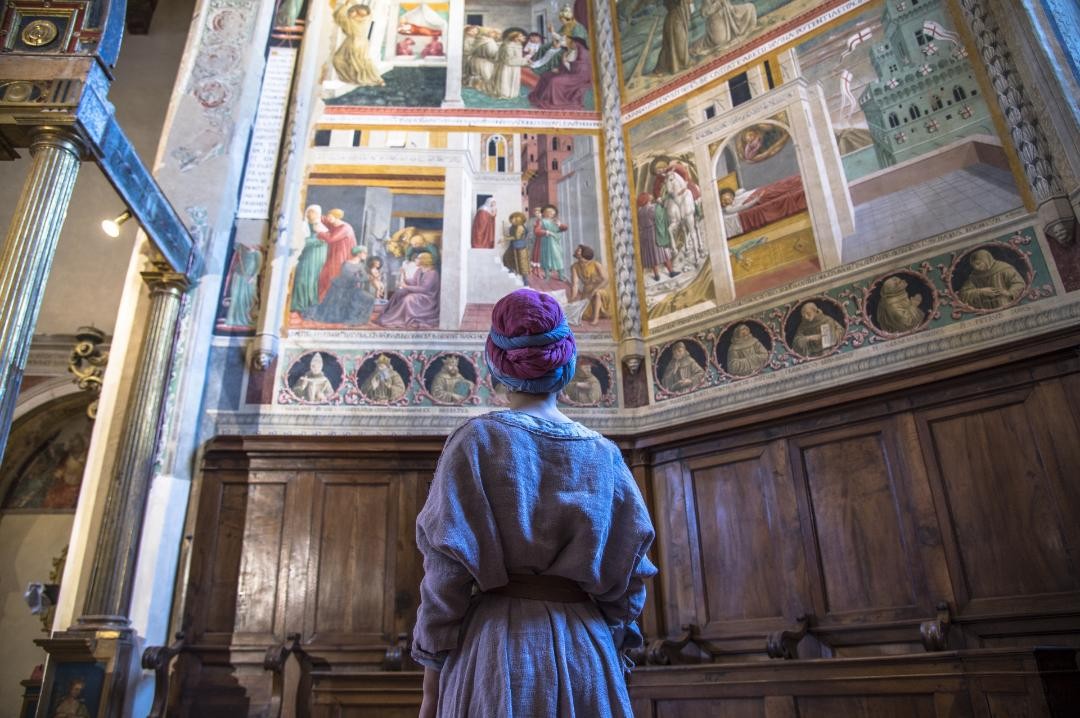
The true soul of San Francesco resides in its breathtaking fresco cycles, most notably the monumental works by Benozzo Gozzoli. Within the St. Girolamo Chapel and the sweeping apse, Gozzorbli’s hand brings to life the sacred narrative of the Life of St. Francis. These vibrant frescoes, executed between 1450 and 1452, are a pinnacle of Florentine Gothic achievement; they do not merely decorate the walls but breathe life into them, skillfully emulating the monumental scale and perspectival mastery of Giotto’s Assisi. For the art lover, these works offer a rare glimpse into a period where color and composition were used to bridge the gap between the earthly and the celestial, creating a narrative flow that guides the eye through scenes of profound spiritual significance.
Beyond the sweeping narratives of Gozzoli, the collection offers intimate encounters with the masters of the Umbrian Renaissance. One cannot wander these halls without being arrested by the serene beauty of Pietro Vannucci, known as Il Perugino. His 1503 masterpiece, Annunciation with God the Father in Glory between Angels and the Nativity , stands as a pinnacle of Renaissance humanism. Through subtle shading and a harmonious, balanced composition, Perugino captures a moment of quiet, breathless divinity that continues to inspire contemplation. The museum further enriches its tapestry with contributions from Jacopo Vincioli, Giovanni di Corraduccio, and the followers of Alunno, creating a diverse dialogue of styles that reflects the multifaceted cultural influences of the region.
What distinguishes San Francesco from the grander, more clinical galleries of larger cities is its profound sense of place. The museum offers a rare opportunity to experience Renaissance masterpieces within their original religious and architectural context. This connection to the sacred is even deeper if one descends into the crypt, where archaeological fragments of ancient marble gravestones whisper of Montefalco’s roots long before the arrival of Christianity. For collectors and designers alike, San Francesco represents more than a collection of objects; it is an encounter with an unbroken lineage of beauty, making it an essential pilgrimage for anyone seeking to understand the spiritual heartbeat of Italy.




