The Ancient Roots of Fresco: From Minoan Walls to Roman Villas
The story of fresco painting isn’t simply a chronicle of artistic development; it's a testament to humanity’s enduring desire to capture moments, beliefs, and stories on the very surfaces that shelter us. While often associated with the Italian Renaissance, its origins stretch back millennia, whispering tales from the palaces of Crete to the vibrant villas surrounding ancient Rome. The earliest examples, discovered in caves like Lascaux, hint at a primal urge to depict the world – though not yet employing true fresco techniques, they laid the groundwork for what would become a defining art form. The Minoan civilization, flourishing on the island of Crete around 2000 BCE, left behind stunning frescoes at Knossos, showcasing lively scenes of bull-leaping, processions, and marine life. These weren’t merely decorative; they offer invaluable glimpses into their culture, rituals, and a profound connection to nature. The Egyptians also practiced wall painting, though primarily using a dry technique – fresco secco – which lacked the luminosity and permanence of true fresco. It was with the Greeks that we begin to see more sophisticated approaches, building upon earlier traditions and establishing techniques that would later be refined by the Romans.
Roman frescoes, particularly those unearthed in Pompeii and Herculaneum following the eruption of Vesuvius in 79 AD, reveal a mastery of illusionistic space and vibrant color palettes. These weren’t solely grand historical narratives; they depicted everyday life – market scenes, still lifes, intimate portraits – offering an unparalleled window into Roman society. The Romans also meticulously documented their techniques, as evidenced by the writings of Vitruvius in his *De Architectura*, detailing the preparation of plaster layers and the use of pigments. The layering process was complex, involving multiple coats of carefully prepared mortar, often incorporating marble dust for smoothness, and a final layer – the *intonaco* – onto which the pigment was applied while still wet. This dedication to material science underscores the Roman commitment to creating durable and visually striking artworks.
Buon Fresco vs. Secco: Understanding the Techniques & Materials
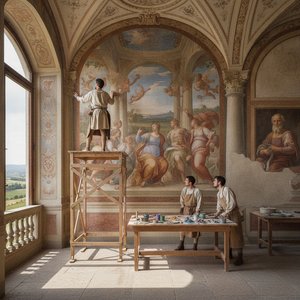
At the heart of fresco lies a deceptively simple principle: painting with water-based pigments on freshly laid, or “wet,” lime plaster. However, within this core concept lie nuances that define distinct techniques and impact the final artwork’s longevity and appearance. The most revered method is buon fresco, meaning “true fresco” in Italian. This involves applying pigment directly to the *intonaco* while it's still capable of absorbing the color, creating a chemical bond as the plaster dries. The result is an incredibly durable surface where the pigment becomes integral to the wall itself – not merely sitting on top, but fused within its structure. This process demands speed and precision; artists worked in sections called *giornate* (“a day’s work”), carefully planning their compositions to be completed before the plaster dried. Mistakes were difficult to correct, requiring the removal of the wet plaster and a fresh start.
In contrast, fresco secco, or “dry fresco,” involves applying pigment to dry plaster. While easier to execute – allowing for more detailed work and corrections – it lacks the luminosity and permanence of buon fresco. The pigments are bound with an organic binder, such as egg yolk or glue, which makes them susceptible to flaking and fading over time. Often, fresco secco was used to supplement buon fresco, adding details or finishing touches after the initial layers had dried. The choice between these techniques wasn’t merely a matter of skill; it also depended on the desired aesthetic effect and the environmental conditions. The quality of the lime itself was crucial – sourced from specific quarries known for their purity and binding properties. Pigments were painstakingly ground from natural minerals, each offering unique hues and characteristics.
Giotto’s Revolution: A Renaissance Master and the Scrovegni Chapel
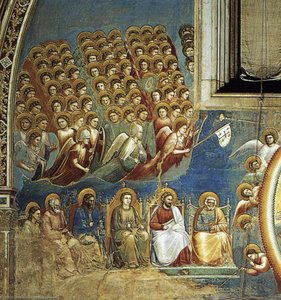
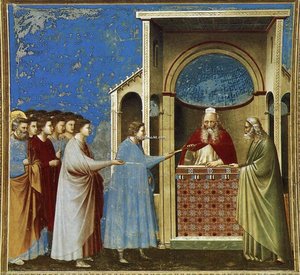 No. 9 Scenes from the Life of the Virgin: 3. The Bringing of the Rods to the Temple
Giotto's fresco 'The Bringing of the Rods' from the Scrovegni Chapel depicts a pivotal moment in Mary's story, showcasing early Renaissance artistry and emotion.
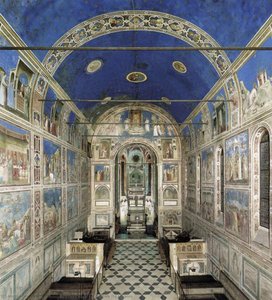
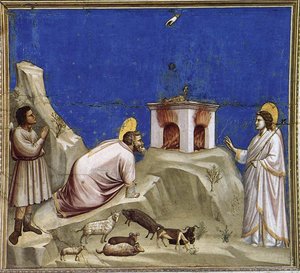
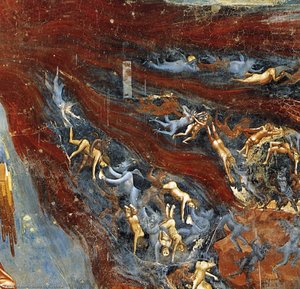
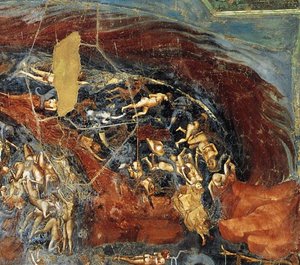
While fresco painting had a long history before him, it was Giotto di Bondone (1267-1337) who truly revolutionized the art form during the early Renaissance. His work in the Scrovegni Chapel in Padua (completed around 1305) is considered a watershed moment, marking a departure from the stylized Byzantine tradition and embracing a more naturalistic and emotionally resonant style. The chapel’s cycle of frescoes depicts scenes from the life of Mary and Christ, rendered with unprecedented depth, volume, and psychological realism. Giotto wasn't simply a painter; he was an architect, sculptor, and innovator who understood the interplay between architecture, light, and narrative.
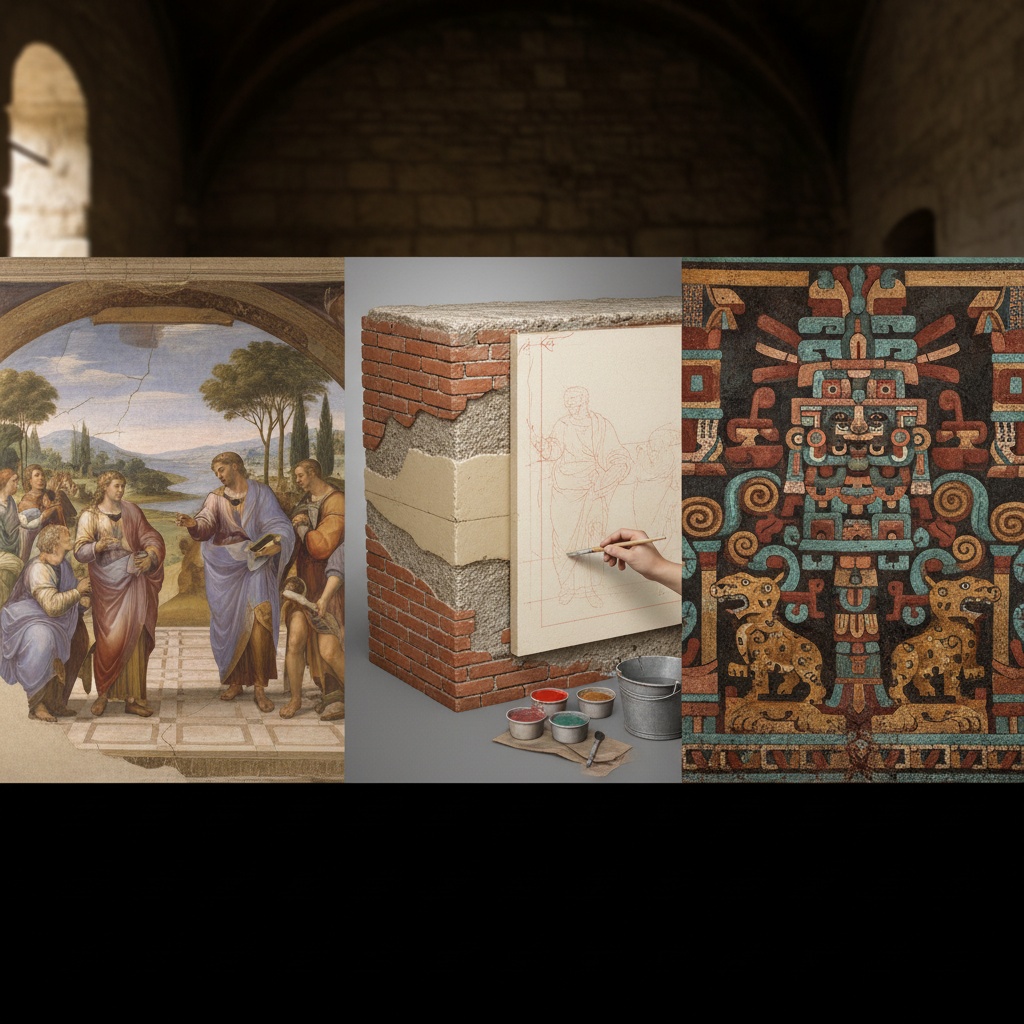
His innovative approach extended to his technique. He meticulously prepared detailed cartoons – full-scale drawings of his compositions – which were then transferred onto the wet plaster using a *sinopia* underdrawing (a reddish pigment used for preliminary sketches). He divided the wall into manageable sections, working rapidly and efficiently with a team of assistants. The frescoes in the Scrovegni Chapel aren’t just beautiful; they are profoundly moving, conveying a sense of human emotion and spiritual depth that had been largely absent from earlier religious art. Witnessing ‘The Bringing of the Rods to the Temple’ or ‘Circumcision’ reveals Giotto's mastery of composition, color, and storytelling – a testament to his genius and a defining moment in the history of Western art.
Fresco Beyond Italy: Global Expressions and Cultural Adaptations
Mexican muralism refers to the art project initially funded by the Mexican government in the immediate wake of the Mexican Revolution (1910–1920) to depict visions of Mexico's past, present, and future, transforming the walls of many public buildings...
While Italy remains synonymous with fresco painting, its influence extended far beyond its borders. Throughout Europe, variations on the technique emerged, adapted to local materials and artistic traditions. In France, Romanesque churches like Saint-Savin-sur-Gartempe feature frescoes that, while less refined than their Italian counterparts, demonstrate a continued commitment to wall painting as a means of religious instruction and visual storytelling. In Eastern Europe, Byzantine fresco art flourished in countries like Russia and Serbia, characterized by its iconic imagery, rich symbolism, and vibrant colors.
However, perhaps the most striking example of fresco’s global adaptation is found in Mexican muralism, a powerful artistic movement that emerged in the aftermath of the Mexican Revolution (1910-1920). Artists like Diego Rivera, José Clemente Orozco, and David Alfaro Siqueiros used large-scale murals to depict visions of Mexico’s past, present, and future, transforming public buildings into didactic scenes designed to reshape national identity. While drawing inspiration from European fresco techniques, Mexican muralists developed a distinct style characterized by its bold colors, dynamic compositions, and social commentary. These weren't merely artworks; they were statements – powerful expressions of political ideology and cultural pride.
The Revival of Fresco: Modern Artists and Contemporary Applications
Despite the advent of new artistic mediums, fresco painting never entirely disappeared. Throughout the 20th and 21st centuries, a renewed interest in traditional techniques has led to a revival of this ancient art form. Modern artists are exploring the possibilities of fresco, pushing its boundaries while honoring its rich history. Contemporary muralists continue to utilize fresco techniques for large-scale public artworks, blending traditional methods with innovative approaches.
Today, ArtsDot.com celebrates this enduring legacy by offering high-quality reproductions of iconic frescoes, allowing art lovers to bring the beauty and historical significance of these masterpieces into their homes. From Giotto’s emotionally resonant scenes in the Scrovegni Chapel to the bold narratives of Mexican muralism, fresco painting continues to inspire and captivate audiences worldwide. The technique itself demands a level of skill and dedication rarely seen in other art forms – a testament to its enduring power and timeless appeal. Whether you're admiring an original masterpiece or a meticulously crafted reproduction, the story of fresco is a reminder of humanity’s ongoing quest to capture beauty, meaning, and history on the walls that surround us.