The Chemistry of Permanence: Understanding Buon Fresco vs. Fresco Secco
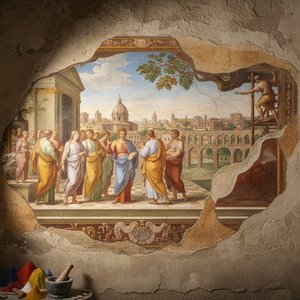
To understand the true majesty of a fresco, one must first look beyond the pigment and into the very chemistry of the wall itself. The term fresco, derived from the Italian word for "fresh," refers to a method where the artist works not merely upon a surface, but within it. At the heart of this medium lies a profound chemical reaction known as carbonatization. When pigments are mixed with water and applied to a layer of wet, lime-rich plaster, the calcium hydroxide in the plaster reacts with the carbon dioxide in the air. This process creates a crystalline structure of calcium carbonate that locks the pigment into the very fabric of the wall.
However, the mastery of this medium requires a nuanced understanding of two distinct approaches: buon fresco and fresco secco. The technique of buon fresco, or true fresco, is the most demanding and prestigious. Because the artist must apply colors while the plaster remains damp, there is no room for error; once the lime begins to set, the window of opportunity closes. This necessitates a rapid, decisive hand and an intimate knowledge of how pigments will react with the alkaline surface. In contrast, fresco secco involves painting on dry plaster. While this allows for greater detail and the use of a wider palette—including more delicate blues like lapis lazuli that might otherwise react poorly to wet lime—it lacks the structural permanence of the true fresco. Over centuries, the secco layers are often the first to succumb to flaking and decay, leaving behind only the enduring bones of the buon fresco underneath.
A Journey Through Time: From Ancient Roman Murals to the Renaissance Zenith
The lineage of fresco painting is a long and storied one, stretching back to the dawn of organized civilization. Long before the great masters of the Italian Renaissance took up the brush, the ancient Romans were perfecting the art of wall decoration. In the villas of Pompeii and Herculaneont, we find breathtaking examples of fresco that demonstrate an advanced grasp of perspective and atmospheric depth. These Roman murals were not merely decorative; they were architectural extensions of the home, designed to dissolve the boundaries between interior living spaces and the expansive landscapes of the Mediterranean.
As history progressed through the Middle Ages, the technique evolved alongside the shifting theological landscape of Europe. The transition from the stylized, symbolic forms of Byzantine art toward a more humanistic, emotive approach found its greatest champion in Giotto. During the late Medieval and early Renaissance periods, fresco became the primary vehicle for visual storytelling within cathedrals and basilicas. It allowed for the creation of massive, immersive narratives that could educate the faithful through imagery. This era saw the transformation of the wall from a flat boundary into a window onto the divine, setting the stage for the unparalleled technical heights achieved in the centuries to follow.
Michelangelo and the Sistine Chapel: The Pinnacle of Fresco Mastery
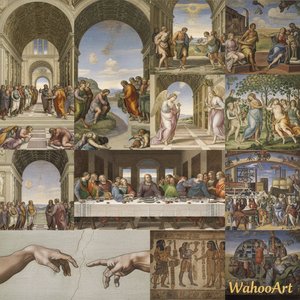
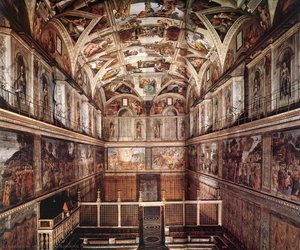
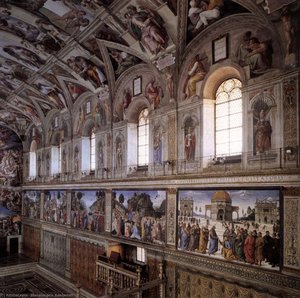
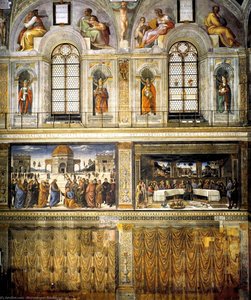
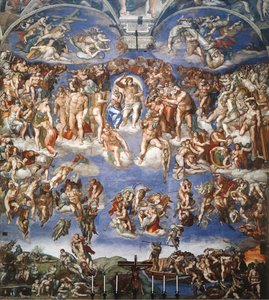
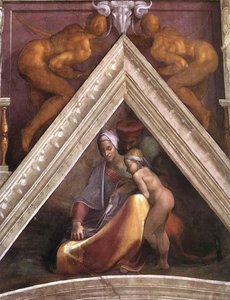
No discussion of fresco can exist without reverence for Michelangelo Buonarroti. His work on the Sistine Chapel ceiling remains perhaps the most significant achievement in the history of Western art. Tasked with decorating the vast expanse of the Pope's private chapel, Michelangelo faced a monumental challenge that required both physical endurance and unparalleled artistic vision. To gaze upon the frescoes above the altar wall or the breathtaking compositions above the entrance wall is to witness a master commanding the very limits of human capability.
Michelangelo’s approach to the Sistine Chapel was far more complex than simple painting; it was an act of sculptural creation through pigment. He utilized the buon fresco technique to render the musculature and torsion of his figures with such anatomical precision that they seem to possess weight, volume, and breath. The sheer scale of the project—covering thousands of square feet of ceiling—meant that he had to work in giornate, or "days' work," carefully planning each section so that the edges of the wet plaster would blend seamlessly. His ability to weave together complex theological themes with the raw power of the human form has ensured that his frescoes remain the definitive benchmark for all who follow in the footsteps of the Old Masters.
The Artist's Discipline: Preparing the Arriccio, Intonaco, and Sinopia
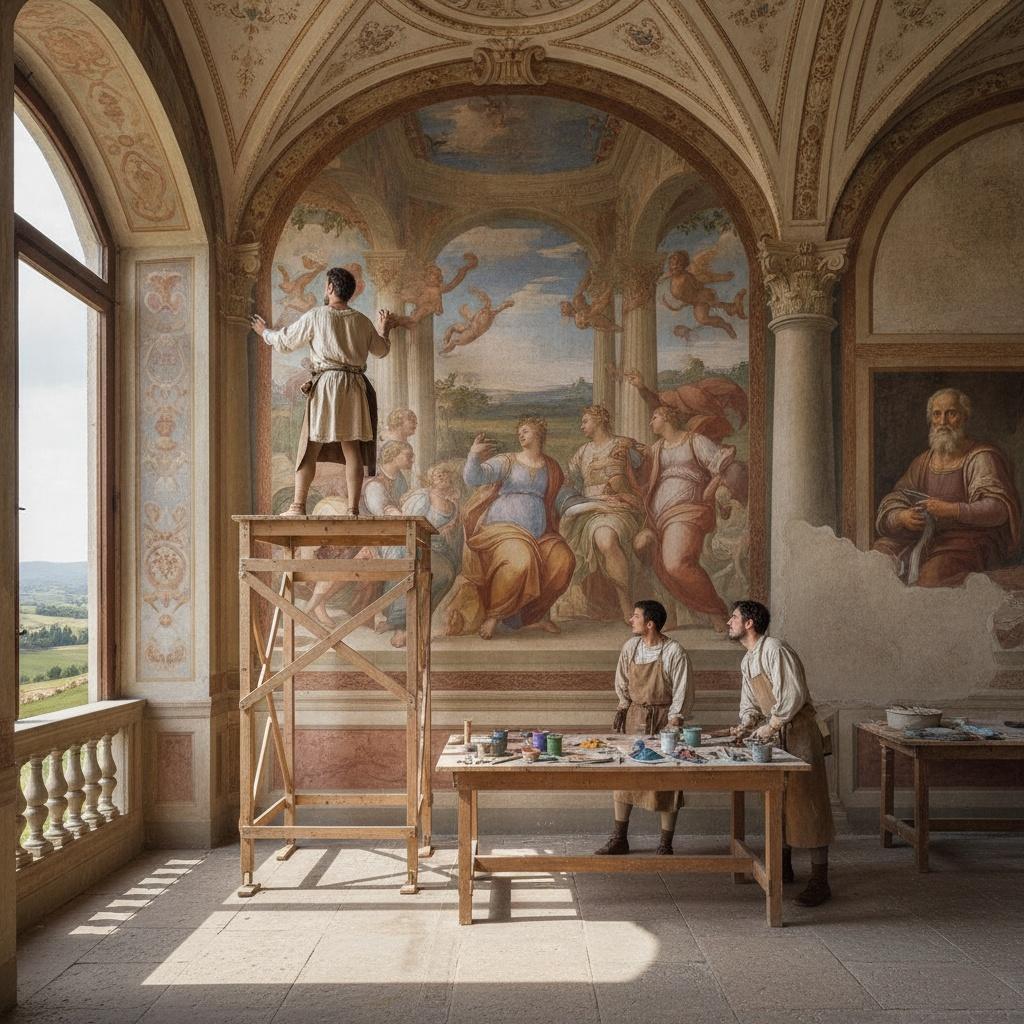
The creation of a masterpiece is a disciplined, multi-layered process that begins long before the first drop of pigment touches the wall. A fresco artist must act as both painter and mason, preparing a structural foundation capable of supporting immense weight and resisting the passage of time. The process begins with the arriccio, a coarse, preparatory layer of plaster applied to the bare masonry. This layer provides the necessary grip for subsequent applications and serves as the rugged base upon which the artwork will be built.
< p>Once the arriccio has dried, the artist often engages in the creation of the sinopia. These are preparatory drawings executed directly onto the coarse plaster using a reddish-brown earth pigment. The sinopia serves as a vital guide, allowing the artist to map out the composition, proportions, and essential anatomical details before the final, more delicate layer is applied. Finally, the artist applies the intonaco—the thin, smooth, and fine layer of plaster that will receive the actual painting. This is the most critical stage; the intonaco must be applied in precise sections, or giornate, to ensure the pigment is absorbed while the surface remains wet. This rigorous preparation is what allows a fresco to transcend mere decoration and become an integral part of the architecture itself.Preserving the Masterpiece: Modern Conservation and the Legacy of Wall Painting
The very strength that makes fresco so enduring also presents unique challenges for modern conservationists. Because the pigment is chemically bonded to the calcium carbonate, cleaning or repairing a fresco requires an incredibly delicate touch. Environmental factors such as humidity fluctuations, atmospheric pollutants, and even the salt deposits from rising damp can cause the plaster to crumble or the colors to dim. The work of contemporary conservators is a constant battle against time, utilizing advanced chemical analysis and microscopic precision to stabilize these ancient surfaces without altering their historical integrity.
Despite these challenges, the legacy of fresco painting continues to inspire both the historian and the modern enthusiast. While we may no longer find ourselves standing on scaffolding in the Sistine Chapel, the aesthetic power of this technique remains accessible. At ArtsDot.com, we strive to bring the grandeur of these historical moments into the contemporary home. Through our meticulous Handmade Oil Reproductions, our master artists recreate the depth, texture, and soul of the world's most iconic frescoes on premium cotton canvas. Whether you seek a large-scale mural to transform a room or a detailed reproduction of a Renaissance masterpiece, we offer the opportunity to possess a piece of art history, preserved with the same reverence as the originals themselves.