Boris Kustodiev (1878-1927) was a renowned Russian painter celebrated for his vibrant depictions of Russian life, merchant culture, and genre scenes. Explore his colorful realism & stage designs!
A Snapshot of Russian Soul: Exploring Boris Mikhailovich Kustodiev’s “Rural Festival”
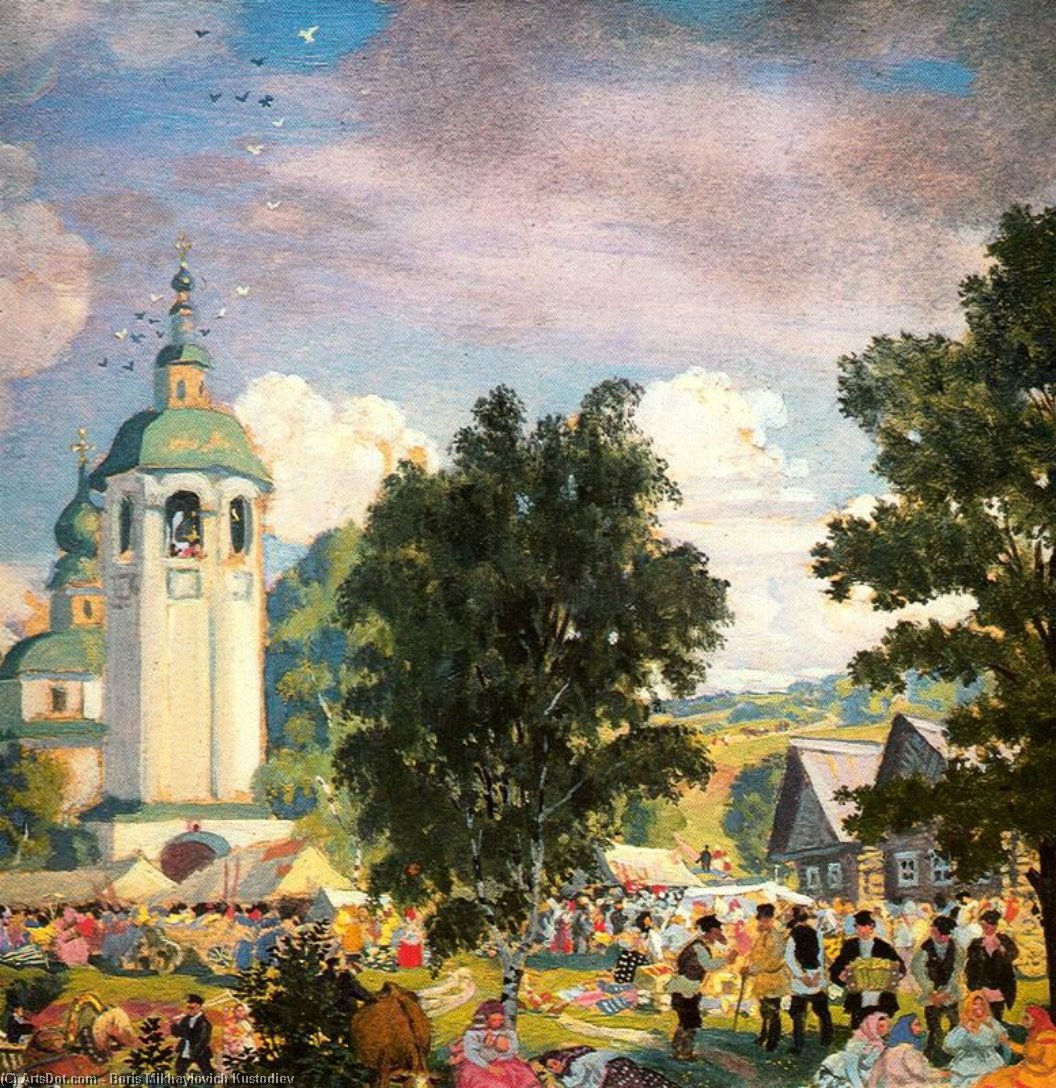
“Rural Festival,” painted in 1924 by Boris Mikhailovich Kustodiev, stands as a quintessential emblem of Russian Impressionism and offers a poignant glimpse into the cultural landscape of the early Soviet era. More than just a depiction of a village celebration—a Khorovod—it’s an immersive experience of tradition interwoven with burgeoning modernity, meticulously rendered in oil on canvas by a master whose artistic vision remained deeply rooted in his provincial upbringing.
Subject Matter and Composition
The painting captures precisely what its title suggests: a lively rural festival unfolding amidst the golden hues of late summer. Kustodiev skillfully portrays a congregation of villagers gathered around a central clearing, dominated by tents providing shade against the sun’s glare. Figures are positioned dynamically—some standing upright, others seated on chairs—creating a sense of movement and communal engagement. Scattered throughout the scene are details that enrich the narrative – umbrellas shielding attendees from the heat, backpacks laden with provisions, and birds soaring overhead—elements that speak to the everyday realities of rural Russian life. The artist’s eye for capturing authentic human interaction is remarkable.
Style and Technique: Impressionistic Brushstrokes
Kustodiev's approach aligns squarely with Impressionism, albeit imbued with a distinctly Russian sensibility. He eschews meticulous realism in favor of loose brushstrokes and vibrant color palettes—a technique championed by Repin himself during their formative years at the Imperial Academy of Arts. The artist prioritizes capturing fleeting impressions of light and atmosphere rather than precise anatomical detail. Notice how Kustodiev utilizes broken color to create shimmering effects, particularly evident in the sky where blues and yellows blend seamlessly. This stylistic choice reflects a broader artistic movement that sought to convey emotion and subjective experience above objective representation.
Historical Context: Echoes of Tradition Amidst Change
Painted during the tumultuous years following the Russian Revolution, “Rural Festival” encapsulates the anxieties and aspirations of a nation grappling with dramatic societal transformations. While Kustodiev’s style harkens back to earlier artistic traditions—particularly Symbolism—the subject matter itself celebrates rural customs and rituals that were facing increasing pressure from urbanizing forces. The Khorovod, a pagan ritual dance symbolizing renewal and fertility, represents the enduring spirit of Russian folklore and serves as a counterpoint to the rapid pace of industrialization. Kustodiev’s work is thus interpreted as an affirmation of cultural heritage amidst the upheaval of political change.
Symbolism: Color and Gesture
The painting's color scheme—dominated by warm yellows, reds, and greens—is deliberately symbolic. Yellow represents prosperity and vitality, mirroring the abundance of crops during harvest season. Red signifies passion and energy, reflecting the fervor of the Khorovod dance itself. The artist’s expressive brushstrokes convey a palpable sense of joy and spontaneity, capturing the emotional core of the festival experience. Furthermore, the positioning of figures—often facing outwards—suggests openness to new ideas and traditions while simultaneously honoring established customs.
Emotional Impact: A Window into Russian Identity
“Rural Festival” transcends mere visual representation; it evokes a profound feeling for the beauty and resilience of rural Russia. Kustodiev’s masterful depiction captures not only the physical setting but also the intangible spirit of community—a spirit that persists despite external pressures. Viewing this artwork inspires contemplation on themes of tradition, faith, and human connection. It serves as an enduring testament to Kustodiev's ability to distill complex cultural values into a single, unforgettable image – a timeless celebration of Russian soul.