 Preview
 Send
Send Share
Share
 Details

 Download
 Similars
 X-Ray
X-Ray Diaporama
Rural Festival

 Read More
Hand Made Oil Reproduction
Hand-painted oil on canvas in your size and frame, made to order by our artists. ( Buy Print Buy Image)




P118B $10

P118H $10

P118W $10

P438Z $10

P508JH $12

P508YH $12

P805H $10

P805Z $10

P919BZ $10

P919G $10

P919XJ $10

P959ZH $10

P968JZ $12

W106C $8

W218G $10

W218JH $8

W218Y $10

W307PJ $10

W316G $10

W316PJ $8

W316Y $10

W398PJ $8

W4111J $10

W500HY $15

W500JH $15

W692G $12

W849H $8

W940BG $15

W953PJ $8




Pick from our preset sizes that match the artwork's original proportions.

You may enter your own dimensions to fit a specific frame or space. If your selected size does not match the original image's proportions, we will either crop the artwork or extend the painting with additional hand-painted elements. A digital mockup will be sent for your approval before production begins.
Please note that the on-screen preview does not reflect the actual cropping or extension. Only the mockup will accurately show the final composition.
While custom sizes are available, we recommend selecting a dimension from the predefined list to preserve the original proportions.
After order, ArtsDot.com team will email client for instructions and provide a mockup preview
Worldwide Delivery () in 3/4 weeks instead of standard 5 weeks. (17 August). No compromise on quality.

Free Worldwide Express Shipping

High-Quality Linen Canvas

Full Shipping Insurance

Customs Tax Refund Guarantee

True Color Matching Guarantee

60-Day Return Policy (Defects Only)

100% Money-Back Guarantee

Bulk Discount Offer
 Glass option is only available in size under 110 CM

Rural Festival
Reproduction Medium
Reproduction Size
-


Total Price
$ 263
Artwork Description
A Snapshot of Russian Soul: Exploring Boris Mikhailovich Kustodiev’s “Rural Festival”
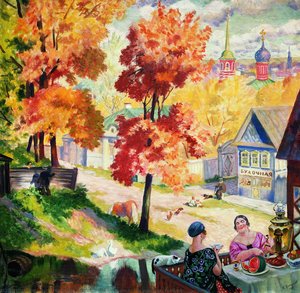
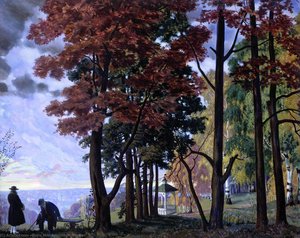
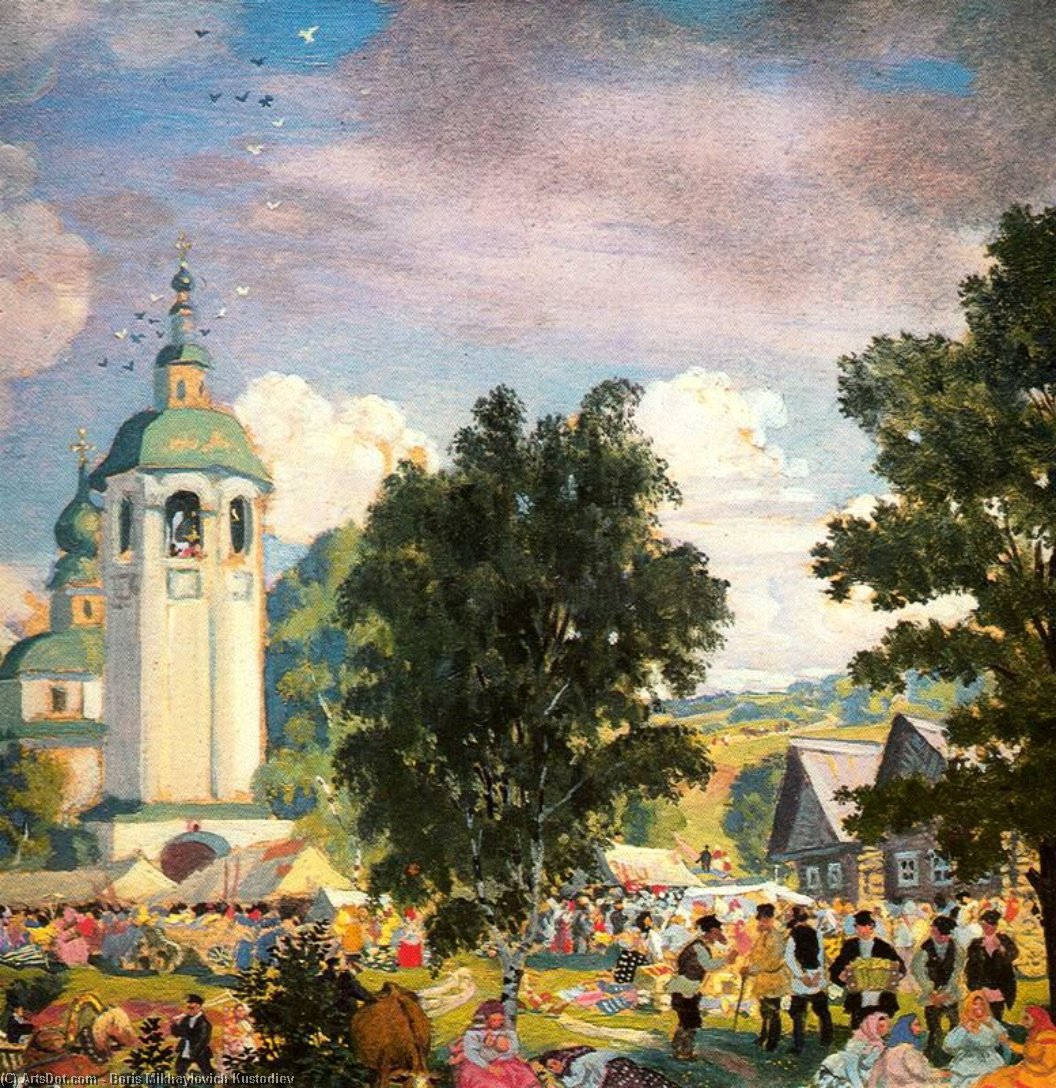
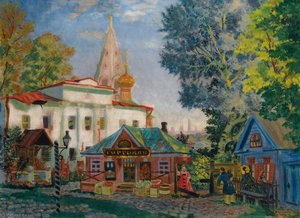
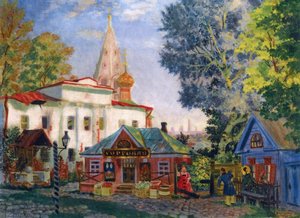
“Rural Festival,” painted in 1924 by Boris Mikhailovich Kustodiev, stands as a quintessential emblem of Russian Impressionism and offers a poignant glimpse into the cultural landscape of the early Soviet era. More than just a depiction of a village celebration—a Khorovod—it’s an immersive experience of tradition interwoven with burgeoning modernity, meticulously rendered in oil on canvas by a master whose artistic vision remained deeply rooted in his provincial upbringing.Subject Matter and Composition
The painting captures precisely what its title suggests: a lively rural festival unfolding amidst the golden hues of late summer. Kustodiev skillfully portrays a congregation of villagers gathered around a central clearing, dominated by tents providing shade against the sun’s glare. Figures are positioned dynamically—some standing upright, others seated on chairs—creating a sense of movement and communal engagement. Scattered throughout the scene are details that enrich the narrative – umbrellas shielding attendees from the heat, backpacks laden with provisions, and birds soaring overhead—elements that speak to the everyday realities of rural Russian life. The artist’s eye for capturing authentic human interaction is remarkable.Style and Technique: Impressionistic Brushstrokes
Kustodiev's approach aligns squarely with Impressionism, albeit imbued with a distinctly Russian sensibility. He eschews meticulous realism in favor of loose brushstrokes and vibrant color palettes—a technique championed by Repin himself during their formative years at the Imperial Academy of Arts. The artist prioritizes capturing fleeting impressions of light and atmosphere rather than precise anatomical detail. Notice how Kustodiev utilizes broken color to create shimmering effects, particularly evident in the sky where blues and yellows blend seamlessly. This stylistic choice reflects a broader artistic movement that sought to convey emotion and subjective experience above objective representation.Historical Context: Echoes of Tradition Amidst Change
Painted during the tumultuous years following the Russian Revolution, “Rural Festival” encapsulates the anxieties and aspirations of a nation grappling with dramatic societal transformations. While Kustodiev’s style harkens back to earlier artistic traditions—particularly Symbolism—the subject matter itself celebrates rural customs and rituals that were facing increasing pressure from urbanizing forces. The Khorovod, a pagan ritual dance symbolizing renewal and fertility, represents the enduring spirit of Russian folklore and serves as a counterpoint to the rapid pace of industrialization. Kustodiev’s work is thus interpreted as an affirmation of cultural heritage amidst the upheaval of political change.Symbolism: Color and Gesture
The painting's color scheme—dominated by warm yellows, reds, and greens—is deliberately symbolic. Yellow represents prosperity and vitality, mirroring the abundance of crops during harvest season. Red signifies passion and energy, reflecting the fervor of the Khorovod dance itself. The artist’s expressive brushstrokes convey a palpable sense of joy and spontaneity, capturing the emotional core of the festival experience. Furthermore, the positioning of figures—often facing outwards—suggests openness to new ideas and traditions while simultaneously honoring established customs.Emotional Impact: A Window into Russian Identity
“Rural Festival” transcends mere visual representation; it evokes a profound feeling for the beauty and resilience of rural Russia. Kustodiev’s masterful depiction captures not only the physical setting but also the intangible spirit of community—a spirit that persists despite external pressures. Viewing this artwork inspires contemplation on themes of tradition, faith, and human connection. It serves as an enduring testament to Kustodiev's ability to distill complex cultural values into a single, unforgettable image – a timeless celebration of Russian soul.Related Artworks
Artist Biography
A Life Immersed in Russian Spirit
Boris Mikhailovich Kustodiev, born on March 7, 1878, in Astrakhan, Russia, was an artist whose work became synonymous with a vibrant and often idealized depiction of Russian life. His early years were marked by a sense of provinciality, shaped by the financial struggles following his father’s untimely death – a professor of philosophy, history, and logic. This exposure to the lives of merchants and common folk would deeply influence the themes that permeated his art throughout his career. Kustodiev's formative education began within the theological seminary in Astrakhan, yet it was private lessons with Pavel Vlasov, a student of Vasily Perov, that truly ignited his artistic passion. This foundation led him to St. Petersburg and the prestigious Imperial Academy of Arts, where he studied under the renowned Ilya Repin from 1896 to 1903. Repin recognized Kustodiev’s talent early on, even inviting him to assist with a monumental commemorative painting, providing invaluable experience and mentorship. This period was crucial in honing his skills and establishing his commitment to capturing the essence of Russian identity.Artistic Development and Key Themes
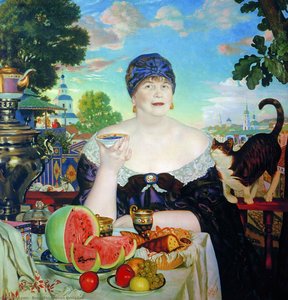
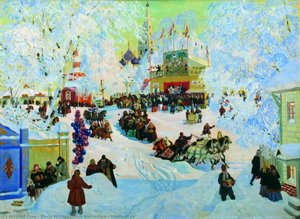
Kustodiev's artistic journey unfolded across various genres – portraiture, genre scenes, and book illustration – but he consistently returned to portraying the richness and complexity of Russian culture. His style evolved over time, initially influenced by Realism and later embracing elements of Art Nouveau. He possessed a remarkable ability to depict not just *what* he saw, but also the atmosphere and spirit of a place or moment. The merchant class, with their traditions and customs, became a recurring motif in his work, reflecting those early impressions from his childhood. Paintings like The Merchant’s Wife, completed in 1918, stand as powerful testaments to this fascination, showcasing the dignity and character of these often-overlooked figures. Beyond portraits, Kustodiev masterfully captured scenes of everyday life – bustling marketplaces, lively festivals such as Maslenitsa (Pancake Week) depicted vividly in his 1916 painting of the same name, and serene landscapes that evoked a deep sense of national pride. His work wasn’t merely representational; it was infused with a palpable love for Russia and its people. He traveled extensively throughout Europe – France, Spain, Italy – but always felt drawn back to his homeland, believing that true artistic inspiration lay within the Russian soul.Overcoming Adversity: Art as Resilience
In 1916, Kustodiev’s life took a dramatic turn when he was struck with paraplegia. Confined to a wheelchair, his physical suffering could have easily extinguished his creative flame. However, it instead fueled an even greater artistic output and a remarkable shift in perspective. Despite the immense challenges, he continued to paint prolifically, his later works characterized by an intensified joyfulness and vibrant color palette. It’s as if, unable to physically experience life fully, he poured all of his energy into recreating its beauty on canvas. This period saw him further refine his style, embracing a more decorative approach that celebrated the simple pleasures of life. His resilience in the face of adversity became an integral part of his artistic legacy, demonstrating the power of art as a source of strength and solace. The market painting by Alexey Petrovich Bogolyubov is a testament to this enduring influence.Legacy and Historical Significance
Boris Kustodiev’s contribution to Russian art lies in his ability to capture the spirit of an era – a time of immense social change, political upheaval, and cultural awakening. He wasn't simply documenting reality; he was interpreting it through a lens of nostalgia, affection, and profound understanding. His paintings offer invaluable insights into the lives of ordinary Russians during the late 19th and early 20th centuries, preserving their traditions, customs, and values for posterity. His work resonated deeply with audiences then and continues to captivate viewers today. Kustodiev’s influence can be seen in the works of subsequent generations of Russian artists who sought to celebrate their national identity and depict the beauty of everyday life. His paintings are now held in prominent collections across Russia, including the Kramskoy Museum of Fine Arts in Voronezh and the Kharkov Museum of Art in Ukraine, ensuring that his artistic vision will continue to inspire and enrich for years to come.Notable Works & Collections
- The Merchant’s Wife (1918): A seminal work embodying Kustodiev's mastery of Russian realism and his affectionate portrayal of the merchant class.
- Fontanka (1916): A vibrant depiction of St. Petersburg life, showcasing his ability to capture atmosphere and movement.
- Pancake Tuesday/Maslenitsa (1916): A joyous celebration of a traditional Russian festival, brimming with color and energy.
- Trinity Day: Captures the lively spirit of a Russian religious celebration.
- The Attack on the Wedding Carriage: A dramatic woodcut illustrating a historical conflict with striking intensity.
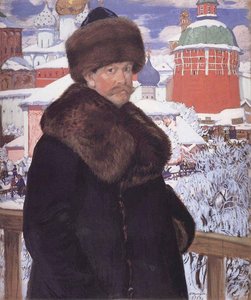
Boris Mikhailovich Kustodiev
1878 - 1927 , Russia
Quick Facts
- Artistic Movement Or Style: Realism, Art Nouveau
- Artists Who Influenced This Artist:
- Ilya Repin
- Vasily Perov
- Date Of Birth: March 7, 1878
- Date Of Death: May 28, 1927
- Full Name: Boris Mikhailovich Kustodiev
- Nationality: Russian
- Notable Artworks:
- The Merchant's Wife
- Fontanka
- Maslenitsa
- Place Of Birth: Astrakhan, Russia
Related Articles
Konstantin Korovin: A Master of Russian Impressionism & Evocative Light
Explore the captivating world of Konstantin Korovin, a leading Russian Impressionist painter renowned for his vibrant landscapes & innovative theater designs. Discover his life, legacy, and enduring artistic impact.
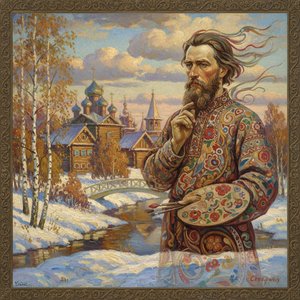
Igor Grabar: Bridging Impressionism & National Identity in Russian Modern Art
Explore the life & art of Igor Grabar, a pivotal figure in Russian Modernism. Discover his Impressionist landscapes, crucial role in art history, and legacy at the Tretyakov Gallery. A deep dive into a master painter & scholar.
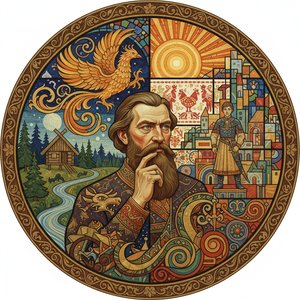
Ivan Bilibin: A Synthesis of Folklore, Modernism & National Identity in Russian Illustration
Explore the enchanting world of Ivan Bilibin, a master Russian illustrator who synthesized folklore, Art Nouveau & national identity. Discover his iconic fairy tale illustrations and legacy with ArtsDot.

Impressionism's Masterpieces: 10 Paintings That Defined a Movement | ArtsDot
Journey through Impressionism's heart with 10 iconic paintings by Monet, Renoir & Degas. Explore light, color & the stories behind these masterpieces. Find museum-quality art reproductions and elevate your home decor on ArtsDot.com.

Sir Alfred Munnings' Masterpieces: 25 Paintings That Define Equine Art | ArtsDot
Explore 25 iconic Sir Alfred Munnings paintings! Discover the beauty of British Impressionism, equine art & rural England. Find museum-quality reproductions and elevate your home decor with ArtsDot. Explore the full collection online.