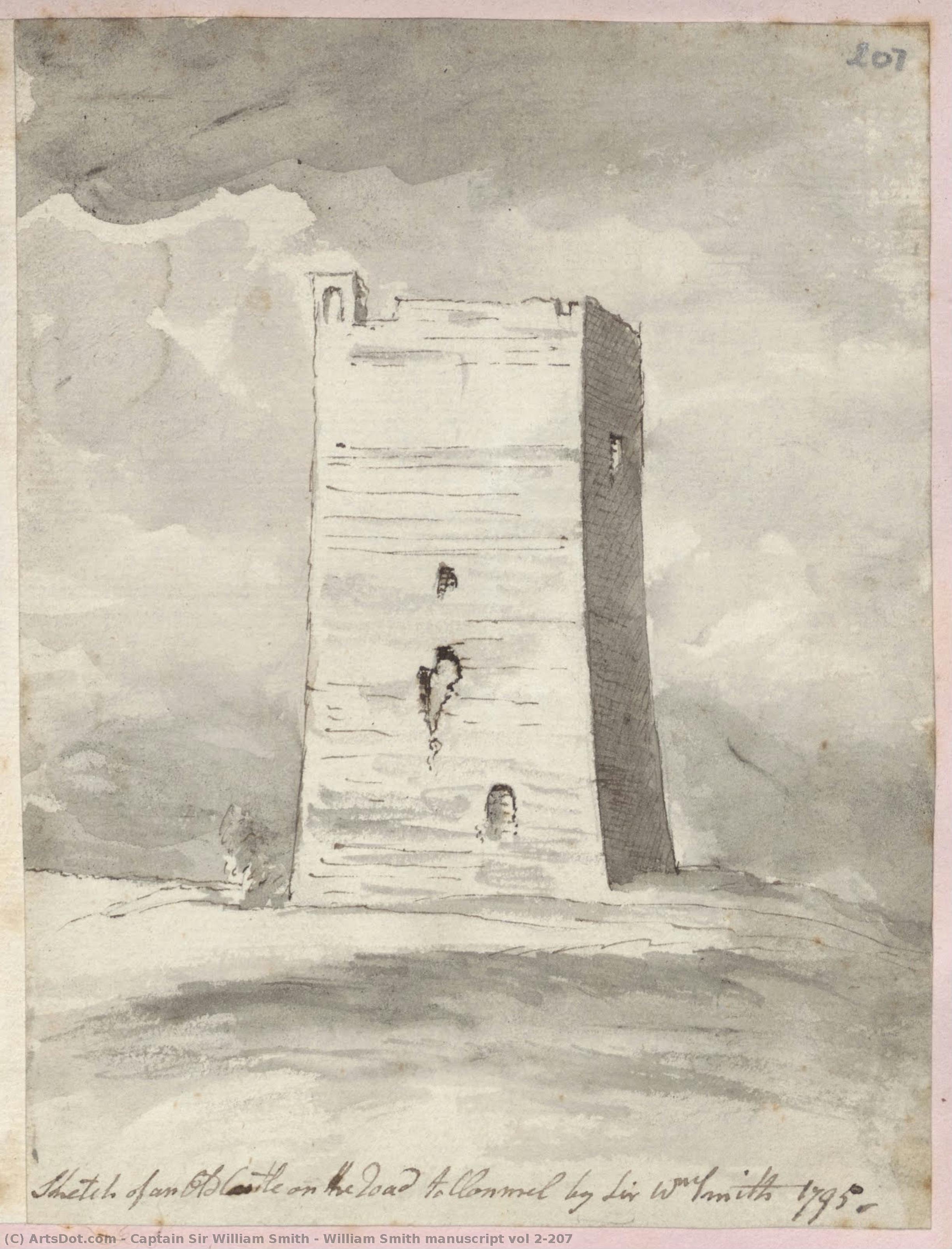
William Smith manuscript vol 2/207 – A Towering Testament to Naval Valor and Artistic Vision
The drawing before us—titled “William Smith manuscript vol 2/207”—offers a glimpse into the multifaceted life of Captain Sir William Smith, a British naval officer whose artistic pursuits were as remarkable as his military achievements. Executed in 1795, this piece transcends mere depiction; it embodies a profound reflection on the era’s anxieties and aspirations, skillfully rendered with meticulous attention to detail.
Subject Matter & Composition: The artwork portrays a monumental brick tower dominating a tranquil landscape. Its imposing presence immediately commands attention, symbolizing strength, resilience, and perhaps even defiance against perceived threats. Two figures stand prominently near the base of the tower—one positioned on the left, gazing upwards with contemplative expression; the other closer to the center, seemingly observing the scene with quiet vigilance. Above them, a solitary bird ascends towards the upper right corner, representing freedom, aspiration, and an escape from earthly constraints.
Style & Technique: Smith’s artistic style leans heavily toward Romanticism, characterized by dramatic lighting, expressive brushstrokes, and a palpable sense of atmosphere. The artist employs a watercolor technique—a medium favored for its ability to capture subtle tonal variations and luminous effects—resulting in an image imbued with warmth and depth. Careful layering of washes creates texture and highlights the architectural grandeur of the tower while simultaneously conveying a feeling of serene contemplation.
Historical Context: Created during the Napoleonic Wars, “William Smith manuscript vol 2/207” speaks to the anxieties surrounding Britain’s defense against Napoleon Bonaparte's ambitions. The tower itself can be interpreted as representing fortitude and unwavering resolve—qualities deemed essential for safeguarding national interests amidst geopolitical instability. Simultaneously, Smith’s artistic inclination reflects a broader cultural preoccupation with capturing sublime beauty in nature, offering solace and inspiration during turbulent times.
Symbolism & Emotional Impact: The bird soaring above the tower is particularly evocative, symbolizing hope and transcendence—a yearning for spiritual elevation beyond the confines of earthly concerns. The contemplative gaze of one figure suggests introspection and a consideration of grander themes, while the watchful stance of the other embodies vigilance and preparedness. Overall, the artwork evokes feelings of awe, admiration for human courage, and appreciation for the harmonious interplay between man and nature—themes that resonate powerfully with viewers even today.
Conclusion: “William Smith manuscript vol 2/207” stands as a testament to Captain Sir William Smith’s extraordinary duality – his unwavering dedication to naval service combined with an undeniable passion for artistic expression. It is more than just a visual record of its time; it's a poignant meditation on human resilience, aspiration, and the enduring beauty of the natural world—a captivating piece that continues to inspire contemplation and admiration.