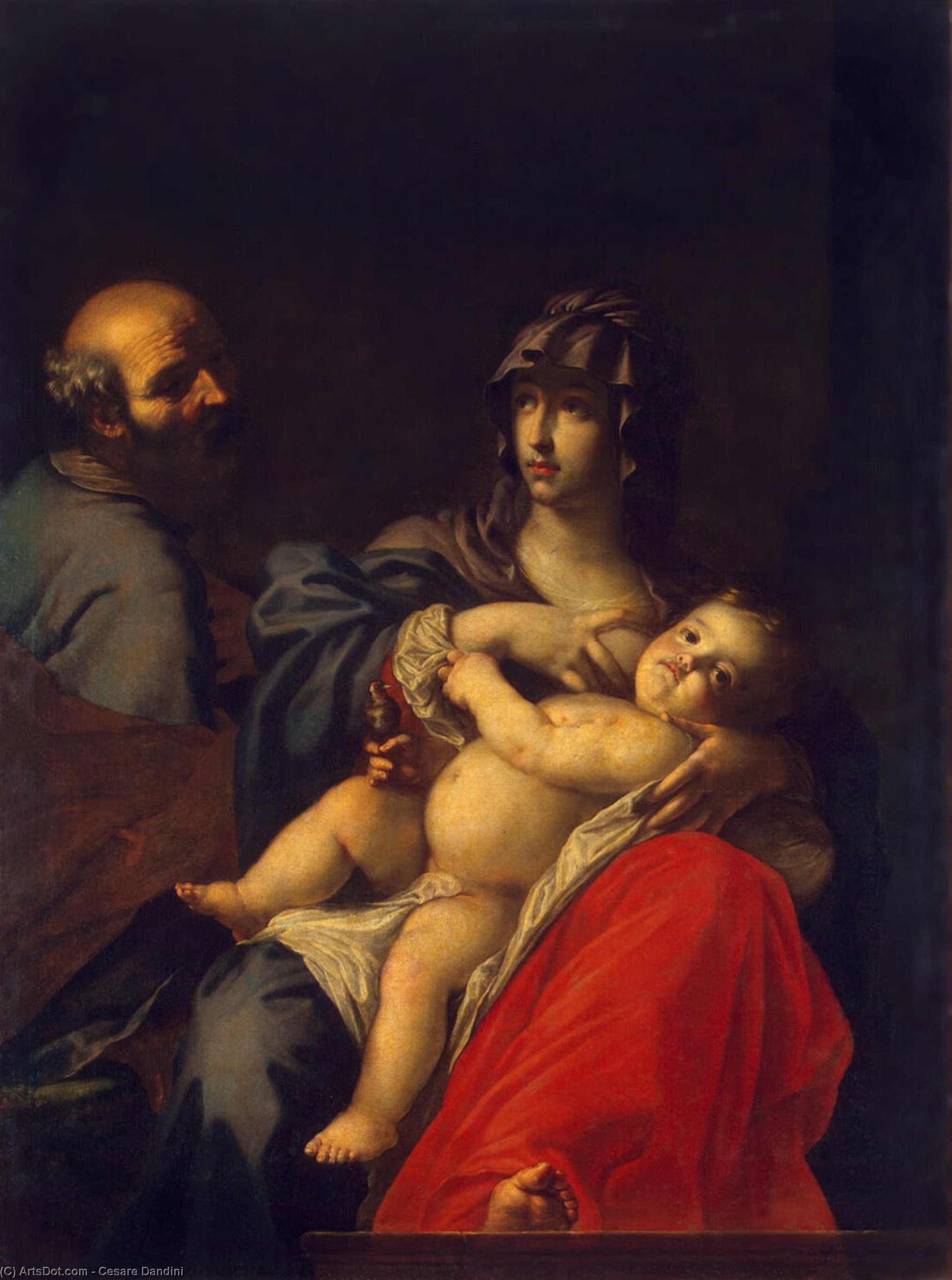
A Florentine Reverie: Exploring Cesare Dandini’s Holy Family
Cesare Dandini's “Holy Family,” painted around 1640, stands as a quintessential emblem of Baroque piety and artistic refinement—a testament to Florence’s enduring legacy within the European art landscape. More than just a depiction of biblical narrative, this canvas embodies a profound understanding of humanist ideals intertwined with spiritual contemplation, reflecting the cultural milieu of its time.
Composition & Technique: Mastering Light and Form
The painting's masterful composition immediately draws the eye inward, prioritizing clarity and emotional resonance. Dandini employs a pyramidal structure, anchoring Mary and Jesus centrally while Joseph occupies a supportive position on the left side. This deliberate arrangement lends stability to the scene and directs the viewer’s gaze towards the divine figures. Dandini’s technique is characterized by meticulous attention to detail—particularly in capturing the subtle nuances of human anatomy and drapery folds—demonstrating an exceptional command of oil paint on canvas. The artist skillfully utilizes chiaroscuro, employing dramatic contrasts between light and shadow to sculpt the forms of his subjects and imbue them with palpable depth.
Symbolism & Iconography: Layers of Meaning
Beyond its visual splendor, “Holy Family” is rich in symbolic iconography. Mary’s serene countenance—expressed through a veiled gaze and gentle posture—represents purity and humility – virtues deeply valued during the Baroque period. The infant Jesus, depicted with rosy cheeks and an expression of peaceful innocence, symbolizes divine grace and redemption. Joseph's attentive stance signifies paternal care and protection, reinforcing the familial bond at the heart of the composition. These figures are positioned within a dark background, emphasizing their luminosity and highlighting their spiritual significance—a deliberate stylistic choice that underscores the sanctity of the depicted scene.
Historical Context: Florence Under Papal Patronage
Painted during the reign of Pope Innocent X, “Holy Family” benefited from the considerable patronage afforded to artists by the Catholic Church. Florentine Baroque art flourished under papal influence, fostering a climate of creativity and innovation. Dandini’s work aligns seamlessly with broader artistic trends—characterized by grandeur, emotional intensity, and an aspiration to convey spiritual truths—reflecting the fervent religious fervor prevalent throughout Italy at the time. The painting's placement within St. Petersburg’s Hermitage Museum underscores its enduring importance as a masterpiece of Baroque art.
Emotional Impact: A Window into Divine Grace
“Holy Family” transcends mere representation; it aspires to evoke contemplation and reverence. Dandini’s masterful use of color—primarily earthy tones—creates an atmosphere of solemn tranquility, inviting viewers to immerse themselves in the beauty of faith. The painting's luminous drapery and expressive facial features convey a palpable sense of emotion—a testament to Dandini’s ability to capture not only visual accuracy but also the spiritual essence of his subject matter. It remains a powerful reminder of humanity’s yearning for divine grace and embodies the sublime ideals that defined the Baroque artistic tradition.