Charles Frederick Worth: The Architect of Haute Couture
Before the dawn of the 20th century, fashion wasn’t merely about clothing; it was an art form dictated by a singular visionary – Charles Frederick Worth. Born in Bourne, Lincolnshire, England, on October 13, 1825, his ascent from humble beginnings to becoming the undisputed leader of Parisian haute couture is a story etched in silk and ambition.
Worth’s early life instilled in him an appreciation for craftsmanship and meticulous detail. His apprenticeship with London textile merchants honed his understanding of fabrics – knowledge that would prove invaluable as he revolutionized the garment industry. However, it was his relocation to Paris in 1845 that truly ignited his creative spark. Immediately securing employment at Gagelin-Opigez & Cie, Worth swiftly distinguished himself not only as a skilled salesman but also as an innovator capable of transforming raw materials into breathtaking gowns.
He wasn’t simply dressing women; he was crafting narratives woven from color, texture, and silhouette. Unlike previous designers who relied on established patterns, Worth championed the concept of live models – a daring move that transformed the fashion salon into a social hub and cemented his reputation as the first true couturier.
The Afternoon Dress: A Symbol of Elegance
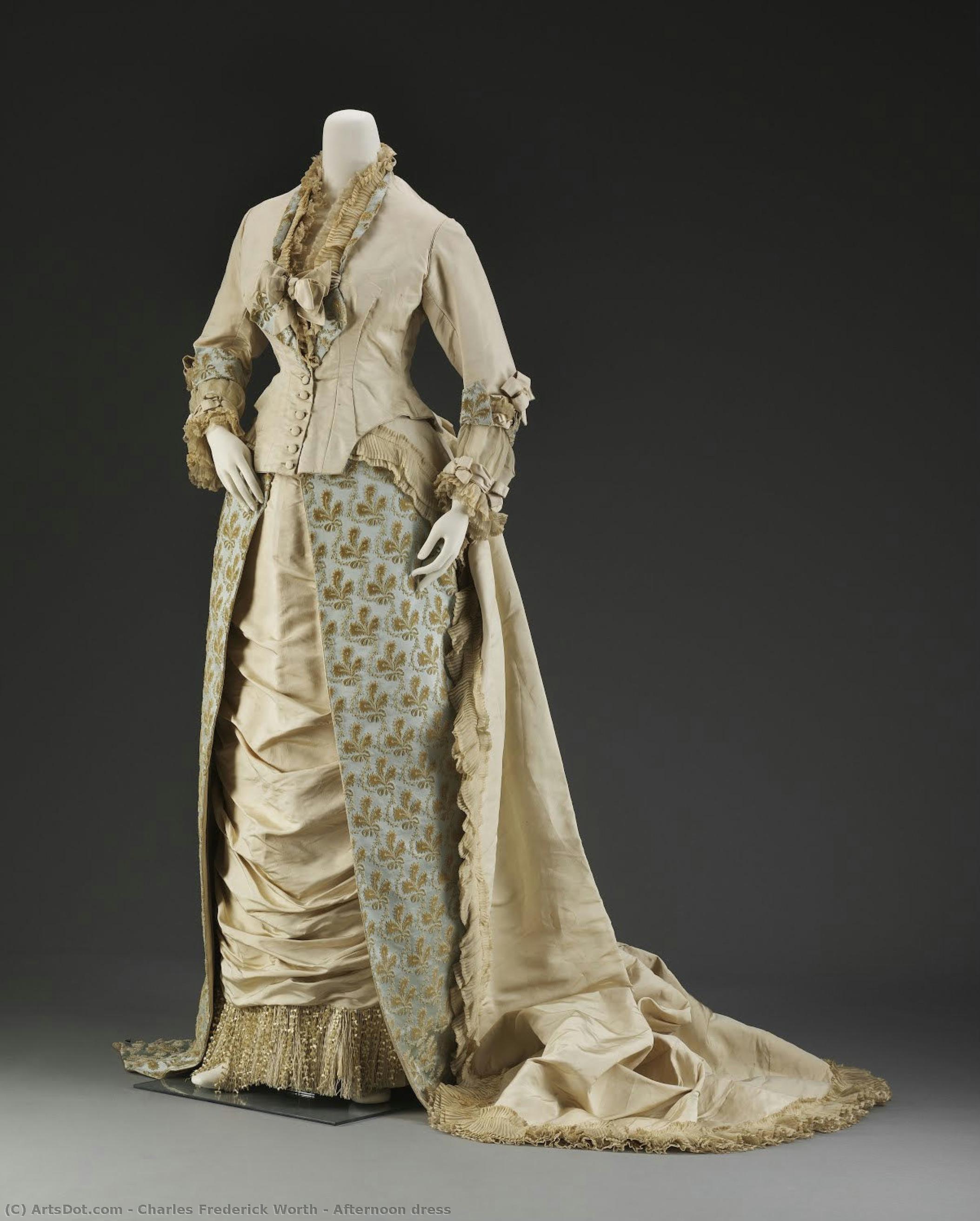
Considered by many historians to be the progenitor of haute couture, Worth’s influence extended far beyond mere dressmaking. His designs embodied an aesthetic rooted in refined elegance and a profound understanding of societal desires. The “Afternoon Dress,” exemplified by the exquisite specimen housed at The Metropolitan Museum of Art—a pale greenish-yellow gown adorned with yellow cut velvet feathers—represents the zenith of Victorian fashion sensibilities.
The dress itself is constructed from satin, chosen for its luxurious sheen and drape, and embellished with intricate lace trim – a hallmark of Worth’s meticulous attention to detail. The mannequin stands poised before a gray backdrop, strategically employed to accentuate the gown's flowing lines and sculptural form. Every ruffle, every feather, speaks volumes about the era’s obsession with ornamentation and beauty.
Technique and Innovation: Worth’s Legacy
What truly sets Worth apart is his pioneering approach to garment construction. Rejecting traditional methods, he embraced innovative techniques—such as utilizing horsehair supports for skirts—to achieve unprecedented volume and movement. This daring experimentation wasn't merely about aesthetics; it was a deliberate effort to elevate the craft of dressmaking and adapt Victorian fashion to the realities of daily life.
Furthermore, Worth’s insistence on employing live models – a revolutionary concept at the time – ensured that his creations were showcased in their most flattering light. This practice elevated the couture salon into a social institution where discerning clients could experience firsthand the transformative power of exquisitely crafted garments.
Historical Context and Emotional Impact
The “Afternoon Dress” emerged during a period marked by significant societal shifts—the burgeoning Industrial Revolution, the rise of the middle class, and an evolving understanding of femininity. Worth’s designs responded to these changes with grace and sophistication, reflecting the aspirations of women who sought to express their status and beauty through clothing.
More than just a garment, it embodies the spirit of its time—a celebration of opulent fabrics, meticulous craftsmanship, and an unwavering belief in the transformative potential of fashion. Viewing this masterpiece evokes a sense of timeless elegance and reminds us that true artistry lies not only in technique but also in capturing the essence of human emotion.