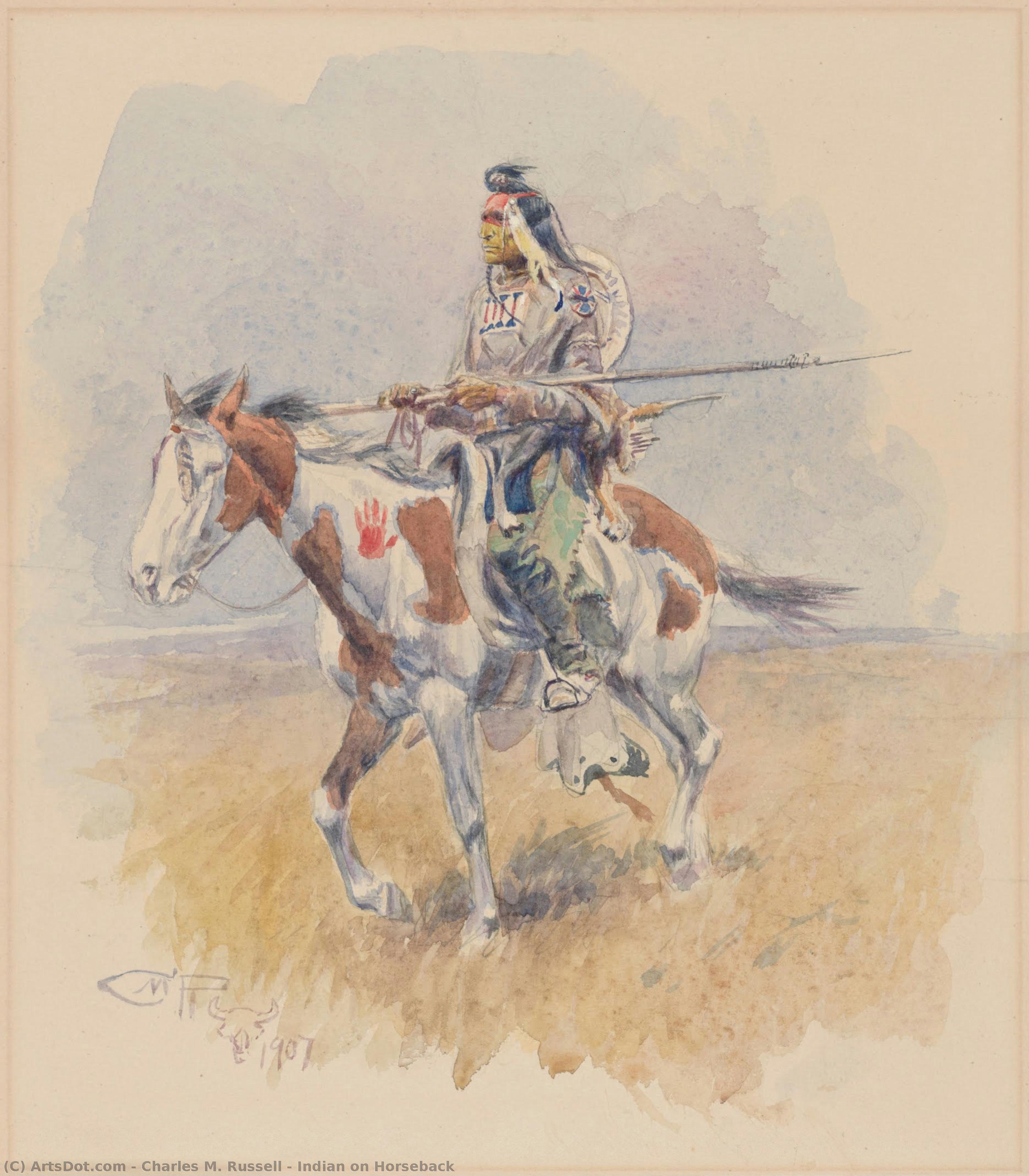
Charles Marion Russell’s “Indian on Horseback”: Capturing the American West Through Romantic Vision
Charles Marion Russell (1864 – 1926), affectionately known as “C.M.” or “Kid” Russell, wasn't born into the world he would so vividly immortalize on canvas and in bronze. Born in St. Louis, Missouri, in 1864, his early life was steeped not in formal artistic training but in a consuming fascination with the American West—a realm initially experienced through stories and sketches, fueled by an almost romantic yearning for open spaces and untamed freedom. This nascent passion would eventually propel him westward, abandoning traditional schooling at sixteen to become a working cowboy in Montana’s Judith Basin. It was a bold move, a deliberate immersion into the life he so vividly imagined, and it proved pivotal in shaping his artistic vision.
Russell didn't merely *depict* the West; he lived it, breathed its dust, and absorbed its rhythms. For eleven years, he embraced the rugged existence of a cowboy, honing his observational skills and developing an unparalleled understanding of the landscapes and people inhabiting this frontier territory. This firsthand experience would become the bedrock of his enduring legacy.
“Indian on Horseback,” completed in 1907, exemplifies Russell’s distinctive style—a masterful blend of realism and romantic idealism. The painting showcases a solitary Native American rider atop a horse traversing a vast expanse of dusty terrain. Unlike many artists of the era who focused solely on documenting the West's harsh realities, Russell sought to convey its beauty and grandeur, capturing a moment of serene movement against a muted backdrop.
- Subject Matter: The artwork centers around a Native American cowboy riding horseback—a quintessential symbol of the American frontier spirit.
- Style: Representational yet imbued with Impressionistic tendencies; Russell prioritized conveying atmosphere and emotion over precise detail.
- Technique: Watercolor on paper utilizes layering washes of color, dry brush techniques, and subtle shading to create a textured surface that evokes the feeling of windblown sand.
- Color Palette: Dominated by earthy tones—browns, tans, ochres, and muted reds—accentuated by whites in horse markings and clothing, reflecting the natural palette of Montana landscapes.
- Composition: The central figures are positioned slightly off-center, generating a dynamic visual balance that emphasizes movement and conveys a sense of freedom.
Beyond its aesthetic qualities, “Indian on Horseback” resonates with deeper symbolic meanings. It speaks to the connection between humanity and nature—a core theme in Russell’s oeuvre—and embodies the romantic ideal of the cowboy as a solitary wanderer embracing the wilderness. The painting's soft lighting contributes to an overall mood of tranquility and contemplation, inviting viewers to immerse themselves in the spirit of the American West.
Russell’s artistic vision was profoundly influenced by his experiences as a cowboy and his admiration for Native American culture. He sought to honor these traditions through his art, capturing their essence with sensitivity and respect. “Indian on Horseback” stands as a testament to Russell's ability to transform observation into enduring beauty—a timeless portrayal of the American West that continues to inspire collectors and artists alike.
Additional Research: Explore Charles Marion Russell’s life and legacy through Wikipedia (Wikipedia) and delve into his artistic achievements on sites like PaintingMania (PaintingMania).