
A Legacy of Vision and Landscape
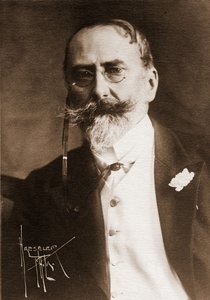
Nestled within the vibrant Cultural District of Fort Worth, the Amon Carter Museum of American Art stands as a profound testament to the enduring spirit of the American West and the transformative power of the creative gaze. Founded in 1961 by the visionary newspaper publisher Amon G. Carter Sr., the institution was born from a deeply personal passion for the rugged beauty and historical narratives of the frontier. What began as a dedicated repository for works celebrating Texas’s heritage has, through decades of thoughtful curation, blossomed into a nationally recognized beacon of American creativity. The museum does not merely display art; it preserves the very soul of a nation's evolution, offering a sanctuary where the dust of the plains meets the sophisticated elegance of modern artistic expression.
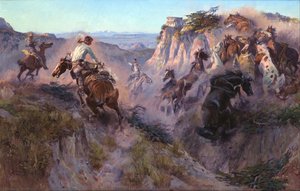
At the heart of the museum’s identity lies its foundational collection, a breathtaking assembly of masterpieces that define the visual lexicon of the American frontier. The works of Frederic Remington and Charles M. Rex Russell serve as the collection's pulse, with over 400 diverse pieces—ranging from intricate drawings and evocative watercolors to powerful bronze sculptures—capturing the dramatic tension between settlers and Native Americans. These are not mere historical records but complex, breathing narratives that invite viewers to witness the grit, glory, and profound symbolism of an era shaped by movement and encounter. This mastery of storytelling is complemented by a staggering photography archive, where approximately 45,000 exhibition-quality prints allow the lens of legends like Ansel Adams and Dorothea Lange to illuminate the social and political transformations of the American experience.
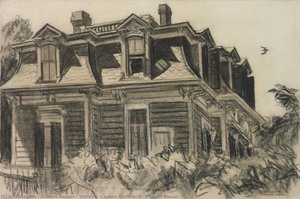
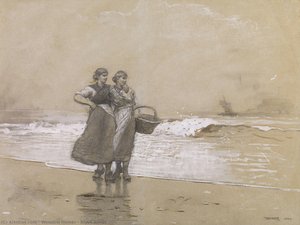
As one wanders through the galleries, the museum’s scope reveals a magnificent expansion beyond the horizon of the West. The collection gracefully transitions into the broader currents of American art history, embracing the delicate light of Impressionism, the grounded truth of Realism, and the bold, fractured energies of Modernism and Abstract Expressionism. Collectors and enthusiasts will find themselves captivated by the presence of icons such as Georgia O’Keeffe , Edward Hopper , and Willem de Kooning , whose works demonstrate how American identity has been continuously redefined through stylistic innovation. This breadth ensures that the museum remains a vital interlocutor in contemporary cultural dialogues, bridging the gap between the historical frontier and the avant-garde.
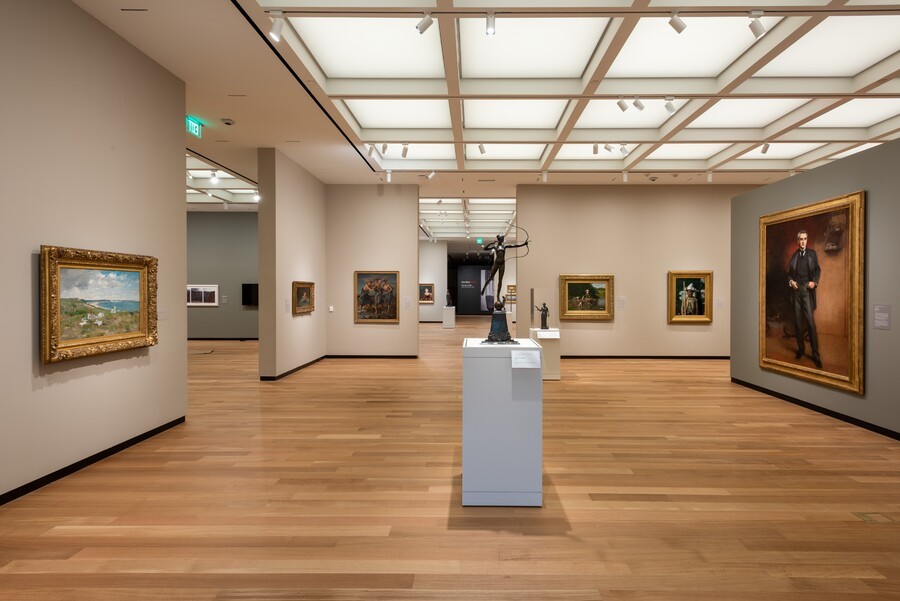
The physical experience of the Amon Carter is as much a work of art as the treasures held within its walls. Designed by the legendary architect Philip Johnson , the museum’s original structure embodies a harmonious blend of modernist elegance and an intimate connection to the natural world. The recent expansion, known as “The New Carter,” has masterfully honored Johnson’s original vision while introducing state-of-the-art facilities and sustainable architectural practices. Bathed in soft, natural light, the galleries provide a serene backdrop that allows the textures of oil on canvas and the sharp lines of contemporary sculpture to resonate with unparalleled clarity. For the interior designer or the wandering soul, the museum offers an atmosphere of profound tranquility and intellectual stimulation, making it a destination where history, architecture, and art converge in perfect, lasting harmony.