The Hudson River School: A Foundation of American Landscape Painting
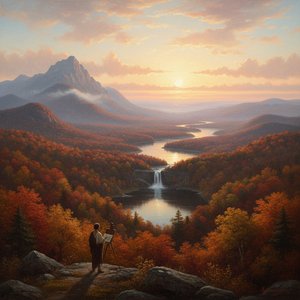
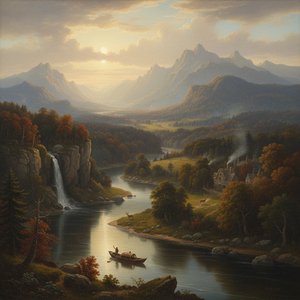
The Hudson River School was a mid-19th-century American art movement embodied by a group of landscape painters whose aesthetic vision was influenced by Romanticism. Early on, the paintings typically depicted the Hudson River Valley and the surroundi...
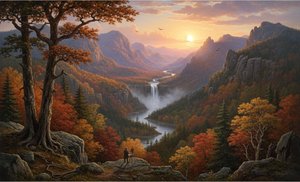
Before the sweeping vistas of Frederic Edwin Church captured the imagination of a nation, a nascent artistic identity was taking root along the banks of the Hudson River. The movement that would become known as the Hudson River School wasn’t initially conceived as a unified style, but rather emerged organically from the work of artists captivated by the dramatic beauty of the American wilderness. Its origins lie with Thomas Cole, who, after years of itinerant portraiture, found his true calling in the untamed landscapes of New York State. Cole's paintings weren’t merely depictions of scenery; they were imbued with a Romantic sensibility, reflecting a deep spiritual connection to nature and a growing sense of national pride. He established a precedent for viewing the American landscape not just as a picturesque backdrop, but as a source of moral and aesthetic inspiration – a “new kind of sublime,” distinct from the European traditions that had long dominated artistic thought. The early adherents—Asher B. Durand, Thomas Moran, and others—shared Cole’s reverence for detail and his commitment to portraying nature with both accuracy and emotional resonance. They sought to capture not just *what* they saw, but *how* it felt to be immersed in the grandeur of the American continent.
Frederic Edwin Church: From Early Promise to National Acclaim
 Wikipedia: Frederic Edwin Church
Frederic Edwin Church (May 4, 1826 – April 7, 1900) was an American landscape painter born in Hartford, Connecticut. He was a central figure in the Hudson River School of American landscape painters, best known for painting large landscapes, often de...
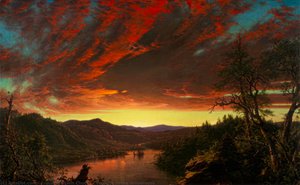
Born in Hartford, Connecticut, in 1826, Frederic Edwin Church possessed a natural talent that quickly distinguished him. His early training under Thomas Cole proved pivotal, instilling in him not only technical skill but also a profound appreciation for the symbolic power of landscape. Unlike some of his contemporaries who focused on recreating scenes with meticulous precision, Church brought an almost scientific intensity to his observations. He wasn’t content simply to paint mountains; he studied their geological formations, meticulously documenting light and shadow, atmospheric effects, and the subtle nuances of color. This dedication to realism, coupled with a remarkable gift for composition, allowed him to create landscapes that were both breathtakingly accurate and deeply evocative. Church rapidly ascended in the art world, gaining recognition for his ability to capture the majesty of nature on an unprecedented scale. He wasn’t merely following Cole's path; he was forging his own, pushing the boundaries of landscape painting with increasingly ambitious canvases and innovative exhibition strategies.
The Heart of the Andes & The Pursuit of Monumentality
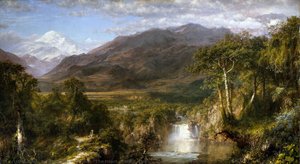 The Heart of the Andes
Explore "The Heart of the Andes" by Frederic Edwin Church – a monumental Hudson River School landscape. Witness stunning detail & luminosity in this 1859 masterpiece, evoking awe & natural beauty.
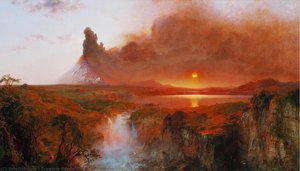
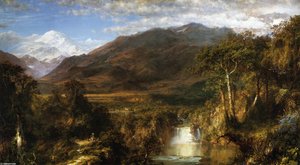
In 1859, Church unveiled “The Heart of the Andes”, a monumental canvas that redefined the possibilities of American landscape art. This wasn’t simply a painting; it was an experience. Measuring nearly ten feet in height and twelve feet in width, the work transported viewers to the lush, vibrant rainforests of South America. Church had undertaken two arduous expeditions to the Andes, meticulously sketching and documenting the region's flora, fauna, and geological features. The resulting composition is a symphony of detail – cascading waterfalls, towering volcanoes, exotic birds, and intricate vegetation—all bathed in a luminous glow. What set “The Heart of the Andes” apart was not just its size but also Church’s innovative presentation. He constructed a specially designed gallery with dramatic lighting and lush foliage to enhance the immersive experience. The painting wasn't merely viewed; it was *felt*. It became a cultural phenomenon, attracting thousands of paying visitors and solidifying Church’s reputation as America’s foremost landscape painter. The success of “The Heart of the Andes” signaled a shift in American art—a move towards larger-scale compositions that aimed to evoke awe and inspire a sense of national pride.
Luminism Emerges: Light, Atmosphere, and Spiritual Resonance
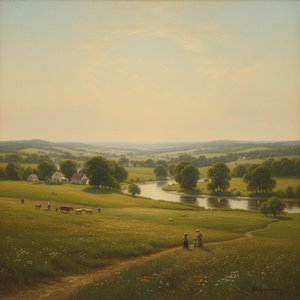
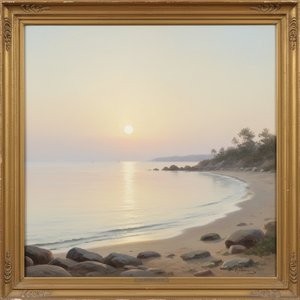
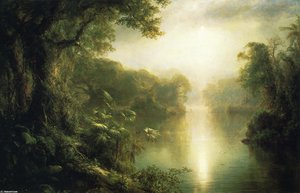
Luminism is a style of American landscape painting from the 1850s to 1870s, characterized by effects of light in a landscape, through the use of aerial perspective and the concealing of visible brushstrokes. Luminist landscapes emphasize tranquility,...
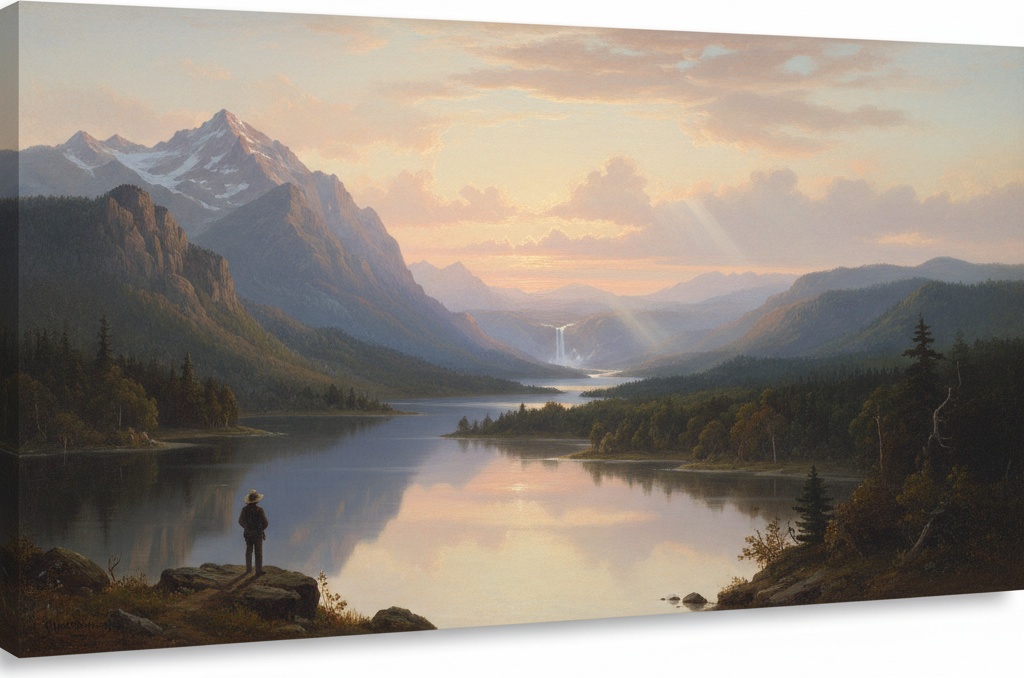
While Church’s work often falls under the umbrella of the Hudson River School, it also anticipates the emergence of Luminism, a distinct style characterized by its emphasis on light and atmosphere. Luminist painters—Fitz Henry Lane, Martin Johnson Heade, and John F. Kensett among them—shared Church’s meticulous attention to detail but focused on creating scenes of quiet serenity and spiritual contemplation. They favored horizontal compositions, deep spatial recession, and a subtle palette that emphasized the play of light on water and sky. Brushstrokes were often concealed, resulting in surfaces that appeared almost seamless, lending an ethereal quality to their work. Luminism wasn’t about dramatic spectacle; it was about capturing fleeting moments of beauty and evoking a sense of tranquility. The style resonated with the Transcendentalist movement, which emphasized the inherent goodness of nature and the importance of individual intuition. Paintings like Lane's “Lumber Schooners at Evening on Penobscot Bay” aren’t simply depictions of maritime life; they are meditations on light, space, and the sublime beauty of the natural world.
Beyond the Canvas: Travel, Science, and Olana as a Total Work of Art
Frederic Edwin Church was more than just a painter; he was an explorer, a scientist, and a visionary architect. His travels to South America, Mexico, and the Arctic weren’t merely for artistic inspiration; they were driven by a genuine curiosity about the natural world. He meticulously documented his observations in detailed sketches, journals, and even collected specimens of plants and animals. This scientific approach informed his paintings, lending them an unparalleled level of accuracy and realism. Perhaps the most enduring testament to Church’s multifaceted genius is Olana, his magnificent estate overlooking the Hudson River. Designed with the help of architect Richard Morris Hunt, Olana wasn't just a home; it was a “total work of art,” seamlessly integrating architecture, landscape design, and interior decoration. The house itself is a Persian-inspired masterpiece, perched atop a hill with panoramic views of the surrounding countryside. Church meticulously planned every detail—from the color palette to the placement of trees—to create a harmonious environment that reflected his artistic vision. Olana became a sanctuary for Church and his wife Isabel, a place where they could live in close communion with nature and pursue their shared passions.
Church’s Legacy: Influences and Enduring Appeal
Frederic Edwin Church left an indelible mark on American art, influencing generations of landscape painters. His commitment to realism, his innovative exhibition strategies, and his visionary approach to landscape design continue to inspire artists today. While the Hudson River School eventually faded from prominence with the rise of modernism, Church’s work has experienced a resurgence in recent years. His paintings are now recognized as masterpieces of American art, celebrated for their breathtaking beauty, technical skill, and profound spiritual resonance. The enduring appeal of Church's landscapes lies in their ability to transport viewers to another time and place—to evoke a sense of awe and wonder at the majesty of the natural world. His work reminds us of the importance of preserving our environment and appreciating the inherent beauty that surrounds us. Discover the timeless allure of Frederic Edwin Church’s art with ArtsDot, where museum-quality reproductions bring these iconic landscapes into your home.