Early Life and Artistic Beginnings: From Ohio Farm to Cincinnati Studios
 Wikipedia: Worthington Whittredge
Thomas Worthington Whittredge (May 22, 1820 – February 25, 1910) was an American artist of the Hudson River School. Whittredge was a highly regarded artist of his time, and was friends with several leading Hudson River School artists including Albert...
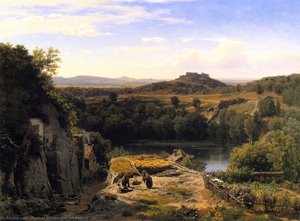
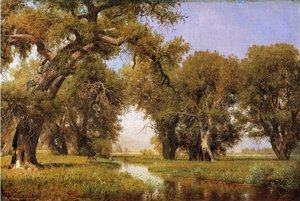
Thomas Worthington Whittredge’s story is one of a deliberate, almost defiant, pursuit of artistic expression against the backdrop of 19th-century American practicality. Born in 1820 in a humble log cabin near the Little Miami River in Ohio, his early life was steeped in the rugged realities of frontier existence. His father, Captain Joseph Whittredge, a man who viewed painting as an unproductive indulgence, instilled in young Thomas a strong work ethic through relentless farm labor and successful trapping – by sixteen, he’d earned a substantial sum selling furs. This formative period, however, fostered not just resilience but also a profound connection to the natural world, a connection that would become the very heart of his artistic vision. Whittredge's initial foray into art wasn't immediate; it was born from a quiet rebellion and a yearning for something beyond the expected path. He initially apprenticed as a house painter in Cincinnati, gradually honing his skills through self-study and sign painting, recognizing early on that his true passion lay not in mere decoration but in capturing the essence of the landscapes he held so dear.
The Hudson River School Influence: Romanticism, Nationalism, and the American Landscape
The Hudson River School was a mid-19th-century American art movement embodied by a group of landscape painters whose aesthetic vision was influenced by Romanticism. Early on, the paintings typically depicted the Hudson River Valley and the surroundi...
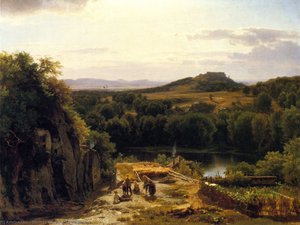
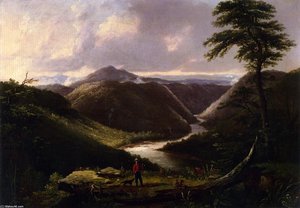
Cincinnati in the mid-19th century served as a crucial stepping stone for Whittredge, exposing him to the burgeoning artistic currents sweeping across America. The influence of the Hudson River School was inescapable. This wasn’t merely a stylistic adoption; it was an embrace of a philosophy that saw the American landscape not just as scenery but as a reflection of divine power and national identity. Artists like Thomas Cole, Asher B. Durand, and Frederic Edwin Church were pioneering a uniquely American aesthetic—one rooted in Romanticism's celebration of nature’s sublimity and untamed beauty. Whittredge quickly absorbed these principles, recognizing the potential to express his own deeply felt connection to the land through expansive vistas and meticulously rendered details. The school’s emphasis on discovery, exploration, and settlement resonated with a nation rapidly expanding westward, and Whittredge would become a significant voice in documenting this transformative era. His 1846 acceptance into the National Academy of Design, spurred by encouragement from Durand himself, solidified his place within this influential artistic community.
Whittredge's Mastery of Luminism: Atmospheric Effects and Detailed Scenery
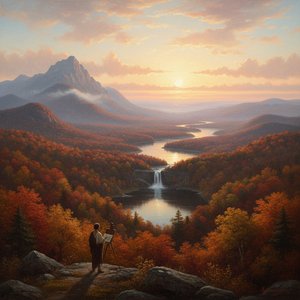
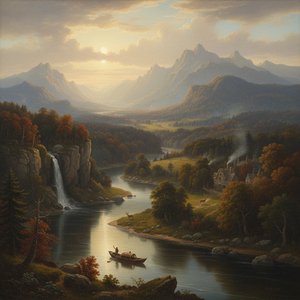
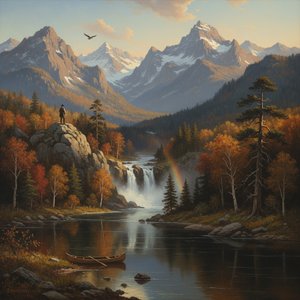
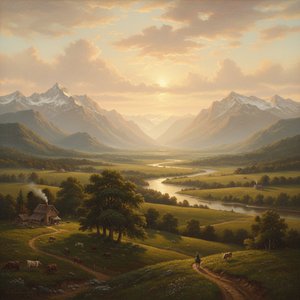
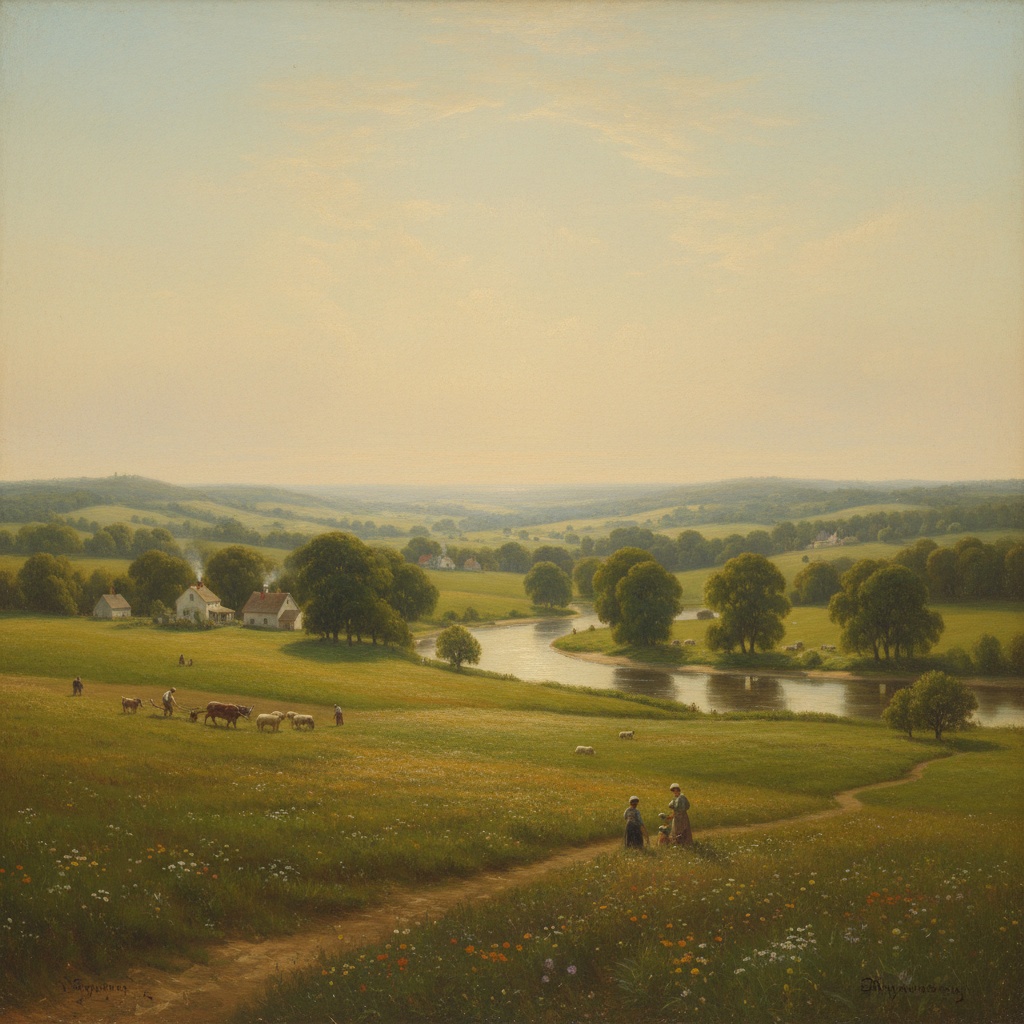
While firmly rooted in the Hudson River School tradition, Whittredge developed a distinctive style that leaned heavily into the principles of Luminism. This subtle yet powerful movement focused on capturing fleeting moments of atmospheric light and clarity, imbuing landscapes with an almost ethereal quality. Unlike the dramatic, often turbulent scenes favored by some of his contemporaries, Whittredge’s paintings are characterized by stillness, tranquility, and a remarkable attention to detail. He wasn't interested in grand spectacle but rather in the nuanced interplay of light and shadow, the delicate textures of foliage, and the serene beauty of undisturbed nature. Paintings like “Going to the Village” exemplify this mastery—a scene bathed in soft, golden light, where every leaf, branch, and ripple on the water is rendered with painstaking precision. This wasn’t simply about accurate representation; it was about conveying a specific mood, an emotional resonance that drew viewers into the heart of the landscape.
Travels West and the Depiction of a Changing America
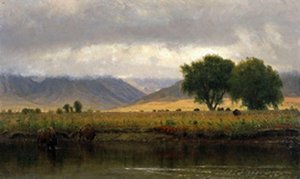 Buffalo on the Platte River
Discover "Buffalo on the Platte River" by Thomas Worthington Whittredge – a luminous Hudson River School landscape showcasing American wilderness & atmospheric beauty. Explore this serene 19th-century painting.
Driven by a desire for artistic refinement and a thirst for new experiences, Whittredge embarked on extensive travels throughout Europe in his late twenties. However, it was his journeys westward across the American continent that truly shaped his mature style. Unlike many artists who sought to capture the dramatic peaks of the Rockies, Whittredge focused on the quieter, more intimate scenes of the plains and prairies. His paintings from this period—such as “Buffalo on the Platte River”—offer a poignant glimpse into a vanishing way of life. He documented not just the majestic wildlife but also the subtle changes occurring as settlers moved westward, altering the landscape forever. These works aren’t simply picturesque depictions; they are imbued with a sense of melancholy and a quiet acknowledgment of the inevitable passage of time. Whittredge's ability to capture both the beauty and fragility of the American wilderness set him apart.
Key Works and Lasting Legacy: 'Going to the Village,' 'Buffalo on the Platte River,' and Beyond
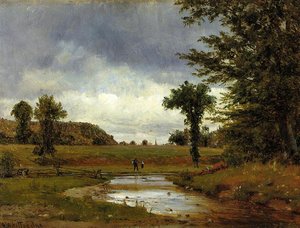 Going to the Village
Discover "Going to the Village" by Thomas Worthington Whittredge – a luminous Hudson River School landscape painting. Explore atmospheric beauty & detailed scenery in this serene American artwork.
Throughout his prolific career, Whittredge produced a remarkable body of work that continues to captivate audiences today. “Going to the Village” remains one of his most beloved paintings—a quintessential example of Luminist serenity and meticulous detail. The painting’s quiet beauty invites contemplation, transporting viewers to a simpler time and place. Similarly, “Buffalo on the Platte River” stands as a powerful testament to the changing American landscape, capturing the grandeur of the plains and the dwindling herds of bison before their near-extinction. Beyond these iconic works, Whittredge's still lifes, like “Peaches,” demonstrate his versatility and mastery of light and color. His dedication to his craft earned him widespread recognition during his lifetime—he served as president of the National Academy of Design and played a key role in shaping the artistic landscape of 19th-century America. Whittredge’s legacy lies not just in the beauty of his paintings but also in his ability to capture the essence of a nation undergoing profound transformation.
Collecting Whittredge Today: A Timeless Vision of American Beauty
Today, Thomas Worthington Whittredge's works are highly sought after by collectors and museums alike. His paintings offer more than just aesthetic appeal; they provide a window into a pivotal moment in American history—a time of exploration, settlement, and a growing appreciation for the natural world. Owning a Whittredge is not simply acquiring a beautiful artwork; it’s possessing a piece of that legacy, a tangible connection to the artists who helped define America's visual identity. His paintings can be found in prominent institutions such as The Metropolitan Museum of Art, offering opportunities for public appreciation and scholarly study. ArtsDot provides high-quality reproductions of Whittredge’s masterpieces, allowing art enthusiasts to experience his luminous landscapes firsthand. Whether you are a seasoned collector or simply beginning your journey into the world of American art, exploring the works of Thomas Worthington Whittredge is an enriching and rewarding endeavor—a testament to the enduring power of artistic vision.