The Sublime and the Untamed: Defining American Romanticism
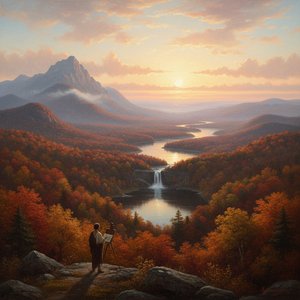
To understand the heart of the nineteenth-century American psyche, one must look toward the horizon, where the boundaries between the earthly and the divine seemed to dissolve in a mist of morning light. American Romanticism was not merely an aesthetic movement; it was a profound emotional response to a burgeoning nation finding its identity amidst a vast, unmapped wilderness. Unlike the structured, rationalist traditions of Europe, this era sought the sublime—that breathtaking, often terrifying realization of human insignancy when confronted by the overwhelming power of nature. It was an era defined by feeling over intellect, where the rustle of leaves and the roar of a distant cataract were seen as whispers from the Creator Himself.
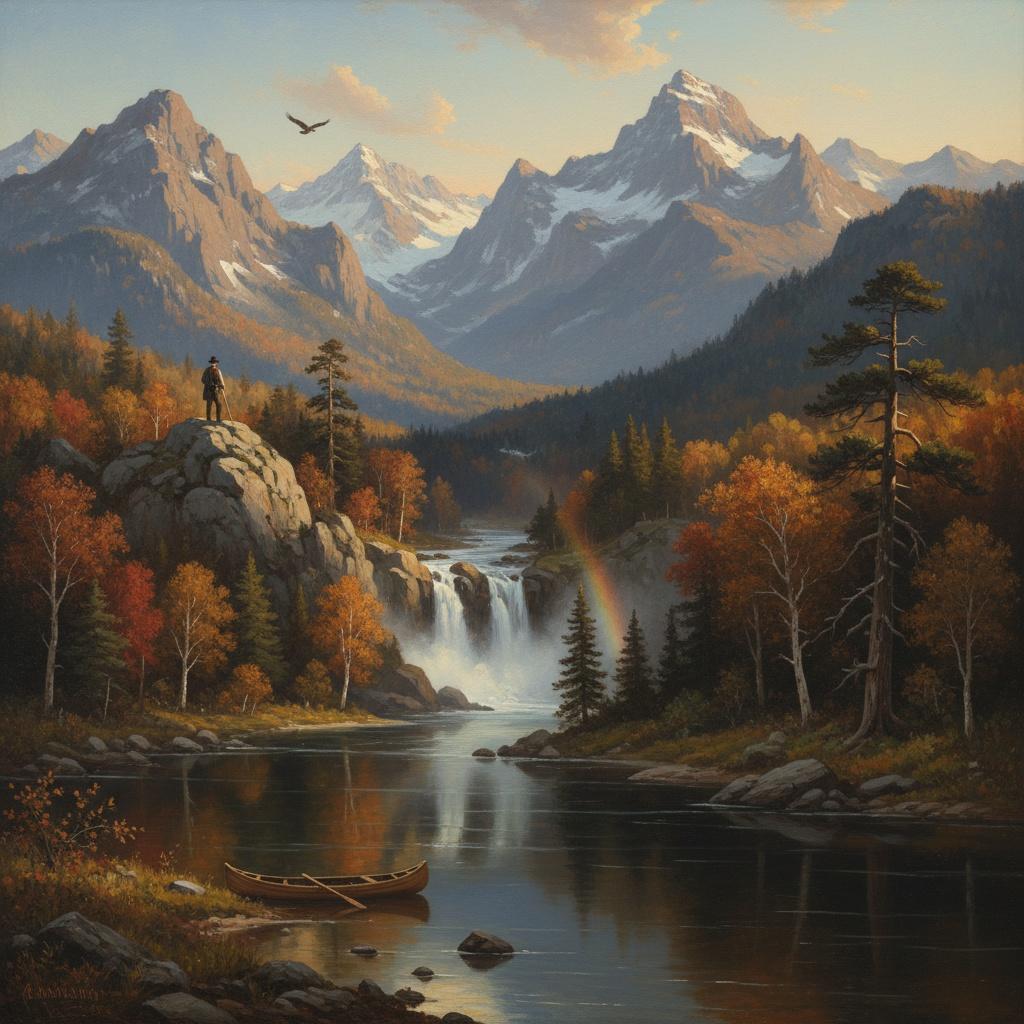
This movement invited viewers to move beyond mere observation and into a state of spiritual communion. The landscapes of this period do not simply depict scenery; they evoke an atmosphere of awe and reverence. Through the lens of Romanticism, the wild frontier was transformed into a cathedral of light and shadow, where every mountain peak and ancient forest held a sacred significance. It was a time when the artist’s brush served as a vessel for the soul, capturing the fleeting, ephemeral moments of beauty that define our connection to the natural world.
The Hudson River School: Pioneers of the American Landscape
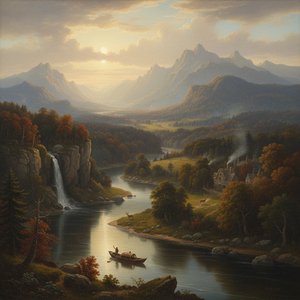
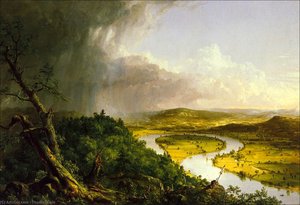
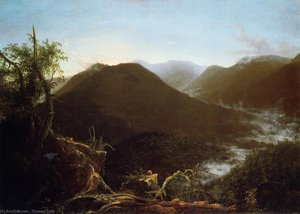
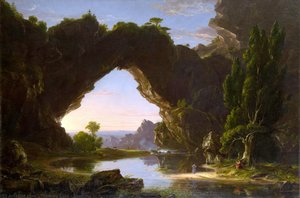
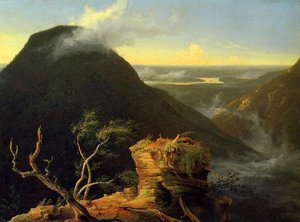
At the epicenter of this romantic awakening stood the Hudson River School, a group of landscape painters who became the visual chroniclers of the American spirit. Led by the visionary Thomas Cole, these artists turned their gaze toward the majestic valleys and rugged terrains of the Hudson River region, finding in its topography a sense of epic history. Their works served as a bridge between the known world and the mysterious frontier, offering a window into a wilderness that was simultaneously being explored and lost to the encroons of civilization.
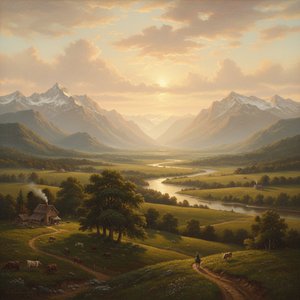
The influence of this school extended far beyond the banks of the Hudson. Artists like Asher Durand brought a meticulous, almost devotional attention to detail, as seen in works such as Hudson at Rhinebeck, where the interplay of light and water creates a sense of profound tranquility. Others, such as Thomas Doughty, captured the serene, picturesque qualities of the river, grounding the movement in a recognizable American reality. Through their collective efforts, the Hudson River School established a visual language for a new nation—one that celebrated the grandeur of its land as a cornerstone of its cultural heritage.
Light, Shadow, and Spirit: The Technical Mastery of the Masters
The emotional resonance of these paintings is inseparable from the technical brilliance of the artists who composed them. To capture the sublime, one had to master the science of light. The painters of this era utilized complex layering techniques to achieve a luminous depth that seems to glow from within the canvas itself. By carefully manipulating chiarosciente—the dramatic contrast between light and dark—they could direct the viewer’s eye toward a sun-drenched clearing or a brooding, storm-swept peak, creating a sense of movement and drama that feels almost cinematic.
Texture played an equally vital role in this technical repertoire. The application of paint was often deliberate, using light to catch the ridges of brushstrokes to simulate the ruggedness of bark or the softness of distant clouds. This tactile quality ensured that the landscapes were not merely seen but felt. Whether through the delicate, atmospheric washes used to depict morning mist or the bold, impasto-like textures that defined rocky precipices, these masters utilized every tool at their disposal to breathe life into the inanimate, turning oil and pigment into a living, breathing testament to the majesty of the earth.
Nature as Narrative: Exploring Themes of History and Transcendentalism
Beyond the visual splendor, the landscapes of American Romanticism are deeply layered with narrative and philosophical intent. The movement was inextricably linked to Transcendentalism, a philosophical movement led by figures like Emerson and Thoreau, which posited that divinity resides within nature and the individual soul. In the paintings of Thomas Cole, for instance, one often finds a sense of historical progression—a narrative arc that moves from the primordial, untouched wilderness toward a more settled, human-centric landscape. This was a poignant reflection of the era's anxieties regarding progress and the inevitable loss of the wild.
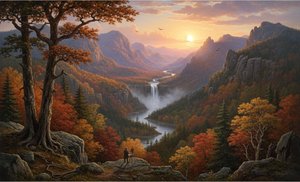
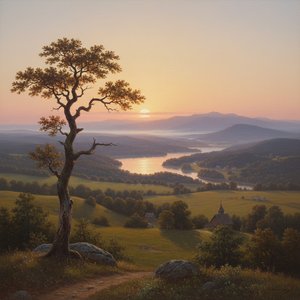
Every element within these compositions serves as a symbol. A solitary, ancient oak tree might represent endurance and the deep roots of history; a sudden break in the clouds could symbolize divine intervention or hope; a decaying ruin might serve as a memento mori, reminding the viewer of the transient nature of human endeavors. By weaving these themes into their landscapes, the artists created much more than scenery; they created epic poems on canvas, inviting the viewer to contemplate their place within the grand, unfolding story of existence and the eternal cycle of life and decay.
Preserving the Frontier: The Enduring Legacy of Romantic Landscapes
As the true American frontier receded into history, the paintings of the Hudson River School remained as enduring monuments to a vanished world. They became much more than historical artifacts; they evolved into cultural touchstones that continue to inspire awe in modern collectors and art enthusiasts. The legacy of these works lies in their ability to evoke a sense of nostalgia for a pristine wilderness, even as we navigate an increasingly urbanized and digital age. They remind us of the fundamental human need to reconnect with the wild and to find solace in the grandeur of the natural world.
Today, the spirit of American Romanticism lives on through the continued appreciation of these masterpieces and the meticulous efforts to preserve their beauty. Whether through museum exhibitions or the careful recreation of these textures in fine art reproductions, the dialogue between humanity and the landscape remains unbroken. These paintings continue to challenge us to look upward and outward, ensuring that the soul of the wild frontier is never truly lost, but rather eternally preserved within the luminous depths of the canvas.
At ArtsDot.com, we are dedicated to preserving this profound artistic legacy. Our studio specializes in creating museum-quality, handmade oil reproductions that capture the very essence of the masters. From the tactile brushstrokes of a Thomas Cole landscape to the light-drenched atmospheres of the Hudson River School, our artists use traditional techniques and premium materials to ensure that every piece retains the spirit, depth, and soul of the original works of art history.