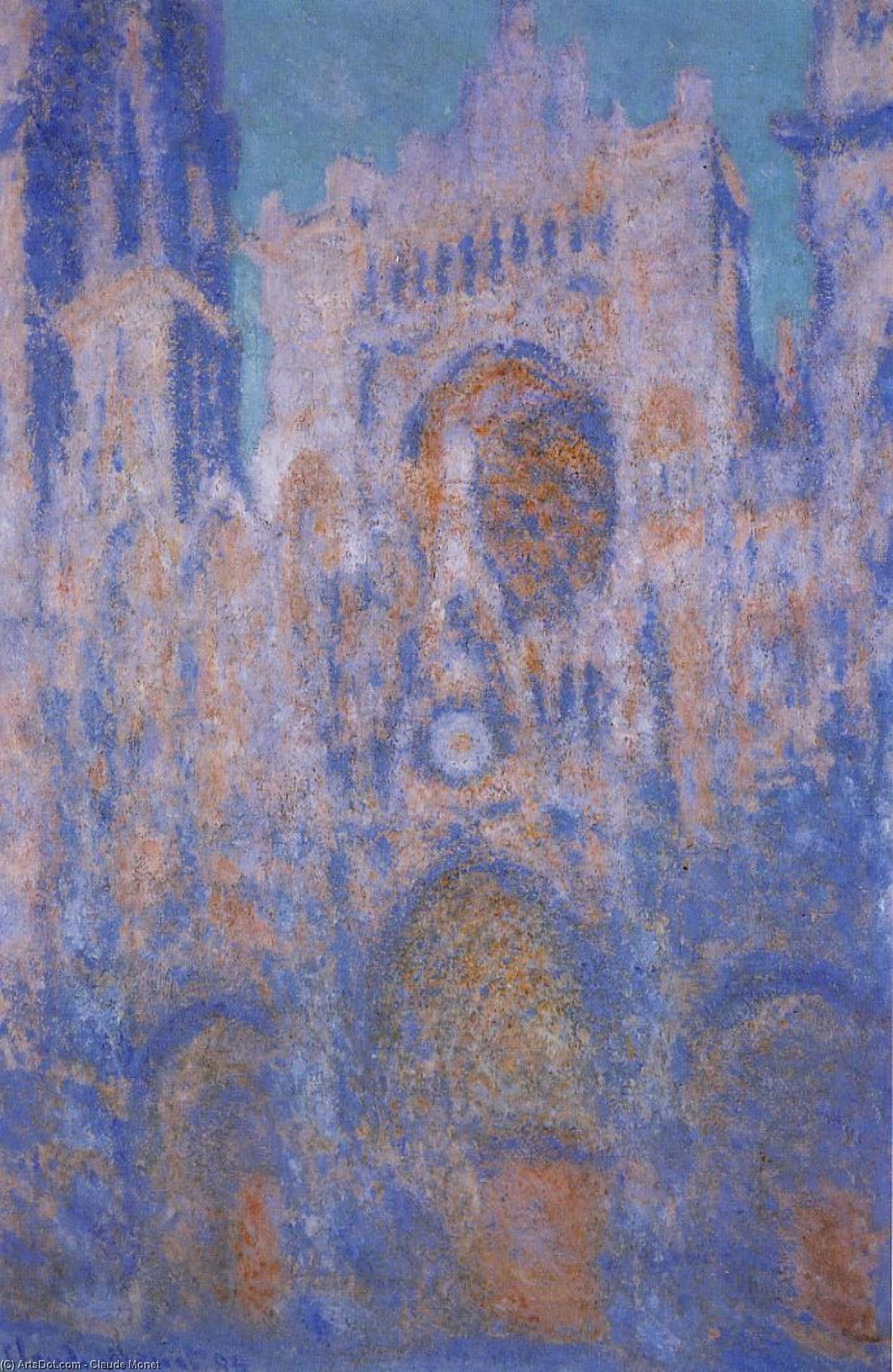
Rouen Cathedral, Symphony in Grey and Rose
Claude Monet’s
Rouen Cathedral, Symphony in Grey and Rose is a captivating oil on canvas painting that exemplifies the artist’s unique ability to capture light and color. Created in 1892, this piece is part of a series of paintings depicting the Rouen Cathedral in France, each showcasing different times of day and weather conditions. It stands as a cornerstone of Impressionism, demonstrating Monet's unwavering dedication to portraying nature as he perceived it—a fleeting glimpse of beauty frozen in pigment.
The Painting’s Composition
The painting features the imposing clock tower of the Rouen Cathedral, with two visible clocks that add to the sense of time and movement. These clocks aren’t merely decorative elements; they symbolize the relentless passage of hours, mirroring Monet's fascination with capturing ephemeral moments. The cathedral itself is depicted in a mix of blue and orange hues, creating a striking contrast that draws the viewer’s eye—a deliberate choice designed to heighten visual impact. Beneath this monumental structure, several people are scattered about, adding a sense of life and activity to the scene. Monet skillfully uses perspective to convey depth, placing figures strategically within the frame to create an immersive experience for the observer.
Monet's Technique
Monet’s use of light and color is a hallmark of his Impressionist style. In
Rouen Cathedral, Symphony in Grey and Rose, he employs short, broken brushstrokes—a technique pioneered by Monet himself—and vivid colors to capture the fleeting effects of natural light. These strokes aren’t blended smoothly; instead, they overlap and interact, resulting in a shimmering surface that vibrates with luminosity. The painting's palette ranges from soft greys to vibrant oranges, creating a sense of depth and dimensionality. Monet meticulously observed how sunlight transformed the cathedral’s façade throughout the day, translating these observations onto canvas with remarkable accuracy.
Artistic Significance
This painting is part of Monet’s series on the Rouen Cathedral, which includes works such as
Rouen Cathedral, the Portal, Grey Weather (Musée d'Orsay) and
The Cour d’Albane (Smith College Museum of Art). These paintings demonstrate Monet's fascination with capturing the changing light and atmosphere of a single subject—a concept that fundamentally challenged academic conventions of his time. The Rouen Cathedral series represents more than just visual representations; it embodies Monet’s philosophical exploration of perception and how art can convey subjective experience.
Conservation and Display
Claude Monet: Rouen Cathedral, Symphony in Grey and Rose is currently housed at the National Museums and Galleries of Wales in Cardiff, United Kingdom. The museum’s collection includes other notable works by Monet, as well as pieces by artists such as Heinrich Schäfer and François Clouet. Its placement allows visitors to contemplate this masterpiece alongside other iconic Impressionist paintings, fostering a deeper understanding of Monet's artistic legacy.
## Reproductions Available
For art enthusiasts who wish to own a piece of this masterpiece, ArtsDot offers high-quality, handmade oil painting reproductions. Visit
Claude Monet: Rouen Cathedral, Symphony in Grey and Rose to explore the details of this painting and other works by Monet. You can find stunning prints and canvases that faithfully recreate Monet’s luminous palette and textured brushstrokes—bringing a touch of Impressionist grandeur into your home.
## Conclusion
Rouen Cathedral, Symphony in Grey and Rose is a testament to Monet’s innovative approach to light and color. This captivating piece continues to inspire art lovers today, offering a glimpse into the beauty and tranquility of Rouen's historic cathedral—a timeless symbol of Impressionism’s enduring power.