A Glimpse into the Heart of 19th-Century Canada
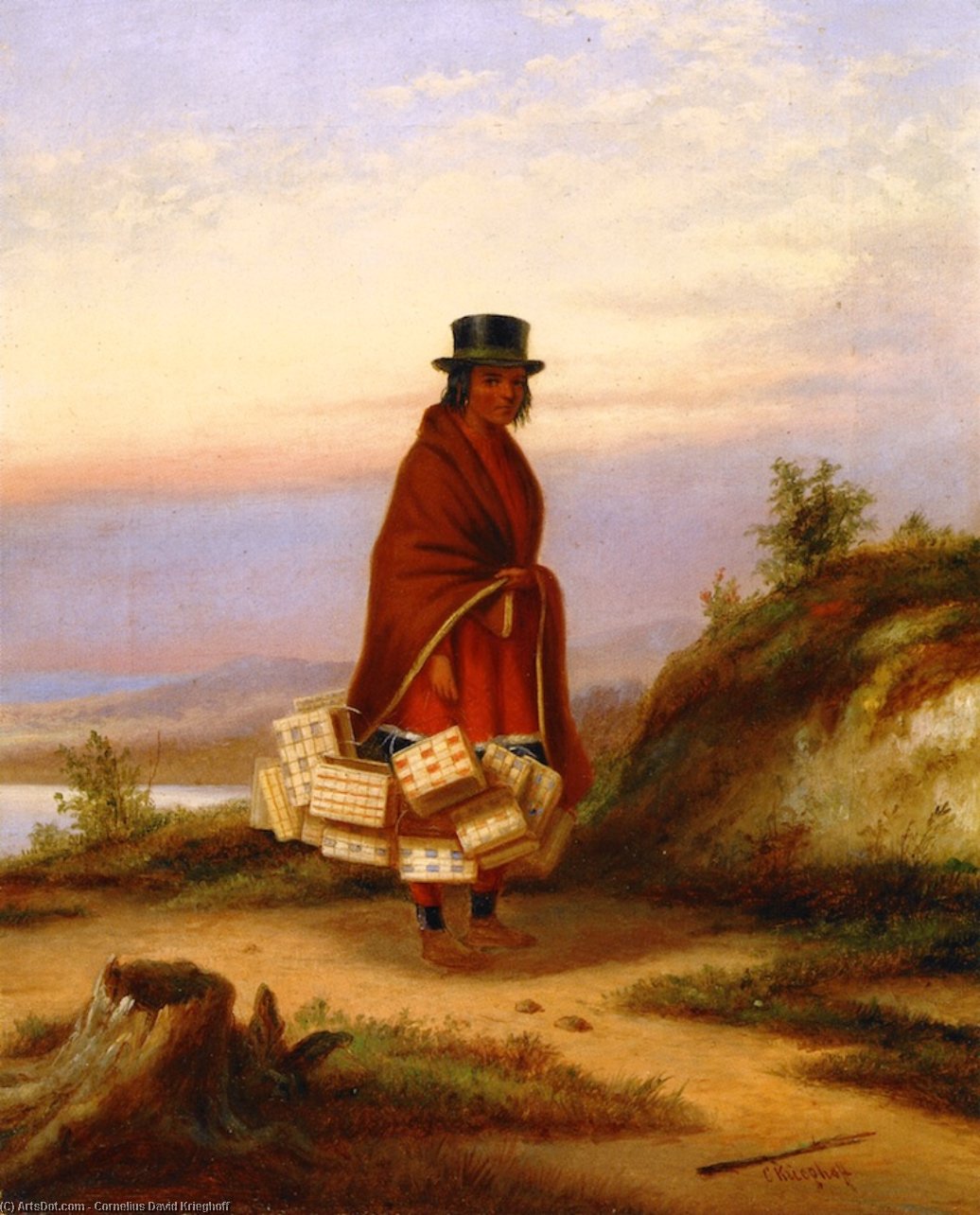
In the quiet, evocative strokes of Cornelius David Krieghoff’s A Caughnawage Woman, we are transported back to the year 1855, a period when the Canadian landscape was as much a character in its own right as the people inhabiting it. This masterful oil on canvas serves as a profound window into the genre scenes of the mid-19th century, capturing a moment of serene yet purposeful existence. The painting presents us with a woman navigating a rugged path, her presence anchored by the vibrant red of a blanket draped over her shoulders—a striking splash of warmth against the more muted, earthy tones of the wilderness. As she carries a basket upon her head, there is an undeniable sense of rhythm and tradition, a silent narrative of daily life and the enduring connection between the Indigenous people and the vast, untamed terrain of Canada.
Krieghoff, a Dutch-born artist who found his true calling in the New World, brings a European technical precision to North American subject matter. His ability to blend the meticulousness of his academic training with the raw, atmospheric beauty of the Canadian landscape creates a tension that is both captivating and deeply moving. In this piece, the viewer can observe the delicate play of light as it filters through the atmosphere, illuminating the textures of the woman's attire and the ruggedness of the distant mountains. The composition is masterfully balanced; while the figure provides a central focus, the inclusion of a boat on the periphery and a solitary bird in the sky expands the world beyond the immediate path, suggesting a larger, interconnected ecosystem of life and movement.
Technique, Texture, and the Romantic Spirit
The technical execution of A Caughsebawage Woman is a testament to Krieghoff’s mastery of the oil medium. Through deliberate brushwork, he achieves a remarkable sense of depth and tactile reality. One can almost feel the weight of the woven basket, the coarse texture of the rocky path, and the soft, heavy drape of the red fabric. The artist utilizes atmospheric perspective with great skill, allowing the distant peaks to recede into a pale, hazy blue, which creates an immense sense of scale and grandeur. This technique does more than just provide depth; it evokes a feeling of nostalgia and reverence for the natural world, a hallmark of the Romantic movement that sought to find the sublime within the landscape.
For the discerning collector or interior designer, this painting offers much more than mere decoration. It is an invitation to contemplate themes of resilience, identity, and the quiet dignity of labor. The soft, diffused lighting—reminiscent of the golden hour during dawn or dusk—bathes the scene in a nostalgic glow, making it an ideal centerpiece for spaces that value warmth, history, and storytelling. Whether placed in a sophisticated gallery setting or as a focal point in a curated residential collection, a high-quality reproduction of this work brings with it a sense of timelessness and a profound respect for the cultural heritage of the Canadian landscape.