A Poignant Encounter with the Divine
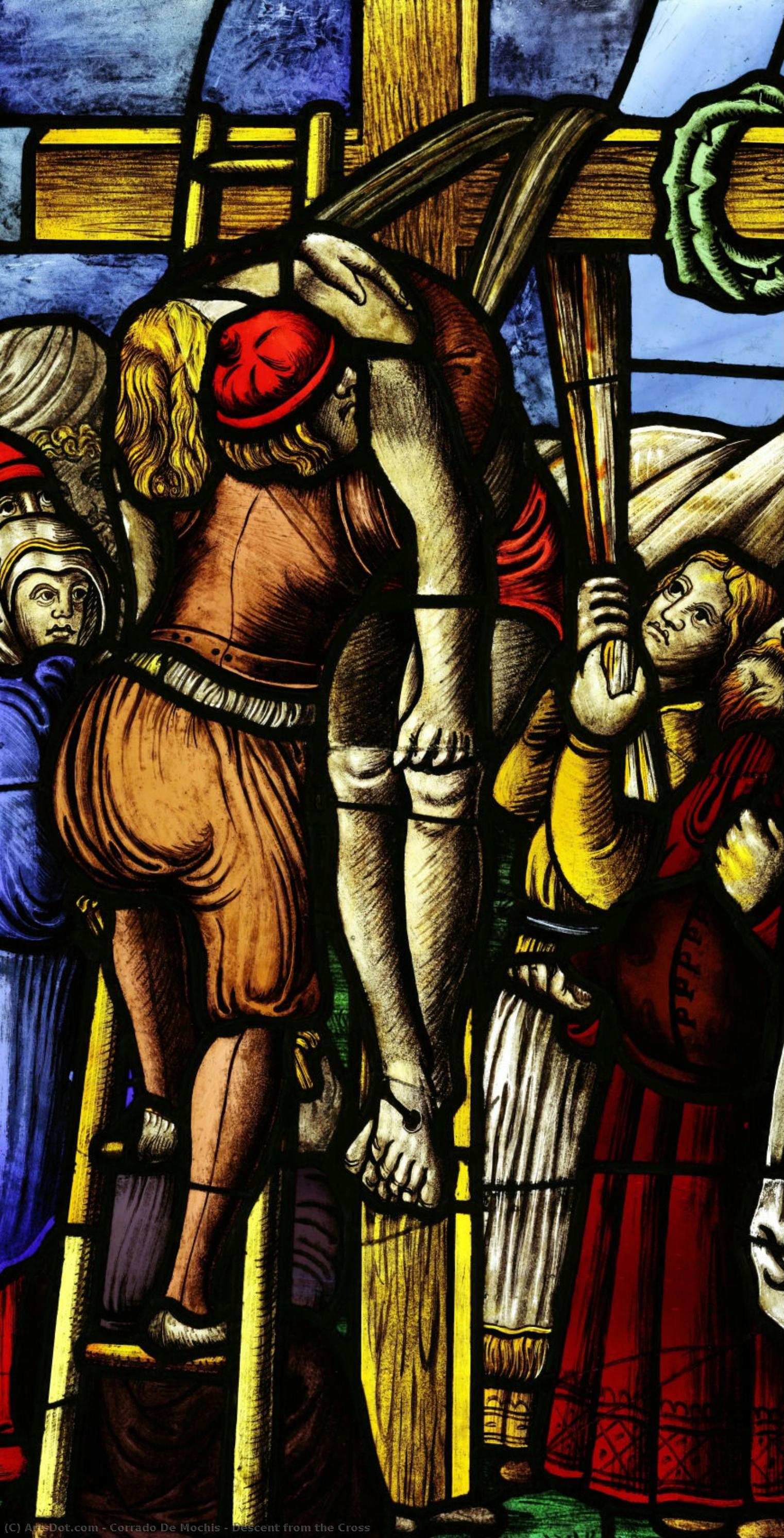
In the quiet, somber moments following the Crucifixion, Corrado de Mochis captures a scene of profound theological weight and human vulnerability. His Descent from the Cross is not merely a depiction of a biblical event, but a visceral exploration of grief and devotion. The painting brings us into the intimate circle surrounding the lifeless body of Jesus Christ as He is tenderly lowered from the cross by Nicodemus, José de Arimatea, and Saint John. Every figure in this composition serves as a vessel for emotion; the palpable sorrow of Mary Magdalene and the vigilant presence of the other women create an atmosphere of heavy, sacred stillness. For the discerning collector or designer, this piece offers more than just a historical window; it provides a focal point of deep spiritual resonance that can anchor a room with its gravity and grace.
The artistry of De Mochis is a masterful bridge between two worlds, reflecting his unique heritage as a German-born master working in the vibrant heart of Milan. He pioneered what he termed the arcimboldesque style—a breathtaking fusion where the meticulous, almost scientific precision of the German Renaissance meets the lush, exuberant energy of the Italian tradition. This stylistic duality is evident in the way he balances geometric clarity with organic, flowing contours. Through his expert use of oil on panel, De Mochis employed sophisticated glazing techniques to layer pigments, creating a luminous, ethereal glow that seems to emanate from within the wood itself. This technique allows light to dance across the skin of the figures and the folds of the linen shrouds, imbuing the scene with a lifelike vitality that transcends the centuries.
A Legacy of Light and Devotion
To understand the true depth of this work, one must look toward its monumental origins. Originally commissioned for the grand apse window of the Milan Duomo, this panel was designed to function as a cornerstone of the cathedral’s visual narrative. It was born from an era of intense religious fervor and unparalleled artistic innovation, where every brushstroke was intended to instruct and inspire the faithful. The symbolism embedded within the composition—from the heavy weight of the Savior's body to the subtle interplay of light and shadow—serves to remind the viewer of the profound sacrifice at the heart of the Christian faith. It is a work that demands contemplation, inviting the observer to linger on the nuances of expression and the delicate textures of the era.
For those looking to integrate a piece of Renaissance history into a contemporary interior, this reproduction offers an unparalleled opportunity. Whether placed in a curated gallery space or as a centerpiece in a classically styled study, the Descent from the Cross brings with it an aura of timeless sophistication. It is a work that speaks to the soul, offering a sense of peace and historical continuity that modern art often lacks. Owning such a piece is not simply about decoration; it is about preserving a fragment of the Renaissance spirit—a testament to human craftsmanship and the enduring power of faith.