A Baroque Moment of Grace: Corrado Giaquinto’s “Rest on the Flight into Egypt”
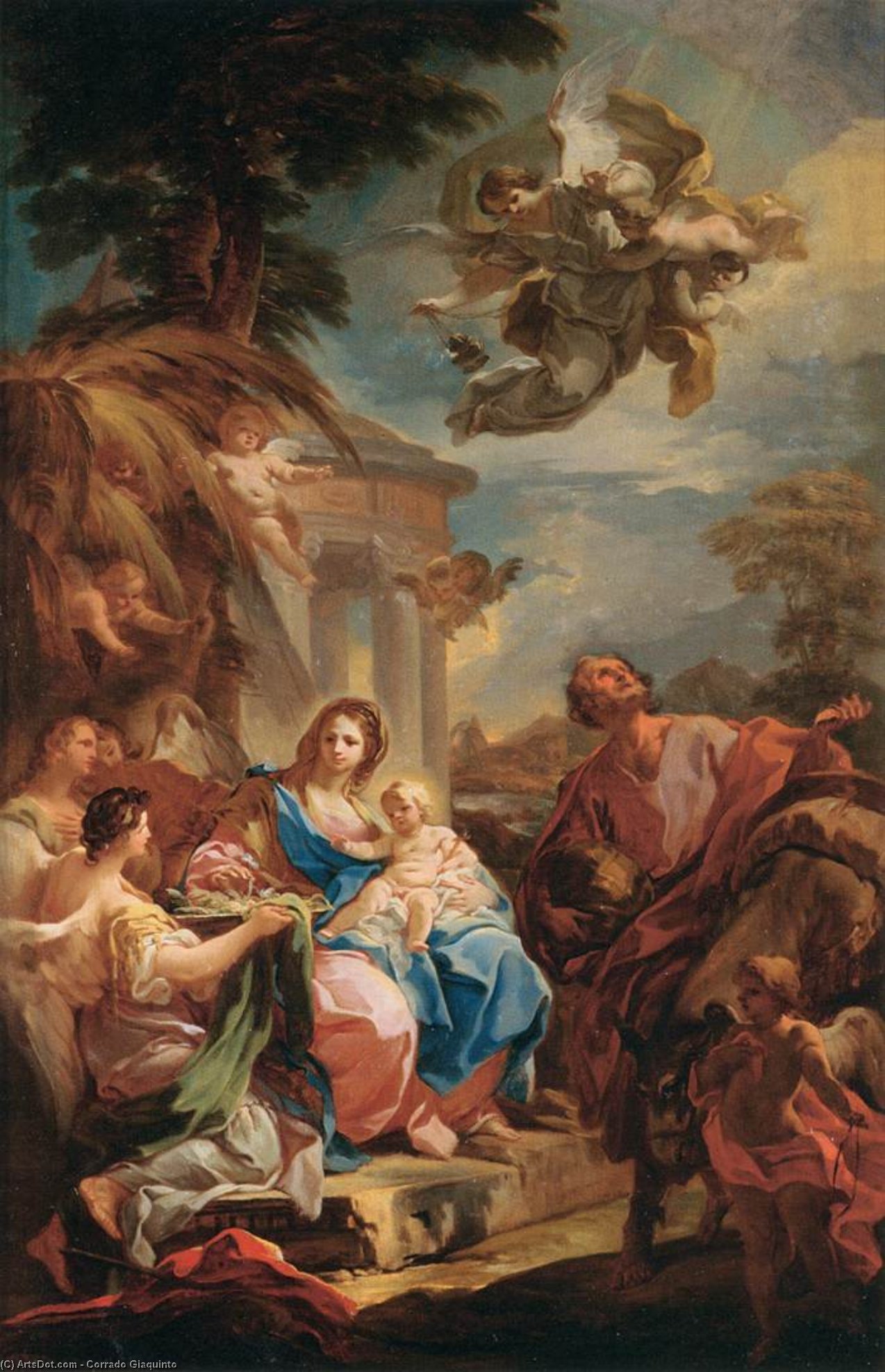
Corrado Giaquinto's "Rest on the Flight into Egypt," painted in 1740, isn’t merely a depiction of a biblical scene; it’s a carefully orchestrated tableau of serenity and divine protection. This oil painting, measuring a substantial 98 x 63 cm, transports us to a moment of respite within the perilous journey of Mary, Joseph, and the infant Jesus into Egypt – a narrative steeped in both danger and profound faith. Giaquinto, a pivotal figure bridging the styles of Solimena and Giordano, masterfully blends their influences, creating an image that is simultaneously dynamic and deeply contemplative.
The composition immediately draws the eye to the central figures: Mary, seated gracefully with her child, exudes a quiet dignity. Joseph, positioned slightly behind them, appears absorbed in gathering firewood – a subtle detail suggesting his role as protector and provider, grounding the scene in earthly realities while acknowledging the divine intervention at play. The landscape itself is crucial; it’s not simply a backdrop but an active participant in the narrative. Rolling hills, dotted with trees and culminating in a distant classical temple, establish a sense of vastness and timelessness, mirroring the enduring nature of their faith.
The Language of Baroque: Light, Shadow, and Dramatic Detail
Giaquinto’s technique is firmly rooted in the Baroque tradition. The use of tenebrism – a dramatic contrast between light and shadow – dominates the scene. Strong highlights illuminate the faces and clothing of the figures, while deeper shadows create volume and depth, lending a theatrical quality to the composition. This isn't a gentle, idealized portrayal; it’s imbued with a palpable sense of drama and movement. The brushstrokes are visible, adding texture and richness to the fabrics and foliage, demonstrating Giaquinto’s meticulous attention to detail.
The color palette is rich and warm, dominated by reds, golds, and blues – colors associated with royalty, divinity, and stability. These hues contribute to the painting's overall sense of grandeur and importance. The architectural elements, particularly the temple in the background, are rendered with precision and clarity, anchoring the scene within a classical framework while simultaneously hinting at a higher spiritual realm.
Symbolism and Spiritual Resonance
Beyond its aesthetic beauty, “Rest on the Flight into Egypt” is laden with symbolism. The angel hovering above Mary represents divine grace and protection – a constant reassurance amidst the dangers of their journey. The scene itself embodies themes of humility, faith, and family unity. It’s a reminder that even in times of adversity, there is always hope and guidance to be found. The inclusion of Joseph gathering firewood subtly reinforces the idea of earthly responsibility alongside spiritual devotion.
Furthermore, the painting resonates with echoes of the Exodus narrative – the story of Israel's liberation from slavery. Just as Moses led his people out of Egypt, Jesus is being delivered from Herod’s murderous intent. This parallel elevates the scene to a broader level of significance, suggesting that the flight into Egypt represents a new exodus, a deliverance orchestrated by God himself. The distant temple, reminiscent of Roman architecture, can be interpreted as a symbol of divine authority and permanence.
A Legacy of Beauty: Giaquinto’s Enduring Influence
Corrado Giaquinto's "Rest on the Flight into Egypt" stands as a testament to his artistic skill and his ability to capture both the drama and the serenity of this pivotal biblical narrative. His masterful use of Baroque techniques, combined with a profound understanding of symbolism and emotional resonance, has ensured that this painting continues to captivate viewers centuries after its creation. Reproductions of this work offer a window into a world of beauty, faith, and timeless storytelling – a perfect addition to any art collection or interior space.