The Reign of King Richard the Third: A Dramatic Historical Narrative
Daniel Maclise's "The Reign of King Richard the Third" is a monumental Victorian history painting, capturing a pivotal moment in English history with dramatic flair and meticulous detail. Completed around 1850, this artwork offers viewers a glimpse into the complex political landscape and personal dynamics surrounding one of England’s most controversial monarchs.
Composition and Narrative
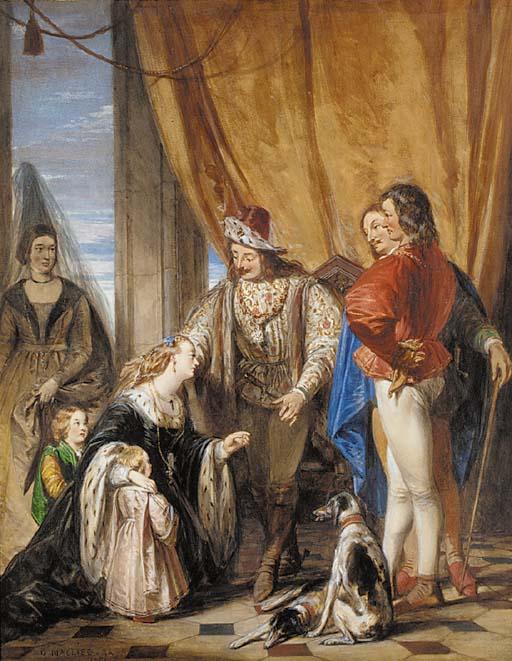
The composition is carefully orchestrated to draw the viewer's eye directly to King Richard III, positioned centrally within the scene. He stands as a figure of authority, yet his expression hints at contemplation rather than outright dominance. A woman kneels before him, holding a child – likely pleading for mercy or recognition, adding an element of pathos and human drama. Other figures populate the space, observing the interaction from various vantage points, creating a sense of bustling court life. The semi-circular arrangement of these figures contributes to the dynamism of the scene, suggesting movement and unspoken tensions.
Style and Technique
Maclise’s style is firmly rooted in 19th-century history painting, blending realism with Romantic sensibilities. He employs a rich color palette dominated by warm tones – reds, golds, browns, and creams – contrasted by cooler blues and greens in the clothing and background elements. The use of oil paints allows for layering and glazing techniques, resulting in a depth of color saturation and subtle gradations of light and shadow. Noticeable brushstrokes reveal the artist's hand while contributing to the texture of various surfaces—smooth skin, polished fabrics, rough stone, and even the realistic depiction of the dog’s fur.
Symbolism and Emotional Impact
Beyond its historical portrayal, "The Reign of King Richard the Third" is laden with symbolic elements. The kneeling woman embodies humility and supplication, while the king's posture conveys authority tempered by introspection. The presence of a loyal dog symbolizes companionship and steadfastness. The dramatic lighting, focused on the central figures, amplifies the emotional intensity of the scene—a palpable sense of tension hangs in the air, inviting viewers to ponder the power dynamics at play and the potential consequences of this encounter. Maclise masterfully evokes a feeling of drama and suspense, characteristic of Victorian history painting’s emphasis on narrative storytelling.
Historical Context and Legacy
This artwork was created during a period when historical paintings were immensely popular, serving as both entertainment and educational tools. Richard III has long been a figure of fascination and debate, and Maclise's depiction reflects the Victorian era’s interest in exploring complex historical figures and events. "The Reign of King Richard the Third" stands as a testament to Maclise’s skill as an artist and his ability to capture not only a moment in history but also the emotional weight of human interaction within that context.