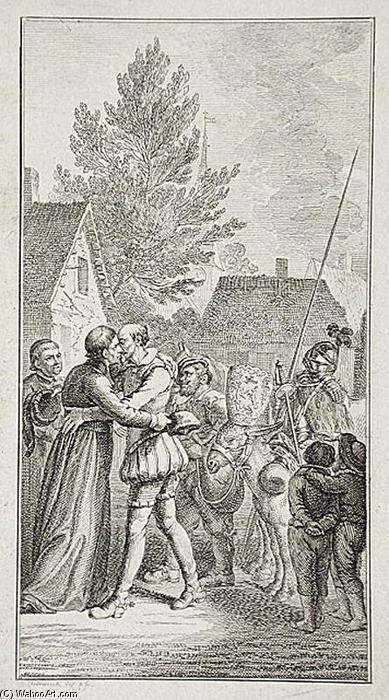
A Vision of Cervantes’ Ideal World: Chodowiecki's Etching for Don Quixote
Daniel Nikolaus Chodowiecki’s etching “Illustration for Don Quixote,” created in 1766, transcends mere visual representation; it embodies a profound engagement with Miguel de Cervantes’ seminal novel and the humanist ideals that underpinned its creation. Held at the Los Angeles County Museum of Art, this artwork stands as a testament to Chodowiecki's mastery of printmaking technique and his ability to distill the essence of Cervantes’ vision into a single, arresting image.
- Historical Context: The etching emerged from the vibrant intellectual landscape of Berlin during the Enlightenment. Chodowiecki, steeped in Huguenot heritage and trained at the Academy of Art, reflected the era's fascination with classical antiquity and its commitment to rational observation – qualities perfectly suited to interpreting Cervantes’ sprawling narrative.
- Subject Matter: The scene depicted portrays a group of figures engaged in conversation amidst a tranquil rural setting dominated by an ancient oak tree. These characters embody the noble spirit championed by Cervantes, representing individuals striving for virtue and intellectual enlightenment.
Chodowiecki’s etching style is characterized by meticulous realism blended with subtle Romanticism. He skillfully employs hatching and cross-hatching to create a rich tapestry of tonal values, conveying depth and texture with remarkable precision. The artist's attention to detail extends beyond the figures themselves; he painstakingly renders architectural elements—a stately manor house and surrounding buildings—reflecting the grandeur of European aristocratic life during the Baroque period.
- Technique: Chodowiecki utilized a mezzotint process, known for its ability to produce tonal gradations that rival oil paint. This technique demanded considerable skill and patience, resulting in an image imbued with luminosity and atmospheric perspective.
- Symbolism: The oak tree serves as a potent symbol of strength, resilience, and wisdom—attributes associated with the heroic figures depicted in “Don Quixote.” Its presence underscores Cervantes’ belief in the transformative power of nature and its capacity to inspire moral contemplation.
The etching's emotional impact is palpable. It evokes a sense of serenity and contemplative beauty, inviting viewers to immerse themselves in the imaginative world crafted by Cervantes. Simultaneously, there’s an underlying current of idealism—a yearning for a society governed by reason and compassion—that resonates powerfully with audiences today. “Illustration for Don Quixote” remains an enduring emblem of Enlightenment thought and artistic excellence, continuing to inspire admiration and fascination across generations.