 Preview
 Send
Send Share
Share
 Details

 Download
 Similars
 X-Ray
X-Ray Diaporama
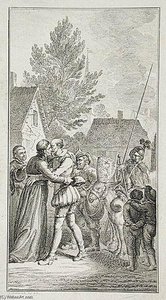
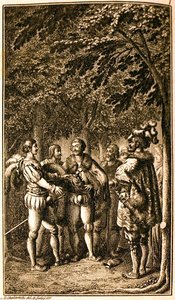
Illustration for Don Quixote
 Acrylic On Canvas
- WallArt
- Romantic Realism
 1766
1766 168.0 x 108.0 cm
 Los Angeles County Museum of Art
 Read More
Hand Made Oil Reproduction
Hand-painted oil on canvas in your size and frame, made to order by our artists. ( Buy Print Buy Image)




P118B $10

P118H $10

P118W $10

P438Z $10

P508JH $12

P508YH $12

P805H $10

P805Z $10

P919BZ $10

P919G $10

P919XJ $10

P959ZH $10

P968JZ $12

W106C $8

W218G $10

W218JH $8

W218Y $10

W307PJ $10

W316G $10

W316PJ $8

W316Y $10

W398PJ $8

W4111J $10

W500HY $15

W500JH $15

W692G $12

W849H $8

W940BG $15

W953PJ $8




Pick from our preset sizes that match the artwork's original proportions.

You may enter your own dimensions to fit a specific frame or space. If your selected size does not match the original image's proportions, we will either crop the artwork or extend the painting with additional hand-painted elements. A digital mockup will be sent for your approval before production begins.
Please note that the on-screen preview does not reflect the actual cropping or extension. Only the mockup will accurately show the final composition.
While custom sizes are available, we recommend selecting a dimension from the predefined list to preserve the original proportions.
After order, ArtsDot.com team will email client for instructions and provide a mockup preview
Worldwide Delivery () in 3/4 weeks instead of standard 5 weeks. (16 August). No compromise on quality.

Free Worldwide Express Shipping

High-Quality Linen Canvas

Full Shipping Insurance

Customs Tax Refund Guarantee

True Color Matching Guarantee

60-Day Return Policy (Defects Only)

100% Money-Back Guarantee

Bulk Discount Offer
 Glass option is only available in size under 110 CM

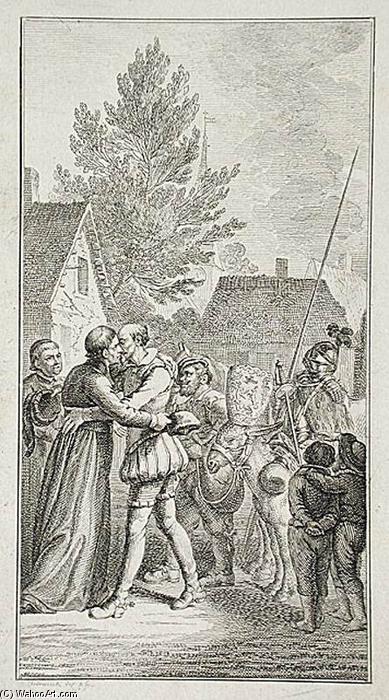
Illustration for Don Quixote
Reproduction Medium
Reproduction Size
-


Total Price
$ 263
Artwork Description
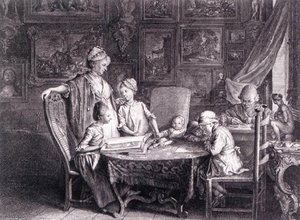
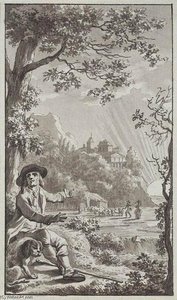
A Vision of Cervantes’ Ideal World: Chodowiecki's Etching for Don Quixote
Daniel Nikolaus Chodowiecki’s etching “Illustration for Don Quixote,” created in 1766, transcends mere visual representation; it embodies a profound engagement with Miguel de Cervantes’ seminal novel and the humanist ideals that underpinned its creation. Held at the Los Angeles County Museum of Art, this artwork stands as a testament to Chodowiecki's mastery of printmaking technique and his ability to distill the essence of Cervantes’ vision into a single, arresting image.
- Historical Context: The etching emerged from the vibrant intellectual landscape of Berlin during the Enlightenment. Chodowiecki, steeped in Huguenot heritage and trained at the Academy of Art, reflected the era's fascination with classical antiquity and its commitment to rational observation – qualities perfectly suited to interpreting Cervantes’ sprawling narrative.
- Subject Matter: The scene depicted portrays a group of figures engaged in conversation amidst a tranquil rural setting dominated by an ancient oak tree. These characters embody the noble spirit championed by Cervantes, representing individuals striving for virtue and intellectual enlightenment.
Chodowiecki’s etching style is characterized by meticulous realism blended with subtle Romanticism. He skillfully employs hatching and cross-hatching to create a rich tapestry of tonal values, conveying depth and texture with remarkable precision. The artist's attention to detail extends beyond the figures themselves; he painstakingly renders architectural elements—a stately manor house and surrounding buildings—reflecting the grandeur of European aristocratic life during the Baroque period.
- Technique: Chodowiecki utilized a mezzotint process, known for its ability to produce tonal gradations that rival oil paint. This technique demanded considerable skill and patience, resulting in an image imbued with luminosity and atmospheric perspective.
- Symbolism: The oak tree serves as a potent symbol of strength, resilience, and wisdom—attributes associated with the heroic figures depicted in “Don Quixote.” Its presence underscores Cervantes’ belief in the transformative power of nature and its capacity to inspire moral contemplation.
The etching's emotional impact is palpable. It evokes a sense of serenity and contemplative beauty, inviting viewers to immerse themselves in the imaginative world crafted by Cervantes. Simultaneously, there’s an underlying current of idealism—a yearning for a society governed by reason and compassion—that resonates powerfully with audiences today. “Illustration for Don Quixote” remains an enduring emblem of Enlightenment thought and artistic excellence, continuing to inspire admiration and fascination across generations.
Related Artworks
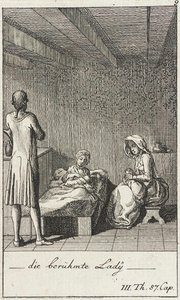
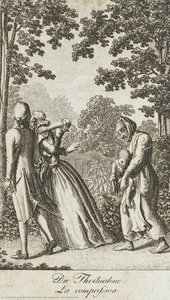
Artist Biography
The Parisian Echo in Berlin: Life of Daniel Nikolaus Chodowiecki
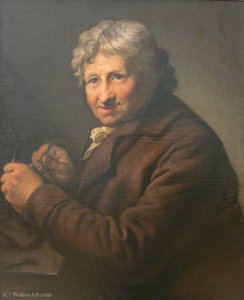
Daniel Nikolaus Chodowiecki remains a fascinating figure at the crossroads of Polish heritage and German artistic life. Born in Danzig (Gdańsk) in 1726, his early years were steeped in a culture that would forever inform his sensitive gaze. Though his roots trace back through generations of tradesmen and Huguenot ancestry, it was Berlin that ultimately became the crucible for his genius. His journey to this Prussian capital is recounted with a wry self-awareness—a detail noted even in letters suggesting a 'genuine Pole' transplanted into German soil.
His artistic education began after moving to Berlin at the age of sixteen, where he was taken under the wing of an uncle who provided him with crucial tutelage. This early grounding allowed his talent to blossom, leading him eventually to become a recognized member and later vice-director of the prestigious Berlin Academy of Art. His life was one of steady professional ascent, marked by dedication to craft and an unwavering commitment to the artistic community.
Mastery in Printmaking: Capturing the Bourgeois Soul
While Chodowiecki’s output spanned paintings and drawings, it is his etchings that secure his place in art history. He was not merely a painter; he was perhaps the most celebrated German graphic artist of his era. His thousands of delicate prints serve as an unparalleled visual diary of the late eighteenth century. These works possess an extraordinary intimacy, allowing us to peer into the daily rhythms and quiet dramas of the burgeoning bourgeoisie during the period known as Zopfstil—a transitional aesthetic caught between the flourish of Rococo and the emerging structure of Classicism.
His book illustrations are particularly noteworthy, encompassing nearly all the great literary classics. Through these detailed renderings, Chodowiecki achieved a remarkable ability to capture not just scenes, but entire sensibilities. His art speaks eloquently of the sensibility cult that permeated the age, blending meticulous observation with deep emotional resonance.
Historical Significance and Artistic Legacy
Chodowiecki’s significance extends beyond mere technical skill; he is a chronicler of an era undergoing profound transformation. His prints offer invaluable glimpses into the life of the middle class—the very backbone of the society depicted. They are records of manners, fashion, and domestic life that might otherwise be lost to time.
By becoming the director of the Berlin Academy of Arts in 1797, he cemented his role as an institutional pillar. His work thus embodies a confluence of personal history—the echoes of Polish identity within German artistic patronage—and a profound engagement with the cultural currents sweeping through Europe. To study Chodowiecki is to study the delicate balance between private life and public art, rendered with the precision of an etcher's needle.
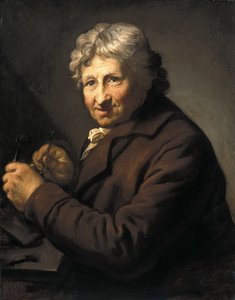
daniel nikolaus chodowiecki
1726 - 1801 , Poland
Quick Facts
- Artistic Movement Or Style: Zopfstil
- Date Of Birth: 1726
- Date Of Death: 1801
- Full Name: Daniel Nikolaus Chodowiecki
- Nationality: Polish-German
- Notable Artworks:
- Etchings
- Book illustrations
- Place Of Birth: Danzig, Poland
Related Articles
Georges de La Tour: Luminosity, Spirituality & Realism in Baroque Painting
Discover the captivating world of Georges de La Tour, a Baroque master renowned for his dramatic chiaroscuro & spiritual realism. Explore key works, influences, and his remarkable rediscovery. Learn more at ArtsDot.
Baroque Realism: Illusion, Emotion & the Dramatic Transformation of 17th-Century Art
Explore the dramatic world of Baroque Realism! Discover iconic artists like Caravaggio & Rubens, their techniques, and the movement's lasting impact on art history. Expert insights for collectors & enthusiasts.

The Golden Age Reforged: Dramatic Realism & Religious Zeal in Spanish Baroque Art
Explore the dramatic world of Spanish Baroque art! Discover masters like Zurbarán & the powerful influence of religious zeal on painting techniques – a guide for collectors and enthusiasts.
Sir Anthony van Dyck: Courtly Portraiture & the Shaping of Baroque Identity
Explore the life & legacy of Sir Anthony van Dyck, the leading court painter of his era. Discover his innovative portraiture, Baroque masterpieces, and investment potential for discerning collectors. Learn more at ArtsDot.
Etching Masters: 10 Legendary Prints That Revolutionized Art | ArtsDot
Journey through 10 legendary etching masterpieces by Rembrandt, Dürer & Goya. Explore the history of printmaking and discover timeless art for your home. Find museum-quality reproductions at ArtsDot.com.