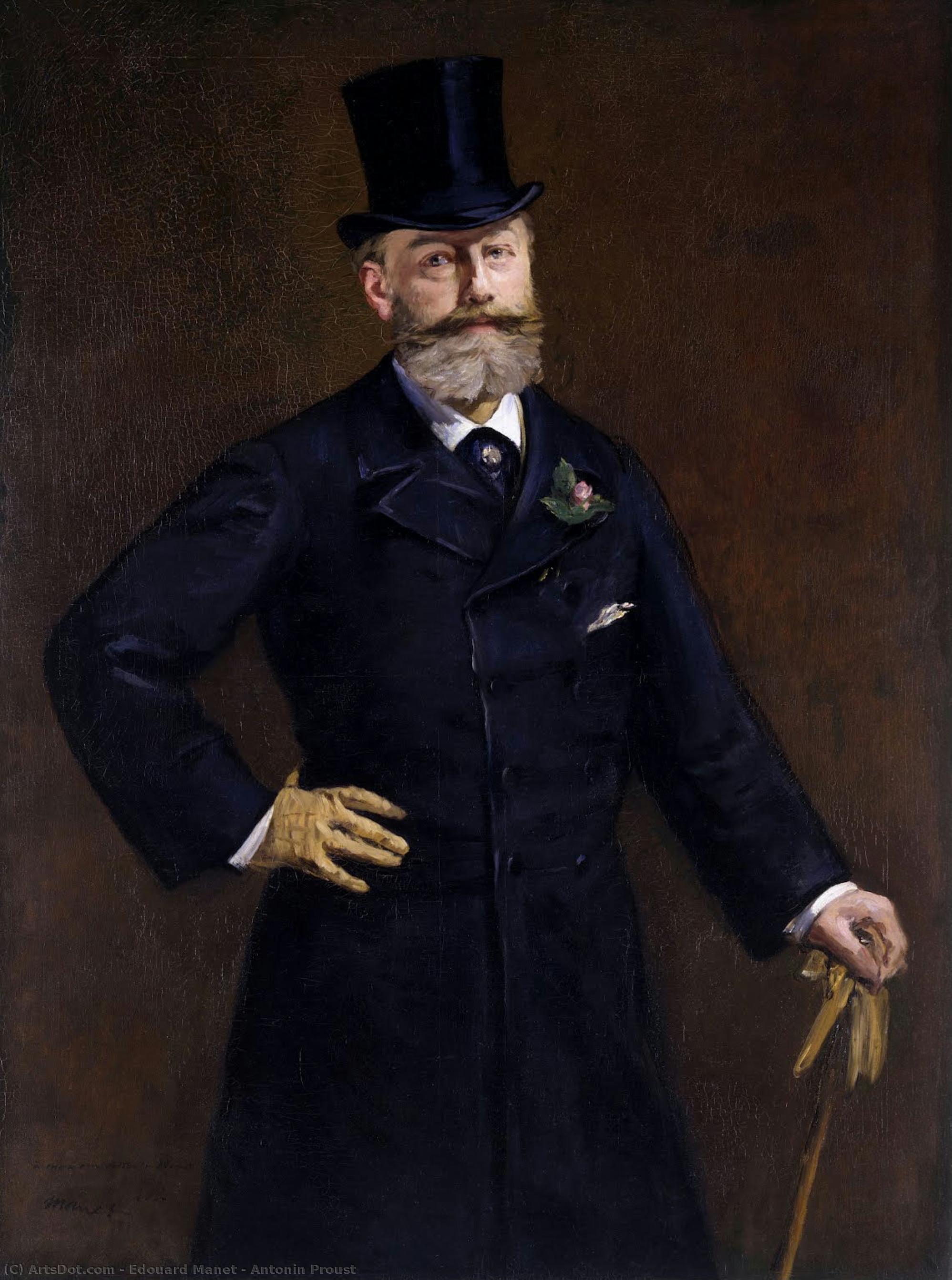
Admire Manet’s ‘Antonin Proust,’ a striking 1880 portrait of a wealthy gentleman in formal attire. Explore this realist masterpiece showcasing elegant style & timelessness.
Explore Édouard Manet (1832-1883), a pivotal figure bridging Realism & Impressionism. Discover iconic works like 'Le Déjeuner sur l'herbe' and 'Olympia,' and his lasting impact on modern art.
Explore world-class art at the Toledo Museum of Art! Discover stunning glass collections, European masterpieces & modern works – all with free admission. Plan your visit today!
A Portrait of Refined Society: Édouard Manet’s *Antonin Proust* (1880)
This striking portrait by Édouard Manet, completed in 1880, offers a compelling glimpse into the world of Parisian high society and exemplifies the artist's masterful transition from Realism towards Impressionism. Measuring an impressive 9590 x 1295 cm, the painting commands attention with its scale and sophisticated depiction of Antonin Proust, a prominent journalist, critic, and collector – and importantly, a close friend of Manet himself.
Subject & Historical Context
Antonin Proust was a key figure in the Parisian art world, known for his insightful writings and advocacy for emerging artists like Manet. This portrait wasn’t simply a commission; it was a gesture of friendship and mutual respect. Painted during a period when Manet was gaining recognition but still faced criticism from conservative circles, the work reflects Proust's support and influence. The late 19th century saw a burgeoning middle class eager to display its wealth and status through portraiture, making works like this not just artistic statements but also social documents.
Style & Technique
Manet’s style in *Antonin Proust* is characterized by a remarkable blend of realism and modernity. While rooted in traditional portrait conventions – the formal pose, direct gaze, and meticulous attention to detail – Manet departs from academic polish. His brushwork, though smooth overall, possesses a visible energy, particularly in the rendering of fabrics and textures. The dramatic *chiaroscuro*—the strong contrast between light and shadow—heightens the sense of depth and emphasizes Proust’s features. Manet masterfully employs oil paints on canvas to achieve a lifelike quality, yet avoids excessive idealization, presenting his subject with honesty and psychological insight.
Symbolism & Composition
The composition is deliberately formal, centering Proust within the frame and reinforcing his importance. Every element contributes to conveying his social standing: the elegant top hat, the impeccably tailored coat, and the subtly held cane—all symbols of wealth, refinement, and intellectual authority. The dark color palette – dominated by blacks, blues, and greys with touches of white and gold – adds to the air of sophistication and gravitas. The one-point perspective draws the viewer’s eye directly to Proust's face, inviting a personal connection.
Emotional Impact & Legacy
*Antonin Proust* is more than just a likeness; it’s a psychological portrait that captures the intelligence and self-assurance of its subject. There’s a sense of quiet contemplation in Proust's gaze, suggesting a man accustomed to observing and analyzing the world around him. The painting exudes an aura of timeless elegance and offers a fascinating window into 19th-century Parisian life. Today, it resides in prestigious collections like The Courtauld Gallery in London, continuing to inspire art lovers and serve as a testament to Manet’s enduring legacy as a pivotal figure in the development of modern art. It is a piece that would lend sophistication and intellectual depth to any interior.
This artwork represents not just a portrait but a moment captured in time, reflecting friendship, social status, and artistic innovation.