El Lissitzky (1890-1941): Russian avant-garde artist of Suprematism, Constructivism & Proun. Explore his Bauhaus influence, typography, photomontage & impactful designs.
The Jewish Museum
(New York City, United States of America)
The Jewish Museum is an art museum illuminating the complexity and vibrancy of the global Jewish experience for all audiences. The first institution of its kind in the United States, it is one of the oldest Jewish Museums in the world.
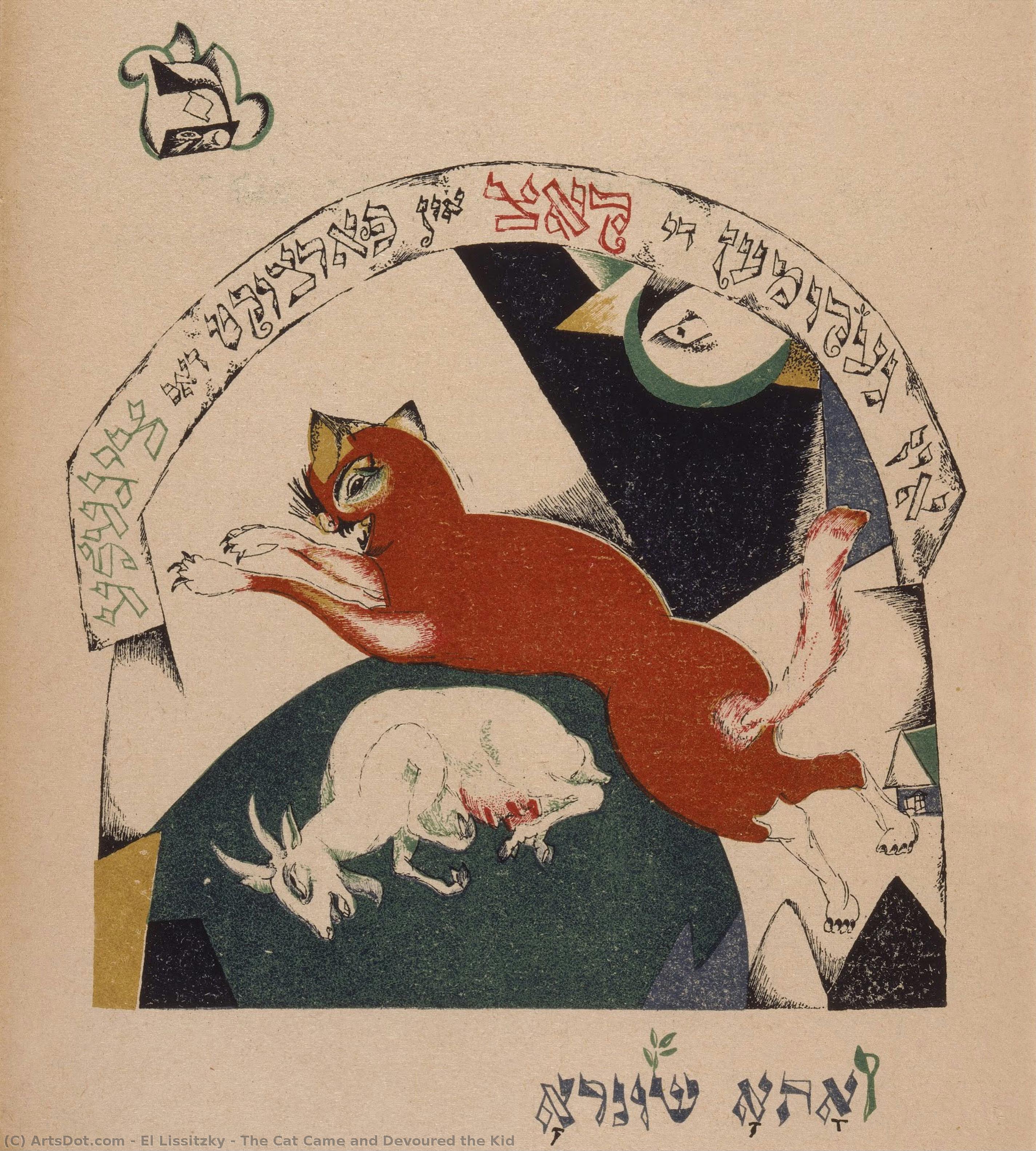
The Cat Came and Devoured the Kid – A Surreal Echo of Passover Tradition
El Lissitzky’s “The Cat Came and Devoured the Kid,” painted in 1919, transcends mere visual representation; it embodies a profound engagement with cultural narrative and artistic experimentation. This striking Suprematist composition delves into the enduring symbolism of ‘Chad Gadya,’ a Hebrew folk song recounting the demise of a goat – a poignant ritual element at Passover – transforming its simple verses into a captivating visual metaphor. The artwork’s genesis lies within Lissitzky's exploration of Jewish folklore and his burgeoning fascination with geometric abstraction, reflecting the broader artistic currents shaping Russia during the early years of the 20th century.
- Subject Matter: At its core, the painting depicts a cat positioned atop a lifeless goat or rabbit figure. This juxtaposition immediately establishes an unsettling dynamic, mirroring the narrative’s central theme of vulnerability and inevitable loss.
- Style & Technique: Lissitzky's signature Suprematist style dominates the canvas. Characterized by flattened planes of color and geometric forms—primarily circles and squares—the artwork eschews naturalistic depiction in favor of conveying pure emotion and conceptual significance. The bold red hue of the cat contributes to an atmosphere of intensity and dominance.
The painting’s historical context is inextricably linked to the fervent artistic debates surrounding abstraction during this period. Lissitzky, alongside Kazimir Malevich and Vladimir Tatlin, championed Suprematism as a radical departure from representational art, arguing that it could liberate the human spirit and express universal truths. “The Cat Came and Devoured the Kid” exemplifies this ethos, prioritizing form over content to provoke contemplation about mortality and transformation—themes central to Passover’s commemoration of liberation from slavery.
Symbolism: The cat represents power and predation, contrasting sharply with the passive victim portrayed by the animal beneath it. This duality encapsulates the song's narrative – a confrontation between life and death, innocence and experience. Furthermore, the clock symbolizes time’s relentless march onward, reinforcing the idea that all things eventually succumb to decay. Lissitzky skillfully utilizes these symbols to elevate the artwork beyond a literal depiction of an animal encounter.
- Emotional Impact: “The Cat Came and Devoured The Kid” evokes a palpable sense of unease and melancholy, mirroring the solemn contemplation associated with Passover rituals. Lissitzky’s masterful use of color and geometric form compels viewers to confront existential questions about fragility and permanence.
- Interior Design Considerations: This artwork's bold aesthetic would lend itself beautifully to contemporary interior spaces seeking a statement piece that speaks to themes of contemplation and artistic innovation. Its striking red hue and simplified geometric composition create an arresting visual focal point.
Ultimately, Lissitzky’s “The Cat Came and Devoured The Kid” stands as more than just a painting; it's a crystallized embodiment of artistic conviction and cultural heritage—a testament to the transformative power of art to engage both intellect and emotion. Its enduring appeal resides in its ability to distill complex ideas into a visually arresting composition that continues to resonate with audiences today.