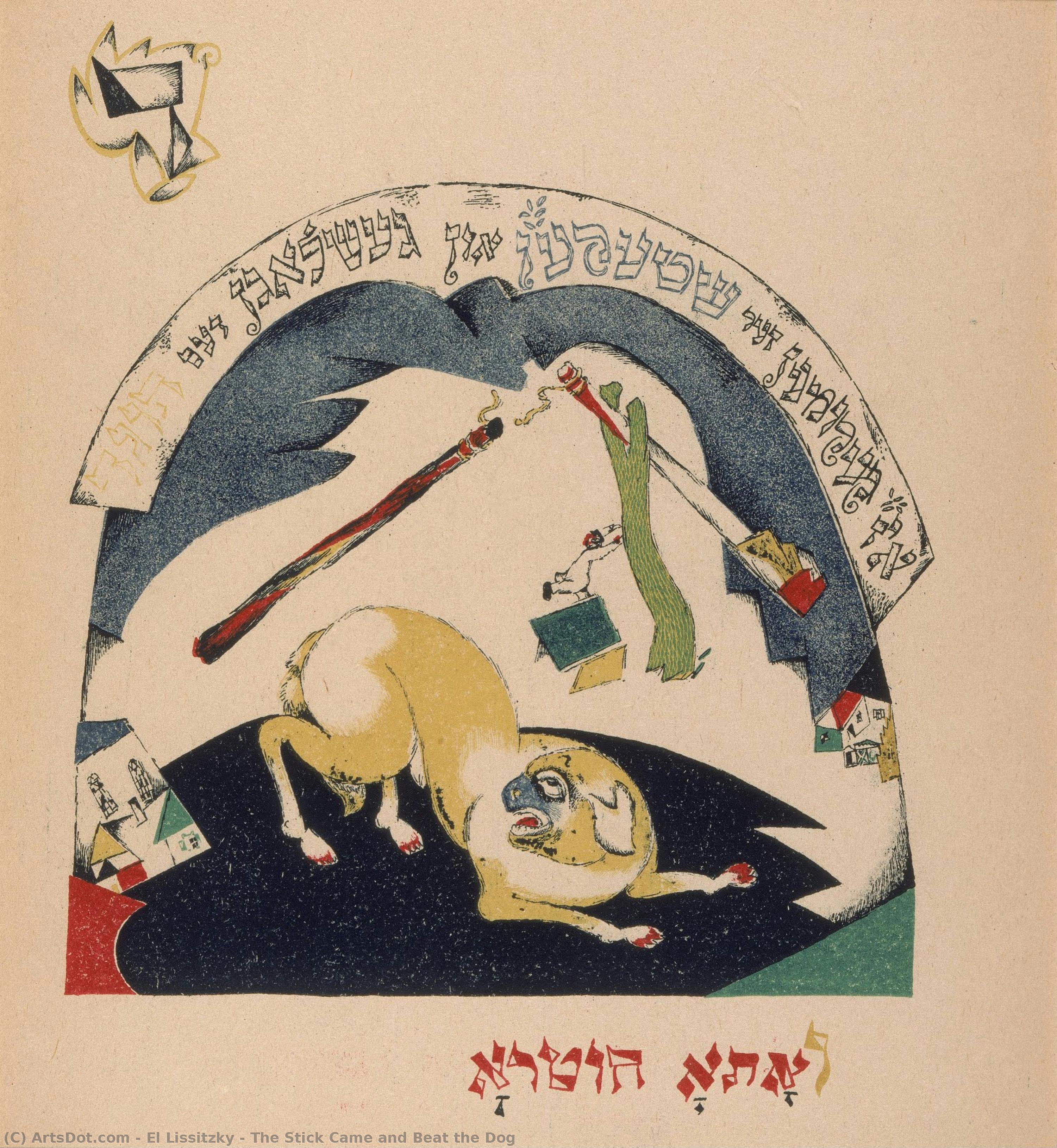
El Lissitzky (1890-1941): Russian avant-garde artist of Suprematism, Constructivism & Proun. Explore his Bauhaus influence, typography, photomontage & impactful designs.
The Jewish Museum
(New York City, United States of America)
The Jewish Museum is an art museum illuminating the complexity and vibrancy of the global Jewish experience for all audiences. The first institution of its kind in the United States, it is one of the oldest Jewish Museums in the world.
A Surreal Echo of Tradition: Exploring El Lissitzky’s “The Stick Came and Beat the Dog”
El Lissitzky's "The Stick Came and Beat the Dog," painted in 1919, stands as a striking testament to the intersection of surrealist experimentation and deeply rooted Jewish cultural heritage. Currently residing at The Jewish Museum in New York City, this artwork transcends mere visual representation; it’s an invitation into a contemplation of narrative disruption and symbolic layering—a characteristic hallmark of Lissitzky's artistic vision.
The Genesis of Inspiration: “Had Gadya” and Surrealist Dialogue
Lissitzky’s preoccupation with "Had Gadya," the Hebrew song recounting the persecution of Jewish children during Passover, fueled his creative impulse. This traditional tale speaks of a goat purchased by a father, subjected to cruel treatment by a stick, triggering a cascade of misfortunes affecting other animals and objects. Lissitzky brilliantly reimagined this narrative through the lens of surrealism—a movement prioritizing dreamlike imagery and illogical juxtapositions—resulting in an artwork that defies straightforward interpretation. The artist deliberately destabilizes expectations, prompting viewers to confront unsettling realities hidden beneath deceptively calm surfaces.
Technique and Medium: Paper’s Fragility as Symbolic Resonance
The choice of paper as the medium is not accidental; it serves as a powerful metaphor for vulnerability and impermanence—themes central to Lissitzky's broader artistic concerns. Employing a meticulous layering technique, Lissitzky achieved an ethereal quality that captures the essence of the song’s distressing narrative. The deliberate flatness of the composition contributes to this sense of stillness, juxtaposed against the dynamic suggestion of movement conveyed through the scattered objects—a calculated disruption designed to heighten emotional impact.
Objects as Symbols: Decoding Layers of Meaning
The artwork is populated with carefully selected symbols that enrich its interpretive potential. Dominating the scene is a dog lying prone on the ground, embodying distress and helplessness – mirroring the plight depicted in “Had Gadya.” Surrounding it are books representing knowledge and wisdom, yet positioned at varying distances from the dog’s head, perhaps signifying unattainable understanding or the futility of intellectual pursuits amidst suffering. Similarly, a cup symbolizes nourishment and sustenance, while a bottle—placed strategically on the right side—represents vitality and resilience. Each element contributes to a complex visual dialogue that encourages viewers to consider broader implications about faith, perseverance, and confronting adversity.
Legacy in Modern Art: Lissitzky’s Influence Beyond Boundaries
“The Stick Came and Beat the Dog” cemented Lissitzky's reputation as an innovator who dared to fuse traditional Jewish storytelling with avant-garde artistic principles. His pioneering approach has resonated across generations of artists—particularly those exploring themes of abstraction and surrealism—inspiring them to push creative boundaries and challenge conventional perceptions. Reproductions of this artwork offer a captivating glimpse into the mind of a visionary artist, inviting collectors and interior designers alike to appreciate its enduring beauty and profound symbolic depth.